Do We Become More Virtuous As We Age?

Do we become more virtuous as we age? Certainly there are saints among us who display more of the fruit of the Spirit with every passing year. Then there is someone like Fred Phelps, founder of Westboro Baptist Church, who by all accounts remained as hateful as ever until his recent death at age 84. How about the average older person, though?

Fred Phelps. We don't all get better with age.  (AP Photo/Charlie Riedel)

Fred Phelps. We don’t all get better with age. (AP Photo/Charlie Riedel)

I suspect that the answer to this question depends on what virtue we are talking about. For example, having to deal with countless frustrations during the course of life inculcates patience in most older adults. Dependability might also improve, if for no other reason than repeatedly suffering the consequences of being unreliable probably teaches something to even the slowest learners. On the other hand, I suspect that flexibility and broadmindedness are more common among the young.

A recent  news article discusses a virtue (actually, the absence of a vice) that is more common in older adults. It seems that as we get older we become less spiteful.

According to Dictionary.com, spite is “a malicious, usually petty, desire to harm, annoy, frustrate, or humiliate another person; bitter ill will; malice.” The authors of the research study on which the article is based include another element in their definition, namely that spiteful persons will attempt to harm others even at the risk of experiencing negative consequences themselves. This element of willingness to endure unpleasant consequences in order to injure others is quite evident in the “spitefulness scale” that the researchers developed. Here are a couple items:

  • “It might be worth risking my reputation in order to spread gossip about someone I did not like.”
  • “If my neighbor complained about the appearance of my front yard, I would be tempted to make it look worse just to annoy him or her.”

Responses to the scale were obtained from two university samples, and from online participants who were paid to take part. The researchers found that women were less spiteful than men, and older participants were less spiteful than younger participants.

David Marcus, a psychology professor at Washington State University and a co-author of the study, suggested the following regarding the relative lack of spite in the older participants: “You get older and you learn from experience and you just may not have the energy for it.”

We don’t have the energy? So we senior citizens are just too tired to be spiteful? Thanks a lot, Dr. Marcus! If I was a spiteful person, I would write something nasty about you at this point! But I don’t have that sort of malice, so I’ll be charitable and focus on your other explanation for why seniors aren’t spiteful. Yes, we have learned from experience. Specifically, we’ve learned that the satisfactions that result from harming others are shallow and come at a tremendous price. Kindness is better than cruelty, and love is better than hate, both for others and for ourselves. If you doubt this, just ask an elder.
Posted in Psyche | Tagged , , , , , | 3 Comments

If We All Live To 100

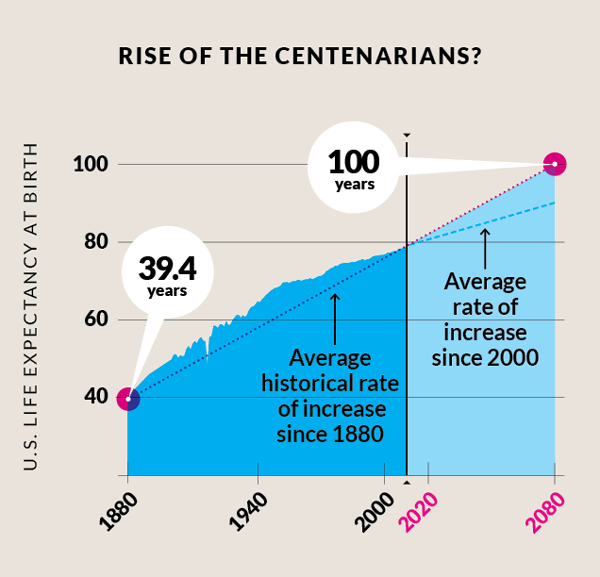
The cover story for the October issue of the Atlantic is titled “What Happens When We All Live to 100?” The author, Gregg Easterbrook, notes that the “life expectancy escalator”—the increase in life expectancy among younger cohorts—has gone up about three months a year for the last two centuries. A graph from the article shows the expected gains in average life expectancy if this rate of increase continues through 2080:

Lifespan graph

Easterbrook cites James Vaupel of Germany’s Max Plank Institute for Demographic Research to the effect that it is a “reasonable scenario” that increases in life expectancy will continue at least until the average expected lifespan of newborns surpasses 100. Vaupel is not predicting major medical breakthroughs that would result in such an increase. Past increases have come about as a result of numerous improvements in areas such as nutrition, public health, sanitation, and medical knowledge; he expects future increments in life expectancy to result from continued gradual innovations in these fields.

Easterbrook describes several lines of medical research aimed at increasing life expectancy, writes about the effects of our personal choices on our likely lifespans, and considers the likely political and economic consequences of having a society most of whose members are middle-aged or elderly. What interested me most, though, was his speculation concerning how the culture might change if lifespans were much longer than they are presently. Here’s what he imagines would happen to higher education, for example:

“Colleges will reposition themselves economically as offering just as much to the aging as to the adolescent: courses priced individually for later-life knowledge seekers; lots of campus events of interest to students, parents, and the community as a whole; a pleasant college-town atmosphere to retire near.”

And here are his thoughts about what might happen to consumerism:

“Neurological studies of healthy aging people show that the parts of the brain associated with reward-seeking light up less as time goes on. Whether it’s hot new fashions or hot-fudge sundaes, older people on the whole don’t desire acquisitions as much as the young and middle-aged do. Denounced for generations by writers and clergy, wretched excess has repelled all assaults. Longer life spans may at last be the counterweight to materialism.”

Even those among us who are slow to learn eventually realize that the excitement that comes with new possessions fades pretty quickly. Formerly new things that are now worn, or have worn out their welcome, clutter our closets and attics. So what’s the point of adding to our store? Besides, there’s little appeal in keeping up with the Joneses when Mr. and Mrs. Jones, now nonagenarians, have slowed to a crawl.

Here’s one more cultural change suggested by Easterbrook:

“[I]f health span extends, the nuclear family might be seen as less central. For most people, bearing and raising children would no longer be the all-consuming life event. After child-rearing, a phase of decades of friendships could await—potentially more fulfilling than the emotionally charged but fast-burning bonds of youth.”

For most of us who are done with childrearing, our bonds with our children continue to be among the most important relationships we have. Still, once free of the demands of child care, we have more freedom to cultivate additional relationships. As I’ve gotten older, fewer of my friendships are with people I work with, and more are with people with whom I share other affinities. I look forward to having more such friendships in the years to come. Perhaps what will give “the golden years” their luster are the rich relationships that are to be found there.

Posted in Culture, Relationships | Tagged , , , , , , , , | Leave a comment

Not Ready To Be Old

I recently encountered a  new blog in which the writer intends to explore the “third act” of life, i.e. the time past age 55. She begins by telling that her grandmother at age 65 wondered how she had gotten so old, then mentions another aging woman who, when an older relative died, said she wasn’t ready to be the matriarch of the family. The writer now finds herself in the same situation: “I do not know how it happened either. I am pushing 6o. I, who seemed to be stuck forever at 16, I am old.” She recently came to her mother’s house to serve as a caretaker, and says, “I am woefully unprepared but I am learning, relearning, learning for myself that we all come to this unprepared and astonished to be so. This is the third act and I am already on stage, horrified to discover this is improv.”

None of us are ready to be old. Of course, by the time we’re in the “third act,” our lack of preparation shouldn’t come as a surprise. We weren’t ready for any of the transitions we went through up to this point. At least I wasn’t. Kindergarten? Secondary School? College? Adulthood? A Career? Marriage? Parenthood? Midlife? I didn’t figure out any of those roles until I had been on stage for a while. Some of them I never got down. Samuel Butler said “Life is like playing a violin solo in public and learning the instrument as one goes on.” How true.

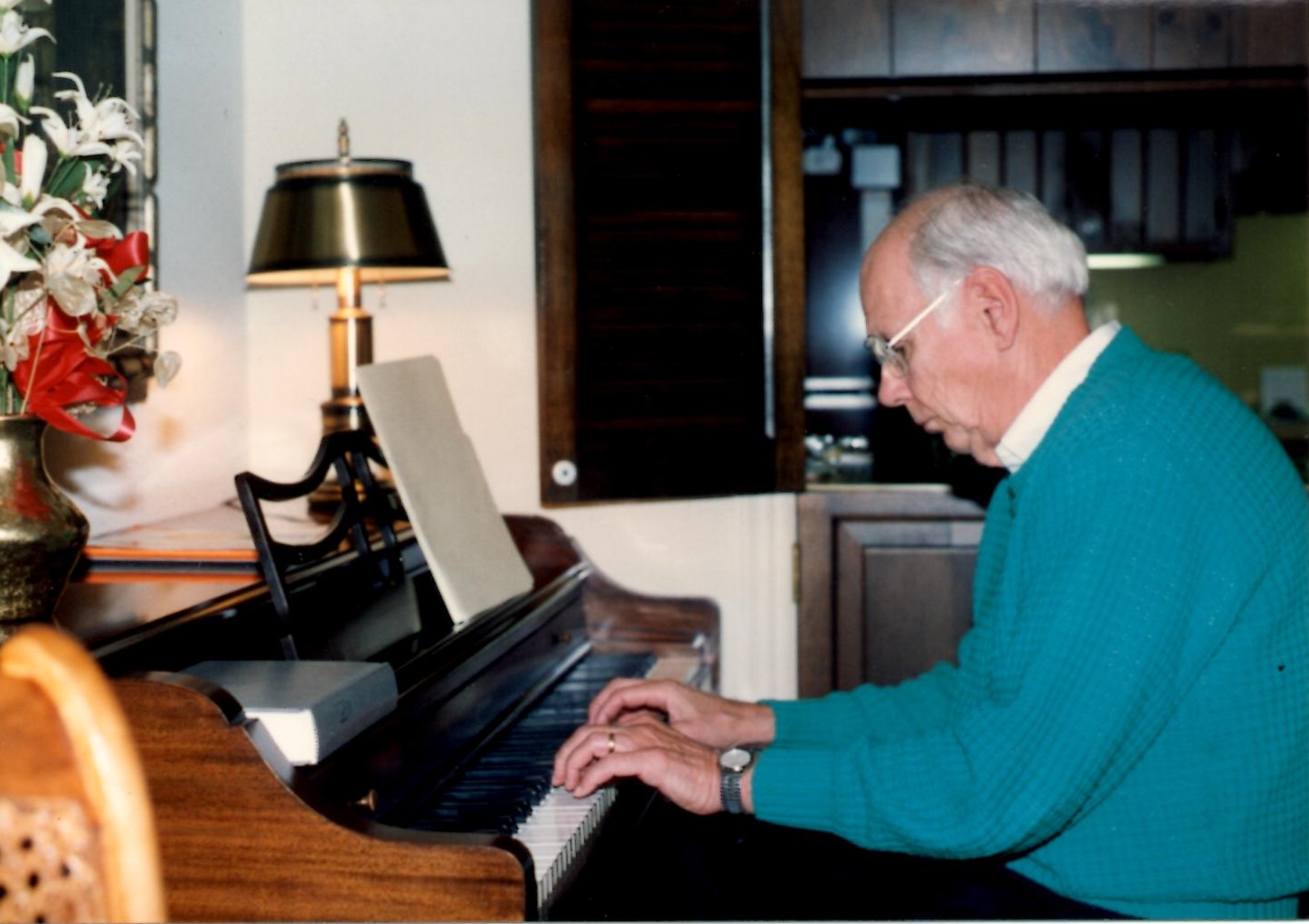
At present, I’m realizing that I don’t know how to act or think or feel now that one of my parents is dead. During the funeral home visitation for my dad on September 5, a videotape of dad playing the piano was running. I was told it had been filmed by one of my nephews in 1991 or thereabouts. I watched it, fascinated. He played smoothly and with confidence, his timing much better than it had been for the past decade. He was bald, and  his hair was mostly white. He looked younger than he had in recent years, but not dramatically so. He was already old then, though certainly not decrepit. By 1991, he had already lost both parents and had had triple bypass surgery on his heart. I did the math. He would have turned 67 that year. I’m now 66.

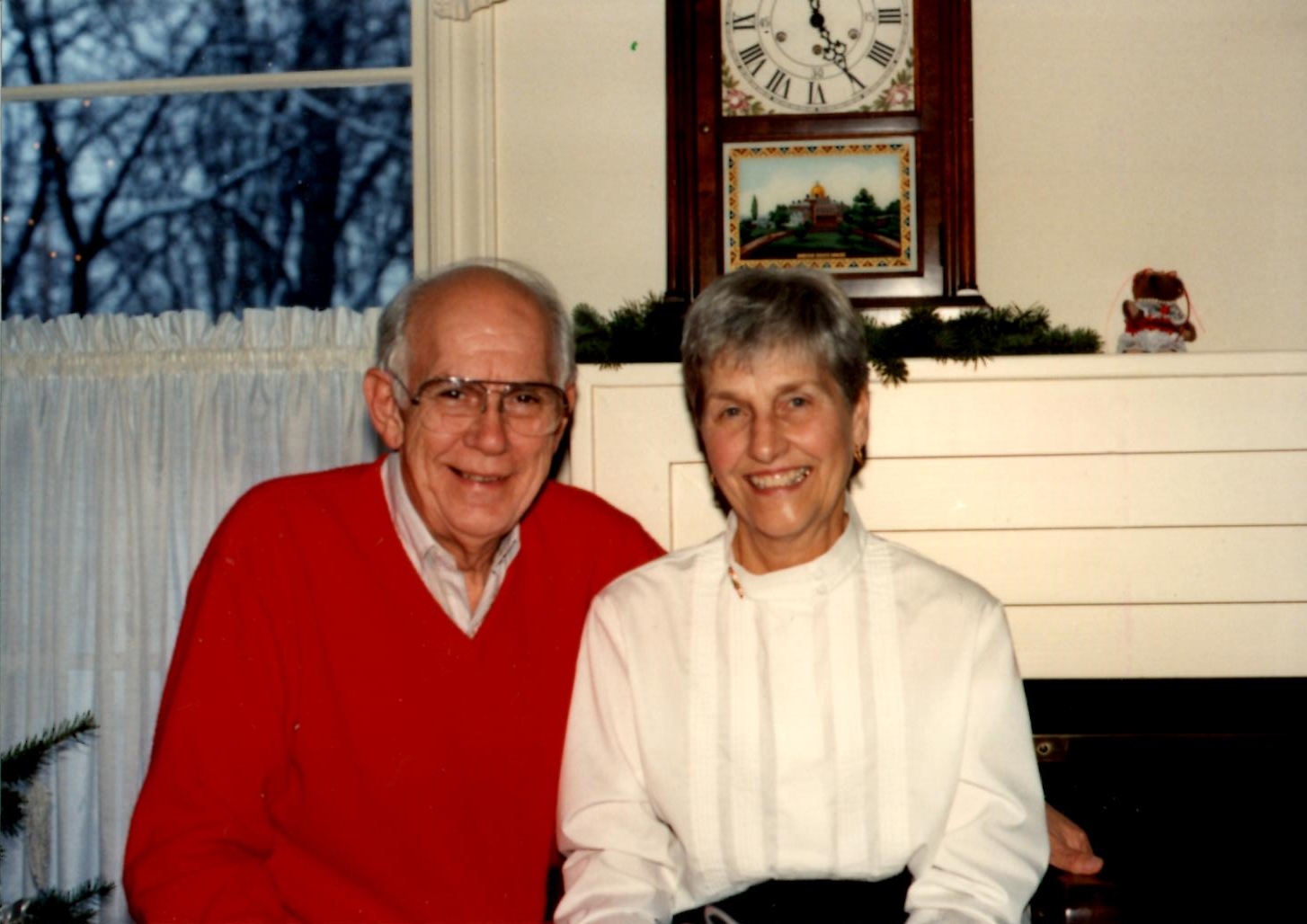
Dad and Mom, December, 1990

Dad and Mom, December, 1990

I never remember him expressing any uncertainty about entering older adulthood. He certainly didn’t have any more preparation for this phase of life than I have had. He just went ahead and did the best he could. The shifting sands on which we older boomers now find ourselves walking shifted just as much beneath our parents’ feet as they do beneath ours. Yet our parents managed to stay upright and keep moving forward. They kept on teaching us and helping us, regardless of whatever uncertainties they may have been harboring. I find that consoling.

Dad at the piano, probably in 1994

Dad at the piano, probably in 1994

Posted in Psyche | Tagged , , , , , | 6 Comments

James A. Ritzema, RIP

dad obit

You’re never ready. My dad had heart surgery 25 years ago, carotid artery surgery 13 years ago, and memory problems for about 10 years that eventually cascaded into severe dementia. Three months ago, he reached the point where he was too incapacitated to remain at home any longer. I asked God why he didn’t take dad home rather than having him linger in such a diminished state. So I would have thought that I would be ready when I got a 4:15 a.m. call from the night nurse at the nursing home saying that she was sorry to inform me that, when the aide went in to turn him over, dad was not sleeping but dead. But I wasn’t ready.

My mom and I went to the nursing home as soon as we could pull on some clothes. Dad was lying on his back, a sheet up to his mid-chest, his head tilted back and his mouth open, as if he were frozen in mid-breath. He was still warm to the touch. It seemed he was simultaneously here and gone. Later in the day, mom, my sister, my brother, my siblings’ spouses and I had a private viewing at the funeral home before dad’s cremation. He was swaddled to his neck in a sheet. The white sheet and his white hair gave him a somewhat ethereal appearance, as if his body would be equally at home on earth and floating on a cloud somewhere.

This dual he’s-present-but-also-absent sensation has been common throughout the week. If anything, he has been more present than he had been for some time, albeit in the form of pictures, music, and writings rather than corporally. We’ve looked at photos from every decade of his life, heard recordings of him playing the piano, and read a list of things he is thankful for that he wrote before the carotid surgery. We also reviewed my mom’s notes of what he wanted at his memorial service. I hadn’t known his favorite Bible verses or his favorite hymns before then.

But dad’s also been very absent. When we went back to the nursing home two days after he died to retrieve his belongings, being there was disconcerting since it so seemed that he should be there, yet he wasn’t. I will never again hear his voice or feel his embrace in the years I will be on this earth, and that’s troubling–not so much painful, at least not right now, but disorienting, like the world has changed fundamentally, but not in a way that is evident to the senses.

Dad was a good man. He not only did the things that were expected of him—serving his country in WWII, working tirelessly to support his family, being present for the important events in his children’s and grandchildren’s lives—but he also was extraordinarily kind and generous. He was there for a family of Hungarian refugees who fled during the 1956 rebellion with just the clothes they were wearing; their successful adjustment to the US was largely due to him. He and the rest of our family were there in 2001 for a handful of Sudanese Lost Boys who had been resettled to Michigan in the dead of winter, dumped in an apartment over the long Christmas weekend with only tropical clothes to wear. In between those times of remarkable generosity, he opened up the family pool every summer to hundreds of neighbors, friends, and friends of friends, especially anyone with kids. He loved to see their delight as they splashed around, and made sure they knew they were welcome to return. He and my mom ran the senior program at their church for as long as they were able, providing memorable programs and a sense of community for scores of older adults. He went to dozens of rest homes in his later years to play the piano for residents, eager to brighten their days.

This world doesn’t have enough people whose main joy is to make others happy. It just lost one of them. I miss you, dad.

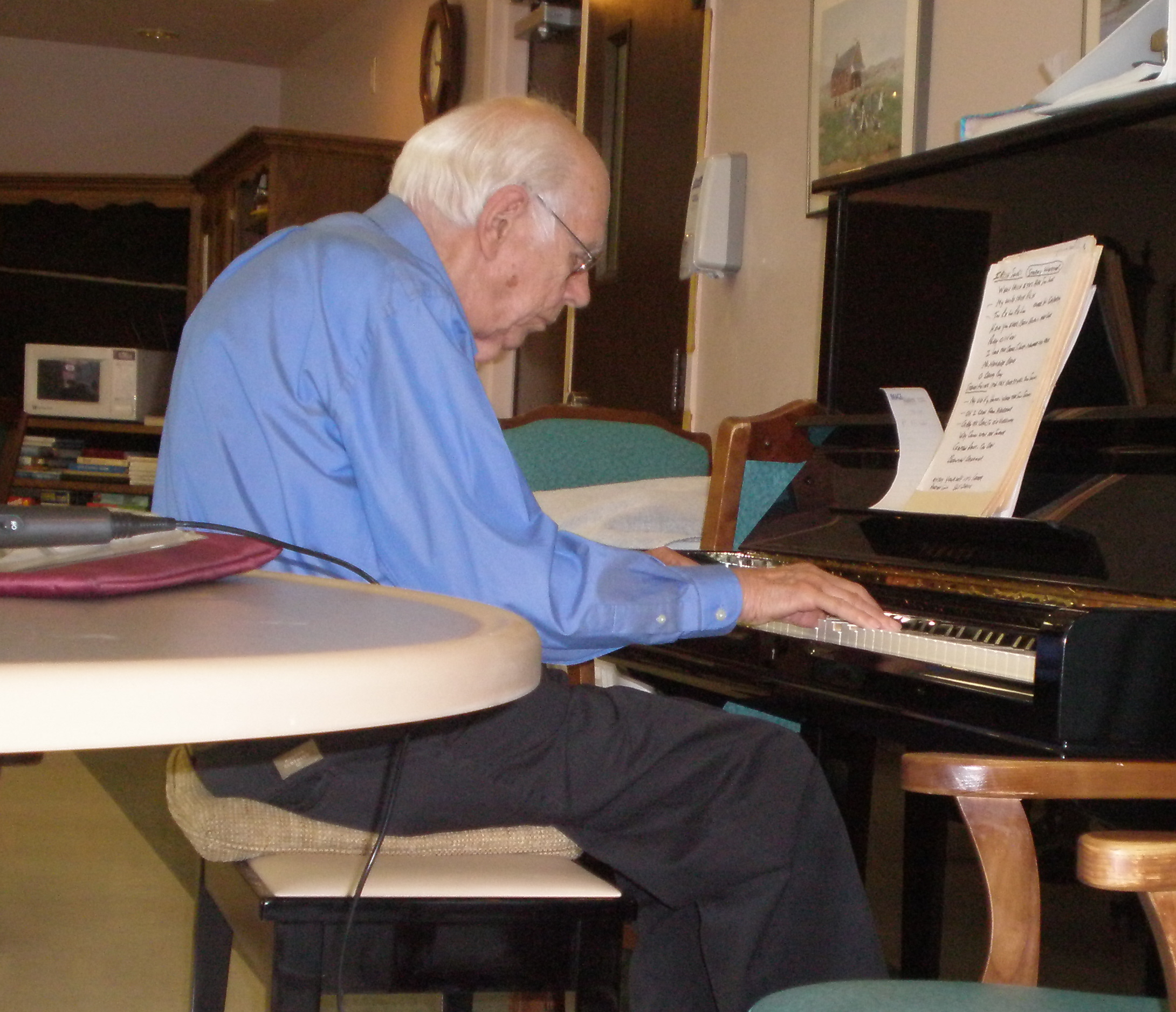
Dad in 2008, playing at a nursing home.

Dad in 2008, playing at a nursing home.

Posted in Death | Tagged , , , , | 6 Comments

The Two Phases of Retirement

Work and leisure patterns late in life are changing. The ideal of taking full retirement in order to live a life of leisure is giving way to phenomena such as partial retirement, active retirement, or, as I labeled what I’ve been doing, “redeployment.” As happens with any changing moray, those of us who aren’t following the existing societal blueprint for this part of life aren’t entirely clear on what we are building and what the structure will look like when  we’ve finished it.

Steve Vernon

Steve Vernon

Steve Vernon, a research scholar at the Stanford Center for Longevity, wrote a piece for CBS News which tries to provide a revised blueprint for late adulthood. Vernon suggests that the “retirement/leisure” phase of life be conceptualized as two separate phases. The first of these is characterized by independence and flexibility, the second by frailty and dependence. He describes the period of independence as follows:

“In this stage, we’re free from expectations that others may put on our lives, free from preconceived notions of how we might live our lives. Free from the responsibility of raising a family. Free to do what we’ve always wanted to do. Free from advertising influences that tell us to spend our time and money in unhealthy and unfulfilling ways.”

Well, we probably never attain that degree of freedom from cultural influences. We humans are, after all, social animals, subject to conformity pressures and persuasive messages in our 50s and 60s just like we were as teens whose parents accused us of always going along with the crowd. At least we feel freer once we reach the point where we have the option of leaving full-time employment, whether or not we actually are as unencumbered as we imagine.

Some of us can’t retire completely but have fewer financial demands that we did in our 30s and 40s. Vernon suggests that, if we find ourselves in that position, we may cobble together work and leisure in original ways. “[O]ur financial independence may come from wages, self-employment, financial resources, governmental benefits, efficient sharing of resources or, more likely, a creative combination of all these solutions. If we’re working, we’re doing more work that we like and less work that we don’t like…. We might work fewer hours to free up time to pursue our interests.”

As I made plans two years ago to leave full-time employment so I could spend most of my time in Michigan assisting my parents, I knew I would be returning to North Carolina several days a month to see a number of longstanding clients. This would provide some income, but not enough to cover my bills. Fortunately, I was able to get a part-time position as a therapist at Psychology Associates of Grand Rapids. I made a little from writing and teaching. After a year, I was eligible for two small pensions from previous employers. I figured out that at age 66 I could start drawing on my ex-wife’s Social Security account, and thus could increase my income a little and still not begin to draw my own SS benefits. So far, I haven’t had to touch IRA or 403(B) savings. I’ve developed a jerry-rigged income stream in just the sort of way that Vernon describes.

I’m currently using the “independence/flexibility” stage of older adulthood to help my parents. In other words, I’m using it in a way that restricts my independence and flexibility, but that is personally meaningful. For others, too, meaning often guides the “redeployment” occurring at the beginning of the last third of life. As Ken Dychtwald and Daniel J. Kadlek put it, this is “a time for finding a new purpose that will give your life meaning and just might become your most joyous and nourishing time on earth (A New Purpose, p.4).” The question of purpose has long been important to emerging adults; now it is important for us fledgling elders as well.

Posted in Culture, Psyche | Tagged , , , , , , , | Leave a comment

A Middle-Aged Suicide

Andrew Solomon wrote recently about Robin Williams’ suicide. He mused about the unique features of this particular death:

“In public appearances, he never showed the callous narcissism of many actors; his work relied on the interplay between riotous extroversion and nuanced self-study. He played an alien so well because he was an alien in his own mind, permanently auditioning to be one of us. Suicide is a crime of loneliness, and adulated people can be frighteningly alone.” 

He also discussed suicide among the middle-aged:

“At one level, the suicide of young people is obviously more tragic than the suicide of older people; youths have more of life ahead of them, more of a chance to work things out. At another level, middle-aged suicide—the vanquishing of someone who has fought off the urge for decades—is especially catastrophic. It implies the defeated acknowledgment that if things aren’t better by now, they won’t be getting better. Robin Williams’s suicide was not the self-indulgent act of someone without enough fortitude to fight back against his own demons; it was, rather, an act of despair committed by someone who knew, rightly or wrongly, that such a fight could never be won.”

The CDC found that suicide rates increased substantially from 1999 to 2010 in adults between the ages of 35 and 64. The rate of increase was 28.4%. There was more of an increase for women (31.5%) than for men (27.3%), though the total number of suicides in this age group is still much higher for men (27.3 per 100,000) than women (8.1 per 100,000). Within the 35-to-64 age range, the greatest increases in suicide rates for men were among those 50-54 (49.4%) and 55-59 (47.8%). For women, the greatest increase was for those aged 60-64 (59.7%). The highest suicide rate is still in men over age 85. The rate among the elderly isn’t growing, though, whereas the rate among the middle-aged is.

What about Solomon’s description of middle-aged suicide—that “it implies the defeated acknowledgment that if things aren’t better by now, they won’t be getting better”? Every person is different, and no generalization fits every case. Nonetheless, in my experience as a psychologist, most people who are dealing with suicidal thoughts in middle age have had such thoughts for years. If they aren’t convinced that things will never get better, they at least dread that possibility. The thought of staggering through the rest of life bearing heavy emotional burdens often seems overwhelming.

One person in her 50s who has struggled throughout life with depression and periodic suicidal impulses told me that, when she heard of Robin Williams’ suicide, her first thought was that he was lucky that he didn’t have to deal with any more pain. She hasn’t had much depression recently, and was surprised by her own reaction. Years of struggle had taken their toll, though, and the idea of suicide still has considerable influence on her. I sometimes tell clients that at first suicidal thoughts seem like a friend, offering the promise that, if things get bad enough, death is always an option. However, such thoughts don’t remain friendly. Over the course of years, they come to torment, frequently intruding and threatening to take over during moments of weakness. I wonder if something of the sort happened with Robin Williams.

People with chronic suicidal thoughts tend not to tell others about them. It may be embarrassing to have such thoughts, or it may seem they are just a part of one’s life. I encourage anyone experiencing such thoughts to seek therapy–or, if you’re already in therapy, to talk to your therapist about the nature and extent of the thoughts you are having. When you aren’t making progress in straightening out the relationship you have with your own thoughts, it’s time to get some help.

Robin Williams in 2011. Photo by Walter McBride/Corbis

Robin Williams in 2011. Photo by Walter McBride/Corbis

Posted in Death, Psyche, Uncategorized | Tagged , , , , , , , | Leave a comment

Mom On Her Own

When my dad went into a nursing home on June 4, it was the first time that he and my mom lived apart in their 68 years of marriage. Mom was exhausted from caring for him. I expected she would regain her strength in a few weeks, and she has. I was unsure of how she would respond emotionally to dad’s absence. What would it be like for her to live without dad? Would she want to spend as much time as possible with him at the nursing home? Would she feel lost, or be overcome by loneliness? Or would she reach out to all the friends whom she had seldom seen while she was caring for dad?

The most difficult thing for her seems to be her frustration about not being able to give dad much help. She has been bothered that he has shown even more signs of decline since moving to the nursing home. Several times she has mentioned that he was doing better and was happier when he was at home. She goes to visit him about every other day, spending about an hour with him each time. It can be draining for her to visit, especially when he is clearly unhappy and her efforts to cheer him up aren’t successful. She knows he would like her to be there constantly, but realizes her limits and stays away some days so that she can recover physically and emotionally.

Before

Before

After

After

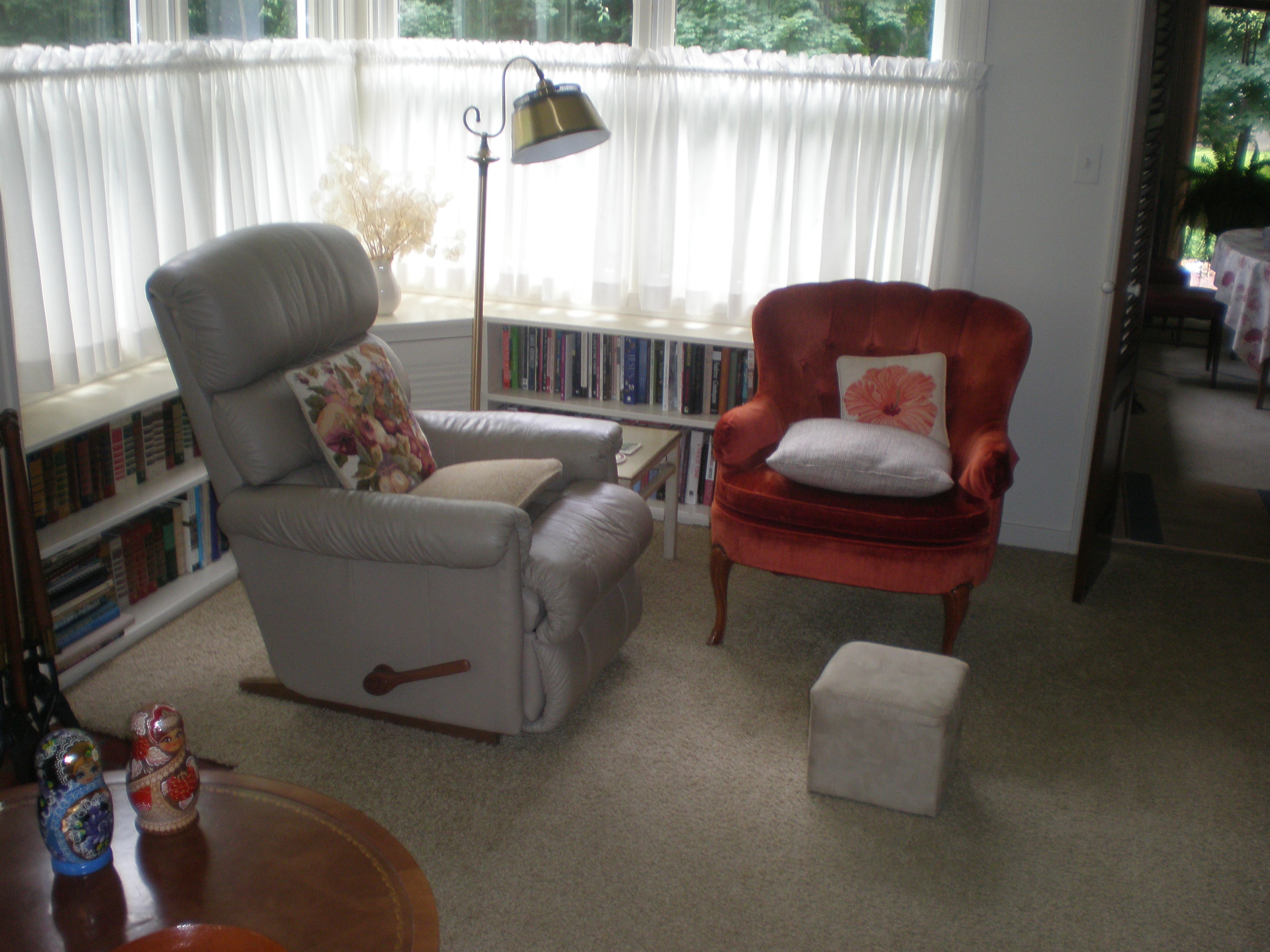
Mom has commented that she has much more time than she did when she was with dad constantly. She’s used that time in a number of ways. She looked through stacks of old pictures to find ones to display in the memory box in dad’s room at the rest home. She also enlisted my brother-in-law and myself to move some furniture. Dad’s recliner went to the rest home with him, so she had to fill that space. She didn’t content herself with the simplest possible rearrangement, though, but recreated a sitting area in the living room similar to what was there decades ago. Jane Gross recently wrote at the New Old Age Blog about an elderly friend who, after losing her husband to Alzheimer’s, moved on by making countless little changes to her house. My mom may be intuitively using the same coping strategy.

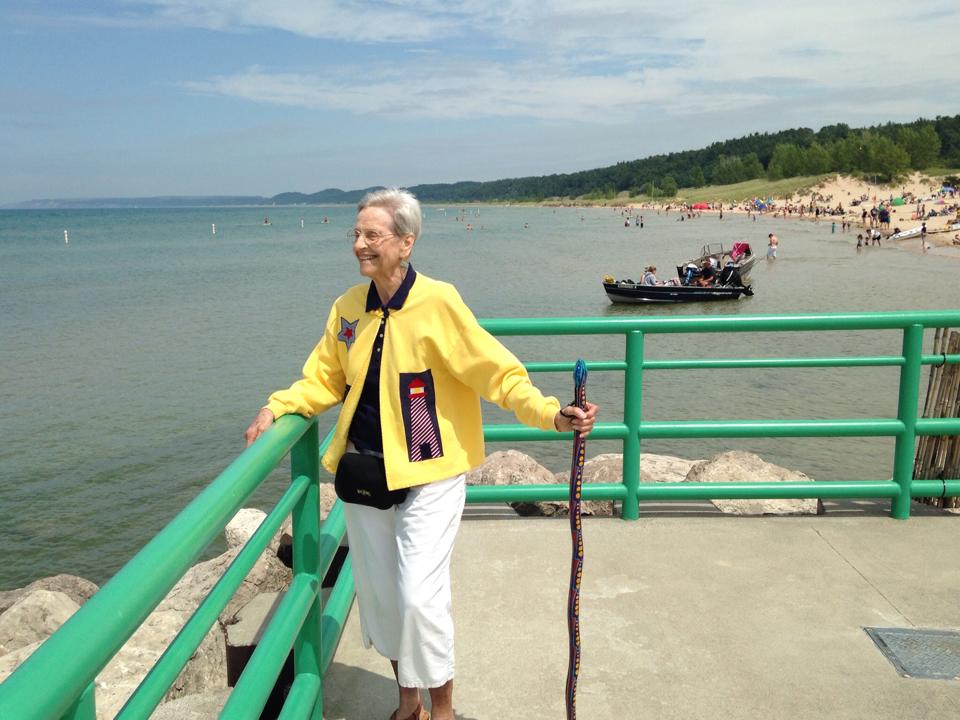
Mom has a limited field of vision due to a stroke, can’t drive, and is uncomfortable in unfamiliar environments. Other than trips to see dad, she didn’t leave the house any more the first month than she had been doing previously. The second month, though, she returned to some places that she hadn’t gone to for years. I offered to bring her to her church, and one Sunday morning she decided to go. She had been watching DVDs of church services at home, but enjoyed being back in the congregation again. She also accepted my sister and brother-in-law’s offer to visit their cottage (years ago, she and my dad were co-owners of the cottage, so she was going to a place she had vacationed many times). I drove her up there Friday afternoon, she stayed overnight, and my brother brought her back home the next evening. She said it had been six years since she had stayed overnight somewhere other than her home. We went into Pentwater, Michigan, near the cottage, for a Friday evening Art Stroll. Eating dinner afterwards at an outdoor restaurant, she looked around at all the diners and remarked with a bit of incredulity in her voice that there is a whole world out there that she has been missing. She seemed happy.

Mom at Pentwater

Mom at Pentwater

Mom seems to be adapting fairly well to this huge change in her life. I’m proud of her for how she is doing. I suspect that, like mom, other older adults who have borne a heavy burden of caregiving for a spouse experience some disorientation but then have a revival of their former selves when the burden is lifted.


Posted in caregiving, Psyche | Tagged , , , , | 2 Comments

Roger Ebert, “Life Itself,” and Change

Life ItselfI recently saw Life Itself, the documentary about Chicago Sun-Times film critic Roger Ebert’s life. The most remarkable thing about this film wasn’t any of Ebert’s achievements but his willingness to be filmed as he was dying of cancer. His face had been disfigured by the removal of his jawbone, but he looks cheerfully into the camera, making no effort to hide the ravages of disease. The camera is also present shortly after he and his wife have received word the cancer has metastasized; they discuss this development with the interviewer even before they have even absorbed it and consulted with each other. Many in our culture hesitate to reveal physical imperfections at the beach or gym, much less to millions of moviegoers. The Eberts are to be commended for their openness.

At one point late in his life, Roger says that he is the same person as he was when, in his early 20s he started writing movie reviews. I think he means by this that he had the same view of film and of the critic’s role throughout his entire life. There were other constancies—he was always sociable and fun-loving, and was big-hearted, displaying generosity of spirit. In other ways, though, he had become a much different person:

  • As a young man, he drank heavily, frequenting O’Rourke’s Bar, a local hang-out, every night. Alcohol increasingly became a problem for him, though, and he quit drinking in 1979.
  • He was a long-time bachelor who apparently loved the ladies. He introduced himself to Chaz, his wife-to-be, while eating at a restaurant after an Alcoholic’s Anonymous meeting. They married when he was 50, and, for the last 20 years of his life, he was devoted to her.
  • Having been a doted-on only child, then achieving considerable success before age 30, Roger was egotistical and became petulant when he didn’t get his way. Then he was paired on television with Gene Siskel, movie reviewer for the rival Chicago Tribune, who wouldn’t back down when Roger tried to argue him into submission. Over the years, their antagonism towards each other turned into friendship, and Roger came to live more comfortably around other large egos who resisted his powers of persuasion.

What strikes me about all of these changes is that Roger didn’t seek them, and, with the first and third, probably resisted them. Yet he found himself changing anyway, and ended up a wiser, more affectionate, and less selfish man than he had been. Life (or, more likely, God wielding life experiences) prods us to change, until we eventually relent. Only the most stubborn among us manage to markedly slow the process, and even then we can’t stop it entirely. As Neil Gaiman put it in The Graveyard Book, “You’re always you, and that don’t change, and you’re always changing, and there’s nothing you can do about it.”

Posted in Death, Psyche, Relationships | Tagged , , , , , , , , , | 2 Comments

Generativity at the Movies

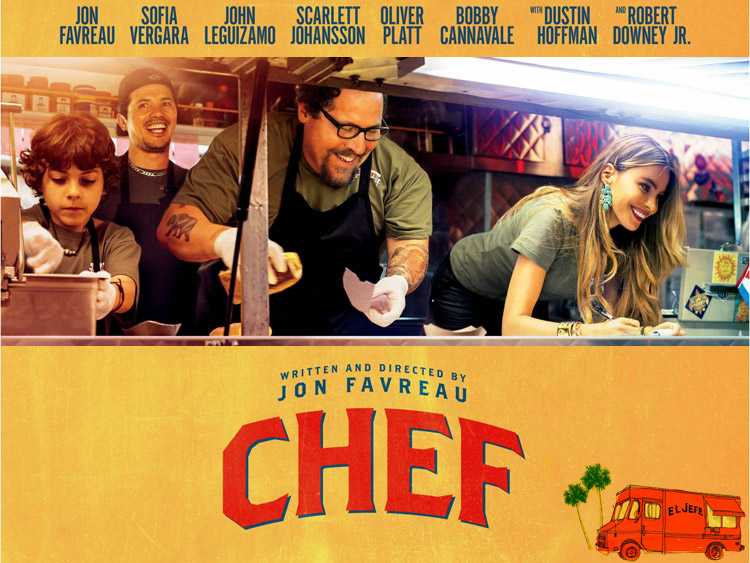
Chef-Movie

I recently posted a reflection on “Chef,” Jon Favreau’s movie about an eminent chef whose career runs aground on the shoals of excess caution, then is re-floated thanks to a cross-country jaunt on a food truck. One of the movie’s themes that I didn’t write about but that is pertinent to this blog is generativity.

Generativity, the positive outcome in psychoanalyst Erik Erikson’s seventh stage of psychosocial development, consists of creating or nurturing some project or person that will outlast oneself. Usually in midlife, the person moves from being primarily concerned about self-enhancement to being concerned about the welfare of one’s children, students, or younger colleagues. As George Vaillant puts it in Aging Well, generativity “involves the demonstration of a clear capacity to unselfishly guide the next generation. Generativity reflects the capacity to give the self—finally completed through mastery of the first three tasks of adult development—away.” (p. 47)

At the start of “Chef,” Carl Casper—the Chef of the movie’s title–lacks interest in generativity. True, he provides guidance to the younger workers in the kitchen he runs, but the emphasis is on food production rather than on mentoring his underlings. The time he plans to spend with his 10-year-old son Percy is often lost to work, and Carl devotes the few hours they do have together to amusements rather than to anything that might deepen their relationship.

Carl’s self-centeredness starts to change after he loses his job. His sous-chef Tony cooks the meal that the restaurant owner insisted on and that Carl refused to make. Rather than holding a grudge against Tony for not supporting his stand, Carl readily accepts Tony’s efforts to reconcile. He tells Tony that he deserves to run his own kitchen, which seems to be his way of offering his blessing to Tony.

Carl moves further toward generativity in his relationship with Percy. He takes interest in what Percy knows, learning from him about social media. Admittedly, this is self-serving at first—he wants to master Twitter in order to respond to negative Tweets about him—but at least he’s starting to be aware of Percy as a person. He accepts Percy’s help on the food truck, gradually going from using Percy just as another set of hands to teaching Percy the intricacies of food selection and preparation. The most clearly generative sequence occurs when Percy, distracted, allows a sandwich to burn. Carl stops production, takes Percy aside, and asks him whether he really wants to do this—he cares, finally, about Percy’s desires. After Percy responds in the affirmative, Carl opens up about what cooking means to him. He says (roughly) the following:

“Everything that’s great in my life is because of this. I’m good at this and I want to share it with you. I get to touch people’s lives because of this.”

Would that all of us could nurture our children by sharing with them our passions! In his study of aging adults, George Vaillant found that “Generativity provided the underpinning of a successful old age.” (p. 113) The time to be constructing such an underpinning is not when we retire, but, as with Chef Carl, when we are in the midst of adulthood, when we have something worth sharing and someone worth sharing it with.

Posted in Psyche, Relationships | Tagged , , , , , | 2 Comments

More on Schweitzer and Maturity

wrote earlier about a comment Albert Schweitzer made about maturity. In looking for the source of that quote, I ran across something else he had said about the topic. The first quote I had found came from when Schweitzer was almost 70, and the second was from his Memoirs of Childhood and Youth, published when he was 49, or about 20 years earlier. Here is the one from midlife:

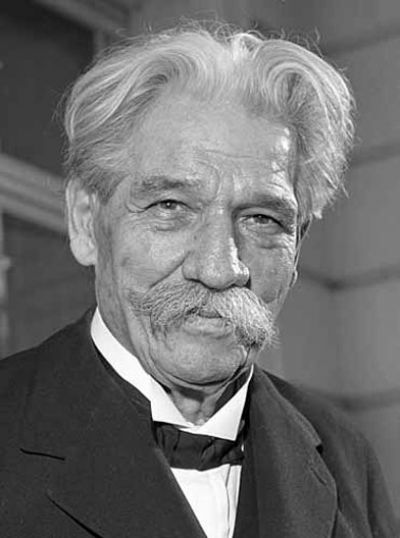
Albert Schweitzer

Albert Schweitzer

“Instinctively I have fought against becoming what is usually called a “mature person…. What is usually considered maturity in a person is really resigned reasonableness. It is acquired by adopting others as models and by abandoning one after another the thoughts and convictions that were dear to us in our youth. We believed in the good; we no longer do so. We were zealous for justice; we are so no longer. We had faith in the power of kindness and peaceableness; we have it no longer. We could be filled with enthusiasm; we can no longer be. In order to navigate more safely through the dangers and storms of life, we lightened our boat. We threw overboard goods that we thought were dispensable; but it was our food and water that we got rid of. Now we travel more lightly, but we are starving.”

Here is what he said in older adulthood:

“The meaning of maturity which we should develop in ourselves is that we should strive always to become simpler, kinder, more honest, more truthful, more peace-loving, more gentle and more compassionate.”

So Schweitzer went from regarding ‘maturity’ as a code word for selling out one’s principles and losing one’s convictions, to regarding maturity, at least in the ideal, as a more pure, peaceable, and caring mode of existence. That’s a pretty substantial difference! I don’t know enough about Schweitzer’s life to be able to hazard a guess about what changed his thinking. The change is consonant with normal developmental processes, though.

According to Daniel Levinson, the psychologist who popularized the notion of the midlife crisis, middle adulthood is a time of de-illusionment. I  wrote earlier about the reappraisal of one’s life that often takes place at this time. Here’s how Levinson describes this process of self-examination:

“As he attempts to reappraise his life, a man discovers how much it has been based on illusions, and he is faced with the task of de-illusionment. By this expression I mean a reduction of illusions, a recognition that long-held assumptions and beliefs about self and world are not true.”

Such probing of one’s thoughts and values can result in a discovery of something that is not illusion, a solid foundation of beliefs on which to rebuild. Alternately, it can result in becoming skeptical that principles or integrity can serve as the basis for life. Perhaps when Schweitzer wrote about maturity in his late 40s, he was referring to the latter outcome: a de-illusionment that left one without convictions concerning truth or goodness. That type of maturity is certainly not worth having!

I suspect that Schweitzer eventually realized that questioning one’s convictions can in some instances be beneficial. Such self-evaluation can reveal that early life successes based on egoism, malice, or strife aren’t ultimately satisfying. When such qualities are uprooted, there is space to nurture those things that Schweitzer described as comprising a desirable form of maturity, among them simplicity, honesty, and compassion. This is the maturity that I aspire to!

Posted in Psyche | Tagged , , , , , | Leave a comment