Come Lord Jesus

candle

Advent is nearly over; Christmas is near. Followers of Christ anticipate celebrating his three comings–in Bethlehem, upon his eventual return to earth, and in our hearts. We who are older have lived through many Advents and welcomed many Christmas mornings. For me, there is joy at the commemoration of his incarnation, yet also disappointment regarding the latter two of the three comings. I have waited many years for Christ’s return to earth, and find that my heart has not changed much as I had hoped by his presence within me.

I look around and see a world in disarray–terrorists ascendant in the Middle East, disease rampaging through Africa, the environment being ravaged, totalitarianism reigning over millions. In our country, many are mourning the victims of violence, and many are hungry, homeless, or living in fear. Many turn to greed, pride, distraction, or gluttony for relief, but these are empty consolations.

When I was in my teens and twenties, I thought that we followers of Christ, along with other people of goodwill, could change the world–not entirely, perhaps, but enough to make it a better place for the great majority of its residents. Now I am in my sixties, and it is apparent that, despite much good that has been done, hatred and fear and self-interest have as much hold on the human race as ever.

Decades in a world full of suffering and sorrow tempt me to retreat from pursuing peace and justice–to instead hunker down until Christ’s final return. Except for one thing. On this planet where I’ve lived for over six decades, this planet filled with injustice and human suffering, there have also been living followers of Christ who have selflessly pursued causes such as overcoming discrimination and providing care to the needy. Martin Luther King, Jr., Oscar Romero, Mother Teresa, Bob Pierce, John Perkins, Desmond Tutu, Paul Farmer–these are just a few of the thousands who have brought hope to the hurting. Christ, have you not made your presence manifest in the lives of these servants of yours?

The night before his crucifixion, Jesus said to his disciples: “Very truly, I tell you, the one who believes in me will also do the works that I do and, in fact, will do greater works than these, because I am going to the Father (John 14:12, NRSV).” Could he have been referring here to the works done by those who feed the hungry, free the captives, and proclaim the good news? Come, Lord Jesus, come. Enable those of us who believe in you to do your work in the world.

Posted in Spirit | Tagged , , , | 1 Comment

Grief and Spirituality After Midlife

In previous posts at Life Assays and Olderhood.com, I wrote about the cover story in the Atlantic that describes the “happiness U-curve,” the finding that happiness decreases in the decades of early adulthood, reaches a low in midlife, and increases in late adulthood. The decline in midlife may stem from increased awareness of our mortality, dissatisfaction with what we accomplished up to that point, and the dawning realization that we’ll never be able to make up the shortfall. We are likely then to go through a grieving process, mourning the loss of our earlier dreams and putting them to rest. There is a spiritual aspect to midlife grief, and that aspect is the topic of this post.

What does it mean to be spiritual? I like Ronald Rolheiser’s explanation of the term. In his book The Holy Longing, he writes:

“We do not wake up in this world calm and serene, having the luxury of choosing to act or not act. We wake up crying, on fire with desire, with madness. What we do with that madness is our spirituality.”

As Rolheiser understands it, to be alive is to have desire, and each of us needs to decide what to do with that desire, how to channel it. “Desire makes us act and when we act what we do will either lead to a greater integration or disintegration within our personalities, minds, and bodies—and to the strengthening or deterioration of our relationship to God, others, and the cosmic world.”

As we seek to satisfy our desires, we receive various responses. These are never exactly what we had hoped for. “Soon enough, we realize that our lives are not fair, that we are not loved and valued as we deserve, and that our dreams can never really be fulfilled.” Our disappointments become particularly acute at midlife, when we realize that “we are so rich and that all of this richness has really no place to go.” Our choices then are either to become permanently angry and disaffected or to grieve our losses. For Rolheiser, “the greatest spiritual and psychological challenge for us once we reach mid-life is to mourn our deaths and losses.”

Falling UpwardRichard Rohr, in Falling Upward: A Spirituality for the Two Halves of Life, gives a similar description of loss and spirituality in midlife and beyond. He suggests that we can only progress spiritually if we experience some disappointment or failure—that we “stumble over a necessary stumbling stone.” This can lead us to an encounter with God unlike the more egocentric faith experiences common earlier in life. “By definition, authentic God experience is always ‘too much’! It consoles our True Self only after it has devastated our false self.”

The false self that Rohr believes is devastated in the encounter with God is the same self that is devastated by midlife disappointments. It is a self constructed of flimsy twigs–the acclaim of others and the accomplishments we’ve amassed. These burn to ash in the divine encounter, allowing us to see the true self that was previously obscured.

And what is that true self we stand to gain once the false self is in ashes? Rohr describes it this way:

“Your True self is who you objectively are from the beginning, in the mind and heart of God, ‘the face you had before you were born,’ as the Zen masters say. It is your substantial self, your absolute identity, which can be neither gained nor lost by any technique, group affiliation, morality, or formula whatsoever.”

This, then, is one way to understand late-life spirituality: it is to mourn the death of many of our hopes and dreams, in the process to encounter the divine, and thereby to come to know the self we always had been.

Posted in Spirit | Tagged , , , , , , , | 3 Comments

Midlife Grief, Late Life Happiness

Atlantic Dec 14I wrote earlier in my other blog about the cover story of the December, 2014 Atlantic on happiness in midlife. Jonathan Rauch, the author of the article, describes the “happiness U-curve,” a graph of data from numerous studies showing a decline in life satisfaction during early adulthood that reaches a nadir in the forties, but then increases. A possible reason for this pattern is that a reappraisal of ourselves and our achievements occurs in midlife. We realize that we are not exceptional, a somewhat painful insight. Our accomplishments seem not to amount to much compared either with our prior expectations or the accomplishments of others. Increased awareness of our mortality further diminishes our sense of satisfaction with what we’ve done. In the end, we have a diminished sense of ourselves and reduced expectations for the remainder of our lives.

A study by Princeton economist Hannes Schwandt described in the Atlantic article provides evidence that after our forties most of us do in fact come to have more modest expectations for our lives. Participants in a German longitudinal survey were asked to rate their current life satisfaction and to estimate what they thought their life satisfaction would be five years in the future. Younger participants consistently overestimated how satisfied they would be five years hence. Thus, they were disappointed when, after five years, life hadn’t lived up to their expectations. In contrast, older participants consistently underestimated how satisfied they would be in the future. They were pleasantly surprised when things turned out better than they expected. The most difficult time was in between; at some point in the forties, a person is likely to both be disappointed that their previous hopes for the present hadn’t been met, and to have diminished expectations for the next five years. This combination of disappointment about the present and pessimism about the future seems to correspond with the low point in the happiness U-curve. Schwandt found that, by their fifties, participants were more often exceeding their earlier expectations, and life satisfaction was increasing.

We who are in our sixties or beyond may not remember having gone through this midlife slough, but many of us probably did. How, though, did we manage to adjust our expectations downward? Many of us gave something up that we hoped would come to fruition but never did. In my case, it was a marriage that I was trying to salvage and career aspirations that, if they were achievable at all, weren’t worth the sacrifices they would have entailed. To give up long-cherished dreams is to go through a grief process. We experience a variety of reactions to the loss—sadness at the death of the dream, uncertainty over whether we should try to resurrect it, disquiet at the void left behind, anger at the circumstances that contributed to the dream’s death, and disappointment with ourselves for the mistakes we made along the way. This grief is like an antiseptic that cleans the wound so that it can heal and we can move on.

So, when in later adulthood we face the possibility of additional losses, it can be useful to remember that loss is not unfamiliar to us. Most of us have already grieved over many hopes we had as young adults and have laid them to rest. We know how to mourn and how to move on. As an age group, we who are elderly have more expertise in grief and acceptance than any other cohort.

Posted in Psyche | Tagged , , , , | Leave a comment

Midlife–More Slough Than Crisis

I recently wrote a post on Life Assays, my other blog, concerning happiness (more, the lack thereof) in midlife. Since the topic is also pertinent to this blog, I’m reposting here.

Bob Ritzema's avatarLife Assays

The cover story in the December, 2014 Atlantic is an article by Jonathan Rauch entitled “The Real Roots of the Midlife Crisis.” His description of midlife, though, is not so much of a crisis but of a low point in the road, a dip that for some is barely perceptible but that for many sinks to dejection. I’d term it a midlife slough rather than a crisis.

Evidence has accumulated for some time that life satisfaction tends to decrease in midlife. Across many cultures and different research samples, happiness tends to decline during the early decades of adulthood, reaching a low point in the mid-forties. It then increases into late adulthood, until the seventies or so, when illness and disability are likely to put a damper on one’s sense of contentment. This pattern of age-related changes in life satisfaction is known as the “happiness U-curve.” Researchers measure happiness in various…

View original post 483 more words

Posted in Uncategorized | Leave a comment

Adaptation

adaptation

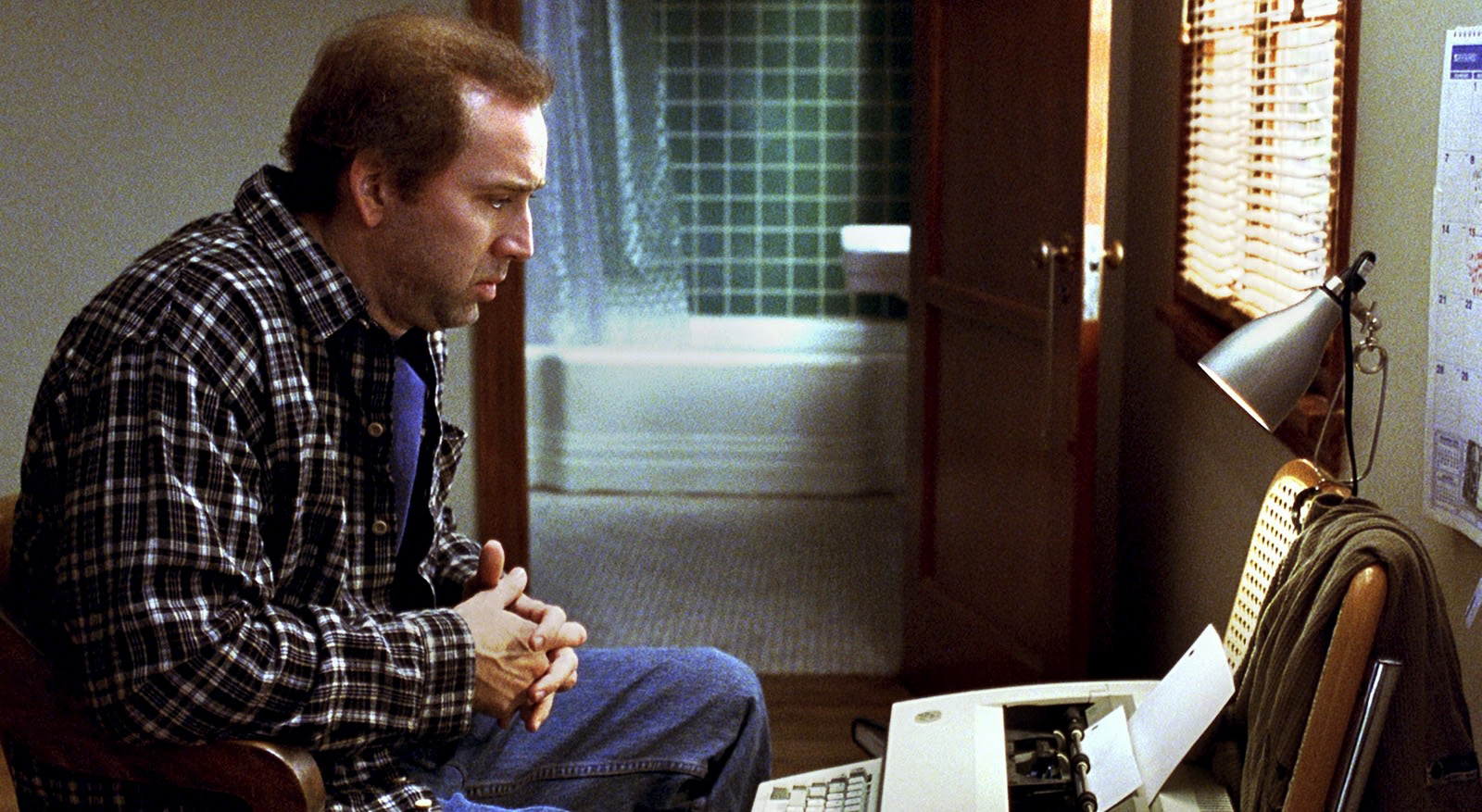
In Spike Jonze’s movie Adaptation, screenwriter Charlie Kaufman (Nicholas Cage) struggles in his effort to adapt The Orchid Thief into a film. Part of the problem is the book—it’s lacking a usable storyline. But much of the problem is with Charlie himself, since he wastes much of his energy on his anxieties and self-doubt. Charlie not only can’t adapt the book, he can’t adapt to life. Meanwhile, Charlie’s twin brother Donald (also played by Cage) decides on a whim to give screenwriting a try. After taking a seminar, he produces an improbable, cliché-ridden script that he sells for a small fortune. Who, then, is better adapted—the talented writer of fine sensibilities immobilized by writer’s block or the hack who plows ahead with an excess of confidence? Who serves as a better model for adjusting to life? What is successful adaptation anyway?

The orchids described in The Orchid Thief are well-adapted to their environment, in the original, biological sense of the term. We often use the word not in that original sense but to refer to psychological coping mechanisms. I earlier wrote that one of the five factors that predicted healthy aging in the Harvard Developmental Study was an adaptive coping style, i.e. adaptation. According to George Vaillant, who directed the Harvard Study for over four decades, healthy aging isn’t determined by the severity of the hardships we encounter so much as by how we adapt to those hardships.

Vaillant thinks of adaptation largely in terms of the psychoanalytic concept of defense mechanisms. First described by Sigmund Freud and explored in more detail by his daughter Anna Freud, defense mechanisms are unconscious strategies used by the ego to ward off some sort of threat to the person. The threat was seen as an internal one, coming from unacceptable sexual and aggressive impulses. These impulses produced anxiety, and the defense mechanisms were strategies to ward off the impulses and thus reduce anxiety. Over the decades, other theorists have described defenses as deployed against other sorts of internal threats, including feelings of inferiority and insecurity.

Defense mechanisms have traditionally been considered distinct from coping strategies (defenses are considered to be unconscious and deployed against internal threats; coping strategies are intentional and used for external stressors). In practice, though, these distinctions between the two tend to blur. For example, is joking about something foolish I did more a matter of handling internal blame or of deflecting external criticism? Is it more a conscious strategy or a reflexive habit? Well, it could be any of these.

In the Harvard Study of Adult Development, adaptive defenses are seen as lying along a continuum from immature to mature. The most primitive and unhealthy defenses are “psychotic” adaptations, involving significant distortions of reality. Next come “immature” defenses, then “neurotic” defenses, and finally, at the top of the heap, “mature” defenses. Here are examples of each level:

  • Psychotic defenses include paranoia (my hostility toward you flipped into thinking you are hostile to me), hallucination, and megalomania
  • Immature defenses include acting out, passive aggression (aggression turned into obstruction), hypochondria, projection, and fantasy
  • Neurotic defenses include intellectualization (“good” reasons used to mask questionable motives), dissociation (some aspect of consciousness being separated off), and repression
  • Mature defenses include altruism, humor, suppression (consciously choosing not to delay attending to an impulse), and sublimation (directing an otherwise unacceptable impulse into something desirable, such as aggression in sport)

A somewhat different categorization of defenses along with descriptions of each can be found here.

If such defenses always operate totally outside of conscious awareness, we don’t have much chance of consciously modifying them. How can I change something I don’t know I’m doing? Lack of awareness is certainly a hallmark of the psychotic defenses: what megalomaniac knows that he or she is  megalomaniacal? The more mature the defense, though, the more likely it is that the person can become aware of using that defense. Most people who cope with their anger by being obstructionist don’t know they are being passive-aggressive, but some do (I occasionally respond to irritation by being irritating in turn, but usually figure out what I’m doing and stop). We can also learn to notice it when we’ve started rationalizing—if I think about it, I realize that I’m not really bingeing on comfort foods because my stress is too much to handle, though that’s what I had been telling myself. As for humor, it’s not too hard to figure out that laughing at life’s vicissitudes often a way to keep from crying instead.

Of course increased awareness of the defenses we are using is only beneficial to us if we eventually manage to limit our use of immature defenses and increase our use of mature defenses. Vailliant’s study provides some hope that, as we age, we can move from immature to more mature strategies. He looked at the defenses used by 67 of the Harvard men at age 50 and 75. Here’s what he found:

  • 28 men were already using such mature strategies at age 50 that further improvement wasn’t possible
  • 19 men used more mature defenses at 75 than they had at 50
  • 17 men stayed the same
  • Only 4 men used more immature defenses at 75 than they had at 50. Two of these were alcoholics, one had Alzheimer’s and the last was very ill and died soon thereafter.

It’s useful to think about which defenses you use. Since some blind spots are likely in this sort of self-reflection, it is useful to also get input from someone who knows you well. Then try to be aware whenever the immature defenses crop up and look for different ways of adapting to whatever threat or stress prompted that response. Moving away from immature strategies and towards mature strategies is a good way to increase the likelihood of healthy aging.


Posted in Psyche | Tagged , , , , | Leave a comment

No One Writes to the Colonel–And That’s a Bad Thing

I recently wrote some thoughts about a movie on my other blog, Life Assays. The movie is quite pertinent to older adulthood, so I’m re-posting my comments here.

When I was in North Carolina recently, I saw a movie sponsored by the Modern Languages Department of Methodist University, where I taught before retiring in 2012. The film was El coronel no tiene quien le escribe (No One Writes to the Colonel), a 1999 Spanish language film by Mexican director Arturo Ripstein, based on a novella of the same name by Gabriel García Márquez. It has me thinking about what life is like for older adults in third-world countries.

The film is set in a small fishing community on what is apparently the Mexican coast. It is the 1940s, and the colonel (played by Fernando Luján), a veteran of the Cisteros war, has been waiting 27 years for the pension he was promised. Every Friday, he dresses in his best suit and waits on the dock for the mail boat, expecting to receive the letter announcing the beginning of his long-delayed pension. The lawyer who has been representing him has been ineffectual at everything except collecting additional fees. It seems that the government wants to forget about the war, so bureaucrats ignore the efforts of the war’s veterans promised benefits.

The colonel’s wife Lola (Marisa Paredes) tells him the pension will never come. Yet he keeps hoping—in the pension and in another longshot possibility, that the fighting cock that was the prized possession of their recently deceased son will win at the cockfights held each fall. The colonel and his wife are destitute, and the mortgage on their house will be due before the cockfights start, so much of the plot has to do with the couple’s efforts to prevent foreclosure.

The couple’s grief over their lost son is heartbreaking. At one point, Lola says pathetically, “It’s a sin to live longer than one’s children. A sin to wake up each morning.” The gamecock has special poignancy because it is all they have left of their son. The Colonel caresses it tenderly and carries it almost as if it were an infant in his arms. This fighting rooster is not just a potential breadwinner; he is a representative of all that was lost.

Besides impoverishment and the loss of their son, the couple are struggling with the lost integrity of their society. The injustice regarding the pension is part of a larger corruption, one that has infected most members of the village and, as it eventually turns out, underlies their son’s murder. The colonel remonstrates at one point, “The nation ended up like me—an old rag.” This is a despair that most older adults in liberal Western democracies never experience; even those of us who rant about government waste or oppression don’t have to grapple with the sort of societal rot that surrounded the colonel and his wife.

What is to be done in such a situation? The colonel does a couple admirable things in response. First, he clings to his honor. At times, this has a humorous element, as when he tries to save face with the neighborhood boys, telling his wife “They can’t find out I know nothing about cocks. I’m a full colonel, you know.” Ultimately, though, preserving honor proves costly, when he refuses blood money that would have provided financial deliverance.

The other thing he does in response to the corruption is continue to show up on the dock, even though there is no hope the letter will arrive. I see that as being his testimony to the whole town—mute testimony that says louder than any words that an injustice has been done, and no one should accept it as normal when such an injustice done to members of the community.

I know the film is a fictional account of events long past, but, still, it reminds me of real needs that exist right now in many countries. As I think ahead to my own retirement, I hope I’ll remember the plight of poor older adults who aren’t wrapped in the sort of financial security blanket that I have. Can any of us be fully at ease as long as so many people, be they young or old, have insufficient food, clothes, or shelter?

Posted in Culture | Tagged , , , , , | Leave a comment

Olderhood.com

olderhood logo

I recently became a contributing writer for olderhood.com. I’ve been following their blog for some time, and have found that their contributors offer interesting perspectives on aging and retirement. Bill Storie, the founder, is of Scottish origin but lives in Bermuda, as do some other contributors. Contributors also hail from England, the US, and France. Here is what the blog says about itself:

Olderhood.com is a blog dedicated to the thoughts, feeling, emotions and issue of the oldsters amongst us.

Health ~ Quality of Life ~ Money ~ Spirit, soul and intimacy

Olderhood is owned and managed by oldsters.
People who experience the ups and downs of retirement,
or approaching-retirement,
EVERY day.
It does not rely on the feelings of people in their mid-years who imagine, or surmise,
what physical and psychological issues face the older generation.

In other words, to understand life in the Olderhood, “you have to be there”.
We are.

I do encourage readers interested in aging or retirement to look at the other offerings on the Olderhood site; there’s plenty of interesting stuff. You won’t need to look there for my contributions, though; what I write for olderhood.com will also be posted here at Beyond Halfway.

Posted in Uncategorized | Tagged , , | 4 Comments

Healthy Aging

George Vaillant

George Vaillant

Some time ago I wrote a post about George Vaillant and the Harvard Study of Adult Development. I’ve since read Aging Well, Vaillant’s 2002 book in which he drew conclusions from the Harvard Htudy up to that point. In what follows, I’ll introduce the study and describe some of his findings regarding healthy aging.

The Harvard Study (also known as the Grant Study after department-store magnate W. T. Grant, who provided initial funding) was begun in 1937 to trace the long-term course of healthy adult development. A multi-disciplinary team of experts from medicine and the social sciences led by physician Arlie Bock selected 268 undergraduates primarily from the Harvard classes of ’42, ’43, and ’44. The study was to be one of normal adult development, so students who showed evidence of physical or psychological difficulty were screened out. The men were interviewed several times by a psychiatrist and given physical and psychological tests. Then they were followed throughout the course of their lives, receiving questionnaires about every two years and being interviewed about every 15 years.

Eventually, two additional samples that had been part of other studies were added. Criminologists Sheldon and Eleanor Glueck had started a study of delinquent and non-delinquent youth in 1939, continuing to study them until the early ‘60s. Contact with them was lost until about 1975, when Vaillant contacted as many of the non-delinquent group as he could find and instituted the same questionnaires and interviews with them as with the Harvard sample. Vaillant also included a female comparison group from the Terman study of highly intelligent young people begun in 1922.

Vaillant looked at the information gathered from these samples to determine factors associated with healthy aging. Healthy aging, he decided, consisted of both physical health (measured by factors such as the absence of an irreversible illness or a disability) and emotional health (factors here include absence of psychiatric diagnosis, success at work and play, and high levels of satisfaction with at least two areas of life). Based on these and other criteria, Vaillant classified the men in the Harvard and Inner City samples as either Happy-Well, Sad-Sick, or Prematurely Dead (before age 75 for the Harvard men; before 65 for the Inner City men).

Vaillant found that there were five factors that predicted healthy aging in both male samples. These were:

  • Not being a smoker or stopping young
  • An adaptive coping style
  • Absence of alcohol abuse
  • A stable marriage
  • Not being overweight

In addition, getting regular exercise predicted healthy aging for the Harvard men and getting at least 12 years of education predicted healthy aging for both the Inner City men and the Terman women. Among the Harvard men who had at least five of their six protective factors at age 50, half were Happy-Well at age 80 and only 8 percent were Sad-Sick at 80.

Putting aside an adaptive coping style for now (that will take a bit more explanation), I’m struck by the importance of self-control in affecting healthy aging. Not smoking, drinking heavily, or being overweight all entail saying ‘no’ to activities that many of us find appealing. Exercising entails saying ‘yes’ to something that can be pure drudgery. There’s even a self-control aspect to having a stable marriage. Psychologists have found that self-control functions like a muscle. That means it can get depleted in the short term, but, the more you exercise it, the stronger it gets. It’s likely that the men who eventually became Happy-Well were those who had exercised self-control regularly throughout life, thus strengthening through the years both their ability to resist temptations and their proclivity to exercise enough to make a difference. Even for those of us oldsters whose actual muscles are only a shadow of what they used to be, it makes sense to strengthen our self-control muscles by regular use!

Vailliant has much more to say about aging well; I’ll be discussing additional findings in subsequent posts.


Posted in Body | Tagged , , , , , | Leave a comment

Are Elderly Parents an Emotional Weight for Their Children?

Ezekiel Emanuel. Image from upenn.edu

Ezekiel Emanuel. Image from upenn.edu

I recently wrote about medical ethicist Ezekiel Emanuel’s Atlantic article explaining why he doesn’t want to live past age 75. I left off without having discussed one of his contentions, that living a long time can have a negative impact on children and grandchildren. In this post I plan to consider his reasons for thinking that.

Emanuel briefly mentions the financial and caregiving burdens that can ensue when elderly relatives are poor and disabled. These can indeed be huge, especially for family members who live at some distance or are poor themselves, whether the poverty is one of money, time, or energy. This isn’t Emanuel’s main focus, though. Here is his concern:

“Our living too long places real emotional weights on our progeny.”

The burden, for him, has as much to do with emotional baggage as it does with money or need for care. There are two main ways he thinks this is so. The first of these is that as long as they are alive elderly parents overshadow their offspring:

“Whether estranged, disengaged, or deeply loving, they set expectations, render judgments, impose their opinions, interfere, and are generally a looming presence for even adult children.”

Ezekiel, it is quite telling that you see parents that way. If the older adults in your family were judgmental and interfering, I can understand why the younger members prefer to be rid of them. One of the important things that therapists who work with families learn early on is that healthy families have good generational boundaries. Parents know enough to stay out of their children’s affairs unless invited in. If they do interfere, children know how to set limits on parental intrusions. My parents rarely offered advice, much less intruded into my life, once I reached my early 20s. I came to help my parents two years ago, when I semi-retired, staying in their home most of the time, and haven’t felt the weight of expectations, judgments, or interference at all. The emotional weight Emanuel is talking about here is very much limited to a particular sort of family.

Here’s the second way according to Emanuel that long-living adults are an emotional weight for their children: we won’t be remembered well by them. Here’s how he puts the point:

“We wish our children to remember us in our prime. Active, vigorous, engaged, animated, astute, enthusiastic, funny, warm, loving. Not stooped and sluggish, forgetful and repetitive, constantly asking ‘What did she say?’…. [L]eaving them—and our grandchildren—with memories framed not by our vivacity but by our frailty is the ultimate tragedy.”

Parents are sometimes a source of tragedy for their children—take physical abuse, sexual abuse, or neglect, for example. A parent dying or deserting the family when children are young can be tragic. But neglecting to exit before becoming frail? That’s no tragedy, much less the ultimate tragedy.

It is difficult to see our parents getting old. During the last two years of dad’s life, his dementia worsened and he became more and more dependent on assistance. I bathed him, dressed him, and helped him walk. Was any of this pleasant? No. But it was an honor to care for one of the best men I have ever known, who provided much more assistance for me through the years than I ever did for him.

Are children harmed by memories of their parents as frail? This seldom seems to be mentioned a problem by grieving offspring. Isn’t never seeing our parents’ frailties more detrimental than having a good dose of their decline? We don’t understand aging and death if we don’t have firsthand experience with it. Not only the passing of a parent but the decline that proceeded it teaches us about our own finitude and mortality.

A few days after my dad died, a friend who has lost both her parents wrote in an email that “after a few years, you find your memory is freed of the image of the loved one in the process of dying. That is, you will begin to remember your father less as the ill and dying man he was at the end and more as he was throughout your life.” I’m already seeing the truth of that comment. No, it wasn’t a tragedy to see my dad’s frailty, and that won’t be the main memory that I carry forward. Memory restores to us what was lost for a time—the whole person our dad or mom was to us, from the first few splatters of early recollection, through a torrent of remembered words and actions, swelling to a stream of remembered moments in which we can be immersed for hours. What a blessing.


Posted in Death, Relationships | Tagged , , , , , , , , | Leave a comment

Hoping to Die at 75?

The October, 2014 Atlantic considers the prospect of average lifespans reaching 100—I wrote about that possibility here. In the same issue there is an article by Ezekiel Emmanuel titled “Why I Hope to Die at 75.” Emanuel indicates that his preferences are based on his personal view of the good life, and makes explicit that he is not saying that those who want to live longer than 75 are immoral or wrong. Still, the reasons he gives for preferring shorter lifespans aren’t limited to the peculiarities of his own beliefs or anticipated life course but instead cover the physical and cognitive declines that become increasingly more likely with age. His views are stated in a way apparently designed to convince others whose conceptions of the good life don’t include frailty, senility, or dependence.

So, why hope that your life doesn’t last much beyond age 75? Emanuel makes the following points:

  • Increased lifespans don’t translate into more years free of physical limitations. In fact, the number of years during which older adults are likely to have some sort of functional impairment is increasing.
  • One in three Americans over age 85 have dementia, and the number of older adults with dementia is projected to triple by 2050.
  • Creativity peaks in midlife, then declines markedly. Other mental functions also decline.
  • A very long life, especially when one is disabled, can negatively impact children and grandchildren.

The last of these assertions receives the least documentation and seems particularly controversial. The first three are well-established facts, but that doesn’t mean that they establish 75 years as the ideal length of a life. Each point implies some additional premise having to do with what is valued—for the first, that death is preferable to living with disabilities; for the second, that death is better than dementia; and for the third, that a life with diminished but still not markedly impaired mental functions is not worth living. I can’t agree with any of these–though, having seen my dad suffer from dementia, I have most sympathy for Emanuel’s preference for death over severe cognitive decline.

Let me say a little about Emanuel’s first point–that physical limitations and disability make life undesirable. There are people of all ages, not just the elderly, who are blind, deaf, wheelchair-bound, and the like. Wouldn’t Emanuel’s reasoning apply to all of these? Does it make any sense to brand all those lives as not worth living? Thinking just of seniors with disabilities, I’ve known a number of older adults with significant physical limitations who were still vibrant, joyful, and deeply engaged with others. Even those whose impairments make life a struggle often have a deep sense of purpose that elevates their lives.

Aging with GraceI think of some of the nuns in David Snowdon’s study of elderly members of the School Sisters of Notre Dame who, unable to do the normal work of the order, took prayer to be their work. They lifted up the needs of the world to God, and in faith believed that that form of ministry was as important as any other. Are their lives not worth living? Aren’t we all better off living in a world in which nonagenarian nuns are praying for the well-being of all of us? I for one am glad that they and many like them haven’t responded to the ravages of age by refusing medical care in hopes of a quick death.

Emanuel’s facts about physical and mental decline don’t constitute a convincing case that the years past age 75 aren’t worth living. I would like to say a bit more about Emanuel’s last contention, that long lives are likely to negatively impact other family members. I’ll save that for another post, though.

Posted in Death | Tagged , , , , , | 3 Comments