News Flash! Old People Are Invisible!

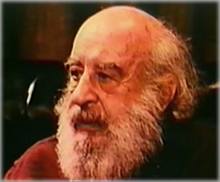
Roger Angell. Photo: The New Yorker.

Roger Angell. Photo: The New Yorker.

In his excellent article in the New Yorker about the rigors and rewards of growing old, Roger Angell, who at age 93 certainly knows something about the subject, describes what it’s like to be treated as if he is irrelevant:

“Here I am in a conversation with some trusty friends—old friends but actually not all that old: they’re in their sixties—and we’re finishing the wine and in serious converse about global warming in Nyack or Virginia Woolf the cross-dresser. There’s a pause, and I chime in with a couple of sentences. The others look at me politely, then resume the talk exactly at the point where they’ve just left it. What? Hello? Didn’t I just say something? Have I left the room? Have I experienced what neurologists call a TIA—a transient ischemic attack? I didn’t expect to take over the chat but did await a word or two of response. Not tonight, though. (Women I know say that this began to happen to them when they passed fifty.) When I mention the phenomenon to anyone around my age, I get back nods and smiles. Yes, we’re invisible. Honored, respected, even loved, but not quite worth listening to anymore. You’ve had your turn, Pops; now it’s ours.”

Over the last 80 years, the United States has improved substantially in caring for the physical needs of its elderly, so that our country ranked relatively high in a recent evaluation of the comparative well-being of older adults (we are 8th out of 91 nations). Our country also has done fairly well at reducing overt prejudice and discrimination against the elderly. As Angell points out, many older adults are honored and respected. However, that’s not the same as treating elderly persons in the way we treat other persons, for then they would receive a full hearing. I suspect that Angell’s friends aren’t aware that they have ignored his comments; they are just deaf to what he says. In a similar way, a woman I know in her 60s describes a younger acquaintance walking past her at a party without acknowledging her presence. Everyone else is greeted, but she has become invisible. (As Angell points out, women get treated as if they aren’t seen or heard at a much younger age than do men.)

The failure to notice or acknowledge the elderly seems to fit what Pope Francis wrote in his Apostolic Exhortation Evangelii Gaudium:

“We have created a ‘throw away’ culture which is now spreading. It is no longer simply about exploitation and oppression, but something new. Exclusion ultimately has to do with what it means to be a part of the society in which we live; those excluded are no longer society’s underside or its fringes or its disenfranchised – they are no longer even a part of it. The excluded are not the ‘exploited’ but the outcast, the ‘leftovers’.” Pope Francis, Evangelii Gaudium. Ch.2, I.

Henri Nouwen and Walter Gaffney (in Aging: The Fulfillment of Life) compared the plight of the aged in our society to that of the writer of Psalm 31, who laments how others react to him:

“Those who see me in the street flee from me.
I have become forgotten like one dead, out of mind.
I am like a destroyed vessel.”

At age 65, I’m still heard when I speak. For now, being male and employed is sufficient for me to stay out of the “leftover” category that Francis describes. However, I’ll inevitably become unseen and unheard if I live long enough. For now, it’s important that I deliberately look at and listen to all the older adults I encounter. Perhaps, if enough of us do that, we’ll render every older adult visible and audible. That will be a blessing to them, and to us.

Posted in Culture, Psyche, Relationships | Tagged , , , , , , , | 4 Comments

How Older Adults React to Adversity

Epictetus

Epictetus

According to Stoic philosopher Epictetus, “It’s not what happens to you, but how you react to it that matters.” Older adults may have an edge in reacting to adversity in a sanguine manner. At least that’s what a recent study of responses to heart failure suggests.

As described in this report, a research team led by Debra Moser of the University of Kentucky looked at how younger and older adults (the over/under being above age 62 vs. 62 and younger) with heart failure evaluated their quality of life. The older patients were sicker and more impaired, yet they reported less physical, psychological and social impact of their illness and had less depression and anxiety.

To better understand this finding, the researchers interviewed a small subset of participants. The younger patients were focused what they could no longer achieve. The older patients focused instead on the limitations they saw in others their age, and concentrated on what they could still do rather on what they could no longer do. Many commented that “It could be worse.”

As Ms. Moser, the lead author, put it, “older people are better able to reframe their lives.” Or, as Epictetus would have it, even serious illness matters less to our well-being than does how we react to it. Focusing on what they could still do, the older participants were grateful for being spared worse afflictions. Perhaps this is a crucial feature of the wisdom that comes with age: that we become more able to look at all of life with gratitude.

Posted in Body, Psyche | Tagged , , , , , , | Leave a comment

The Caregiving Cliff

Photo by Jonathan Zandler. Source: Wikimedia Commons

Photo by Jonathan Zandler. Source: Wikimedia Commons

The Washington Post recently had a series entitled “Caregiving: A Special Report,” exploring the many facets of caregiving in America. Some articles focus on individual stories of caregiving, while others have more to do more with the scope of the problem and social policy issues. An article by Richard Harris was intriguingly entitled “Heading Toward the Caregiving Cliff,” an allusion to the disaster that’s portended by the need for care outstripping the supply of caregivers.

It’s widely known that the ongoing increase in older adults with disabilities will require a tremendous investment in human resources. However, the elderly are not the only ones who are in need of care. None of the three cases that Harris profiled—an injured Army ranger, a teenager with autism, and a man with early-onset Alzheimer’s—were elderly. The man with Alzheimer’s has since died, but the other two are likely to require care for the rest of their lives, which in each case probably will be for decades. For each, the parents are the primary caregivers. One can imagine what these parents’ “Golden Years” will be like: faithfully caring for an adult child who will never become independent while they become increasingly frail themselves.

Harris reports that “[u]npaid family caregiving was valued at $450 billion a year by AARP’s Public Policy Institute in 2009, more than the federal and state Medicaid budgets combined.” A tremendous number of us are already providing care, and more of us will need to do so in the years to come in order to meet the needs of our family members. Whoever you are, your future is likely to include being a caregiver, being a recipient of care, or both.

Posted in caregiving | Tagged , , , , | Leave a comment

When Older Adults Think of the Dead

In a recent post about the unprocessed emotions that many older adults accumulate, I quoted a line by 93-year-old essayist Roger Angell to the effect that advanced age provides plenty of opportunities for bad news. Angell also describes his experiences with loss; in this post I’ll reflect on some of what he says on that subject.

Angell writes the following:

“We geezers carry about a bulging directory of dead husbands or wives, children, parents, lovers, brothers and sisters, dentists and shrinks, office sidekicks, summer neighbors, classmates, and bosses, all once entirely familiar to us and seen as part of the safe landscape of the day. It’s no wonder we’re a bit bent. The surprise, for me, is that the accruing weight of these departures doesn’t bury us, and that even the pain of an almost unbearable loss gives way quite quickly to something more distant but still stubbornly gleaming.”

Roger Angell. Photo: The New Yorker.

Roger Angell. Photo: The New Yorker.

I know dozens of people who have died, though, at age 65, I’m just getting started on my portfolio of the deceased. At age 88, my mother has lost many more friends, family, and aquaintences than I have. She may at this point know more dead people than living ones (my dad, who has dementia, lives in the present, so the dead are truly departed to him). Angell’s experience seems to be mom’s as well—she definitely misses some people, but she’s not buried under the accumulation of losses.

Angell indicates that someone long gone can suddenly appear in memory, often through a mental doorway opened by some sensation redolent of that person—a gesture, a tone of voice, a physical feature, an item of clothing. Names belonging to the departed come readily to mind; he notes, “I don’t go there often, but, once I start, the battalion of the dead is on duty, alertly waiting.” He then asks this question: “Why do they sustain me so, cheer me up, remind me of life? I don’t understand this.”

One answer may be that memories are animating; detailed and lifelike memories enliven the person for us. Those in the grave may be dead, but they aren’t gone. The Reminiscence Functions Scale (RFS), a questionnaire asking people why they reminisce, has a scale assessing reminiscence for the sake of “Intimacy Maintenance”—thinking about someone in order to maintain a connection with them. The idea seems to be that keeping such connections is important even if there is pain associated with the loss.

I asked my mom what she thinks about those who have died. She indicated that she thinks much more about the good times she shared with them than she does about losing them. She said that it feels good to have known them and to have been a part of their lives. She added that it helps to know that they are in a better place—she is a devout Christian, as were most people she knows who have died.

Who knew that, as we join the ranks of the old old, thinking of those we lost can cheer and sustain us rather than weighing us with sorrow? It’s one of several reasons why old age isn’t nearly as bleak as the young imagine it to be.

Posted in Death, Relationships | Tagged , , , , , , , | 2 Comments

Becoming A Practicing Psychologist: How I Now View It

This post is a follow-up to one I wrote earlier about a transition during my early 30s—leaving my budding career as a college professor to work as a clinical psychologist in the Michigan prison system. I thought of this as a midlife transition. Was it, though? If so, it was part of the Second Journey, which can be distinguished between life’s other journeys as follows: “The first segment—the First Journey—occurs during childhood and youth, and includes seeking one’s place in the world and achieving a sense of identity. At the end of the first journey, the person has entered adulthood. The Second Journey entails a change of direction somewhere midway between young adulthood and elderhood. The person typically encounters some obstacle in the path—in the words of Richard Rohr, there is some sort of falling, some failure or  disappointment. This may lead to a totally new direction, or to a different understanding of the path that one is on. The Third Journey occurs near the end of life—whether that end is sensed in youth or the fullness of years—and prepares the person for death.”

I thought that moving from teaching to clinical practice was part of the Second Journey—a change of direction between young adulthood and elderhood. At 32 years of age, I had seen myself as an adult at least since I had taken my first job, three years earlier, maybe even since I began my first internship at age 25. I changed jobs out of dissatisfaction with what I was doing before—or, more accurately, dissatisfaction with what I was not doing, namely clinical work. Doesn’t that amount to  a midlife transition, a Second Journey?

I now think I was instead completing my First Journey, though that realization didn’t come to me until I wrote last month about what had happened. As described above, the First Journey consists of finding one’s place in the world and achieving a sense of identity. I may have been an adult at age 32, but I didn’t have a good sense of where I belonged and my identity had some holes in it. I knew where I came from and knew something of my personality, but probably depended too much on outside feedback for self-definition. As to my beliefs, I held them firmly—maybe too firmly. I’ve since decided that beliefs function best if they aren’t either rigid like an oak or unattached like a tumbleweed, but more like bamboo—rooted in place but flexible, able to bend in response to the winds of new information. The immature self demands certainty, but the mature self is comfortable with both knowing and not knowing.

My proto-identity as a college prof was, as I mentioned in the previous post, chosen at least in part out of social anxiety and an associated fear that I wouldn’t be accepted as a practicing psychologist. In other words, I was not very attentive to my calling but quite attentive to my fears. I probably would have been reasonably happy in academia and my identity would have eventually rounded out, but I never would have found the degree of fulfillment I get from helping clients through difficulties. In other words, I think I have found my vocation as Frederick Buechner describes it: “Vocation is the place where our deep gladness meets the world’s deep need.” In this I completed the First Journey, finding myself and my place in the world. I subsequently acquired the suppleness of belief that I was lacking. In academia, everyone gives lip service to open-mindedness while in actuality defending their viewpoints as fiercely as a dog defends a bone. In contrast, the starting place in the clinic is openness to how the client has experienced life, and that leads to a greater openness in many respects, so that truth becomes not a dead butterfly to be pinned to a board but something fluttery and elusive: seen, not seen, then seen anew.

Here are a couple of other points about my leaving one career path for another. First, not allowing fear to influence this decision was a significant step forward for me. I’ve had fears every other time I’ve changed jobs, but, other than my first professional job, never allowed them to be the deciding factor. My first day working in the prison, I was given a tour that included climbing to the top of the cellblock containing the most dangerous prisoners besides those in lockdown. I was afraid on the walkway, with the meanest people I had ever seen strolling past, only a railing between me and a 40-foot drop to a cement floor. But I didn’t turn back, then or ever. Second, I don’t think that being a college professor was a mistake, even if I don’t like how I came to the decision. I have fond memories of my time at Spring Arbor. Perhaps it was exactly what I needed to do for a few years so that I could be prepared for the next step. Third, I was struck at the time, and am still struck, that at the prison no one had ever been hired as a part-time psychologist before me, but that a mere month or so before I applied a proposal to hire part-timers managed to survive the bureaucratic sausage-grinder. I concluded then, and still believe, that the way had been paved for me. I resonate with the sentiments that Wendell Berry gave to his character Jaber Crow (in the novel named for that character): “I can remember those early years when it seemed to be I was cut completely adrift, and times when, looking back at earlier times, it seemed I had been wandering in the dark woods of error. But now it looks to me as though I was following a path that was laid out for me, unbroken, and maybe even as straight as possible from one end to the other, and I have this feeling, which never leaves me anymore, that I have been led.” Thus it is as I look back: I feel I’ve been led, and am thankful.

State Prison of Southern Michigan, which was closed in 2007. Image from www.mlive.com

State Prison of Southern Michigan, which was closed in 2007. Image from http://www.mlive.com

Posted in Psyche, Spirit | Tagged , , , , , , , | Leave a comment

The Death of a Parent, Part 2

In a recent post I described an article by novelist Mark Slouka on the effect that his father’s death had on him. I provided a few quotes from the article, each followed by my reflections. Here are some more quotes, again accompanied by my comments.

Mark Slouka. Image from chronicle.uchicago.edu.

Mark Slouka. Image from chronicle.uchicago.edu.

“The problem, you see, is that I didn’t think he’d ever die, that his voice would ever be gone from this world. I knew it, but I didn’t, just like I know now that he’s dead—I can talk about it, can report it to the Social Security Administration, which sends its condolences—but I don’t, not really. I’m having trouble with the word “gone.” Gone where? For how long?”

Isn’t that the irrationality of grief? To both know the loved one is gone and at the same time know it can’t be so. Life seems to be solid and unending, yet at the same time it is this utterly fragile, ephemeral thing. We are caught between its permanence and its transience.

“It needs to be said: in some strange way, my father’s death has made the thought of dying easier. The door opened, and he walked through it successfully; the land of the dead is a peopled place for me now because he’s there, somewhere. And, because he’s done it, because he’s pulled this thing off, it’s become conceivable for me as well.”

None of us travels into totally uncharted territory; always, there is someone who has gone before. Could the death of a parent be at least in some cases a gift that prepares us for our last journey? Is his or her death thereby a gift?

“Six months in, the heart, the soul, the spine, begin to regenerate. Slowly. In moments of weakness, his voice saves me, which is appropriate. He was my father. Is.

“Don’t be stupid, he says. You don’t love me less by living more. Live! Live like you mean it.

“You could do worse for fatherly advice. And so I’ll take it.”

For those of us who know (or knew) our parents well, their voice never leaves us. Slouka’s father continues to give good advice! I’m convinced that both my dad and my mom will be speaking to me throughout my life, and I’m thankful for that.

I recommend Slouka’s article to anyone dealing with the loss of a parent.

Posted in Death, Relationships | Tagged , , , , | Leave a comment

Memento Mori

During Ash Wednesday services, the priest or minister makes a cross of ashes on the participant’s forehead and says, “Remember you are dust and to dust you shall return.” We begin the Lenten journey, in other words, by memento mori (Latin for “remember you will die”), a symbolic reminder of our eventual deaths.

We’re inclined to look with askance on those who think frequently of death. It wasn’t always so. The medieval memento mori tradition held that thoughts of death were beneficial to the faithful, helping them remember that life is fleeting and recognition insubstantial. Cultural artifacts that helped believers contemplate death were created. There are still chapels made of bones in several places in Europe. Paintings, mosaics, or sculptures of skulls, skeletons, or other reminders of death were sometimes displayed in churches. The following picture is of the Sedlec Ossuary in the Czech Republic, a chapel containing the bones of some 40,000 skeletons:

r_seaman@hotmail.com

A subgenre of memento mori art is vanitas painting, which typically combines symbols representing status, accomplishments, or pleasures with symbols representing death. “Vanitas” is an allusion to Ecclesiastes 1:2: “Vanity of vanities, all is vanity.” The viewer is being reminded that success and pleasure are ephemeral compared to death.

David_Bailly_Vanitas1651

The above vanitas painting is by 17th century Dutch artist David Bailly. He portrays himself as a young man holding a picture of himself in middle age (this according to art historian Heidi J. Hornik in Christian Reflection, from whom I derive my description of the work). There is a portrait of his wife as a young woman and several other pieces of art, representing his artistic accomplishments. Articles such as the flute, lute, and jewelry refer to the life enjoyed by the artistic class in Holland. Contrasted with these are reminders of mortality: the skull, the hourglass, the extinguished candle, the rolled up paper, and the dead flowers amidst the living ones.

As I age, reminders of my mortality affect me differently than they used to. I used to think Ash Wednesday was somewhat morbid, but now I accept and appreciate the imposition of ashes. I’ve gradually come to react more when I hear of someone dying, even if I didn’t know the person. I am especially affected if the person is near my age. I think more than I used to about what the moment of death was like for the person, what they thought of  their life, and how they will be remembered. I know that in asking these questions about them, I’m also asking about my eventual death.

Though the heyday of vanitas art was in the late middle ages, there are signs of a resurgence in it. Take, for example the following two pieces that were included in a show at the Grand Rapids Art Museum as a follow-up to ArtPrize 2013, a local art competition. The first, a self-portrait by Martha Hayden, juxtaposes skulls, fruit, and flowers, a combination characteristic of vanitas painting. The second is part of a series of photographs by Sara Lowthian titled “Prescription: Vanitas.”

Self Portrait, Martha Hayden

Prescription Vanitas, Skull

A few months ago I decided to contribute to the upsurge in such death-themed representations by creating my own vanitas self-portrait. I dressed in my academic regalia, mostly because the gown and hood are formal markers of status in academia. In front of me I arrayed several objects representing personal accomplishments or attachments—my diploma, some articles I had published, pictures of my children and grandchildren, and the crystal bowl I received when I retired from Methodist University. I filled the bowl with shredded paper symbolizing the eventual fate both of the thousands of progress notes I wrote during my years as a psychologist and of the hundreds of papers I have graded. I included several reminders of mortality—newspaper obituaries, fallen leaves, and a picture of the ossuary that contains the bones of 130,000 unknown soldiers who fell during the battle of Verdun. I look somber and a bit silly in the photo. I guess solemnity is a natural consequence of thinking about mortality, and maybe I look silly because our age is ironic, one in which anyone who is solemn seems clueless.

OLYMPUS DIGITAL CAMERA

In chapter 4 of his “Rules,” St. Benedict advised his followers to “keep death before one’s eyes daily.” I’m slowly moving towards such death-awareness. Walking further down that path might help me become the sort of poor-in-spirit, mournful, and meek person that Christ called blessed.

Posted in Death, Spirit | Tagged , , , , , , | Leave a comment

Unfinished Business

Fritz Perls

Fritz Perls

I recently wrote a brief article on “unfinished business” for the website at Psychology Associates of Grand Rapids, where I work part-time as a therapist.  According to psychologist Fritz Perls, our unfinished business consists of all the emotionally significant events in our lives with which we haven’t come to terms.  Here’s part of my article:

“Perls felt that, as unfinished business stacks up, it comes to block our way forward. We may become habitually depressed, anxious, angry, or hopeless without awareness of the unfinished business that’s responsible. Not realizing what is going on, we may try to escape our discomfort using strategies ranging from the relatively benign (social media, overwork, excessive exercise, sports) to the pernicious (drugs, alcohol, porn, gambling). All the time we are becoming more estranged from ourselves.”

How about unfinished business in midlife and beyond? Unfortunately, the longer we live, the more opportunities we have to collect unfinished business. This is partly just a matter of time: as decades accumulate, so, too, do disappointments, losses, failures, and frustrations. It’s like the snow in Michigan during this unending winter—a few inches a day, and after a while the ground is buried under a yard or so of the stuff. Besides this gradual accumulation, being older presents an increased risk for emotional blizzards that dump huge piles of distress on us all at once. As 93-year-old essayist Roger Angell put it recently, “I can testify that the downside of great age is the room it provides for rotten news.” Health vanishes, friends and family die, hoped-for selves evaporate, the mind becomes unreliable. After a while too much has accumulated to ever process fully.

What to do, then? Do we really need to deal with every sorrow, every hurt? People who never process past hurts often end up having to avoid so many emotional landmines that they are immobilized. On the other hand, those who are what psychologists used to call “sensitizers,” constantly thinking of their disquiet or distress, can spend their later years trying vainly to dig out from under the accumulated mounds of distress, never making their way to joy or contentment. The answer, then, may be selectivity. Process that which regularly intrudes via memory, thought, dreams, or the like, but leave the rest alone.

My article describes ways to identify and resolve our unfinished business. The article and several other useful articles pertaining to mental health can be found here.


Posted in Psyche | Tagged , , , , , , | Leave a comment

The Death of a Parent

In January, the New Yorker website had an excellent (though rather long) article by novelist Mark Slouka on the effect that his father’s death had on him. He describes himself now as “orphaned at fifty-five, nobody’s son, trying to plot my coördinates, to see my way clear.”

Mark Slouka. Image from chronicle.uchicago.edu.

Mark Slouka. Image from chronicle.uchicago.edu.

Though ten years older than Slouka, I haven’t lost either parent to death, so in that respect am different from him. I’m also different in that I view death through the hope of resurrection, a perspective that he dismisses with the comment “the angels and the harps don’t work for me” Despite our differences, I find his account of how losing his dad has affected him to be thoughtful and authentic. Here are a few quotes from the article, with my comments about each.

“He was not a person of interest; he’d pass through the mesh of the New York Times Obituary section like dust. He’d lived a long, heartbreaking, and extraordinary life, lived it, on the whole, more decently than most, and when he came to the end of it, he died. It doesn’t get more ordinary than that—the dying part, at least.

“Except that he was my father. And grief, like love, is resistant to reason. It was him and me. And now it ain’t.”

Aren’t all lives in the end ordinary lives? And, in its ordinariness, isn’t each
life exceptional? Prominent obituaries, a multitude of mourners, or eloquent
eulogies don’t in the final analysis separate one life from the next. Perhaps rather than saying that grief is resistant to reason, it is better to say that it operates according to a  reason of it’s own.

“Lacking brothers and sisters, aunts and uncles, with my mother’s memory having long ago lost any trace of me, I find myself the sole surviving owner of ten thousand names, stories, jokes, associations—that time the raccoon reached up through the knothole in the cabin floor when I was four; those Friday nights when the three of us would watch “The Man from U.N.C.L.E.”; that evening, a memorable night in 1966, when my dad, with his professorial air and his Czech accent and his horn-rims, put on my mother’s shoulder-length blond wig on a dare and went out to pick up the pizza—that mean nothing, except that they were the soil of our lives.

“What am I supposed to do with this nest of thorns?”

Mourning is memory, for we can’t mourn for what we can’t recollect. When our memories overlap with those of others; their telling recreates a larger, shared version of the person, and we are consoled. In contrast, to find oneself in possession of a storehouse packed with memories unlike what anyone else possesses is isolating. As Slouka suggests, it is also a burden. Is he somehow a chosen one, given this trove in order to honor his father as no one else could? Or is he cursed by having closetsful of meaningless trivia that he can’t discard? What, indeed, is he to do with these?

I’ll provide a few more quotes along with my comments in a later post.

Posted in Death | Tagged , , , , , , , | Leave a comment

My Life Story: Becoming a Practicing Psychologist

In a previous post about changes in midlife, I described several significant changes that I underwent. The first of these was that, at age 32, I decided that I wasn’t satisfied teaching what I hadn’t practiced, and sought part-time (later full-time) clinical work in state prisons. This post will describe how that came about.

When I went to graduate school in the clinical psychology program at Kent State University, I thought that I probably would eventually work with clients. During  my training I enjoyed the practicum and internship experiences I had, largely because I was making a difference in people’s lives. I also very much liked a different aspect of the program, namely the academic side of psychology. I was required to take coursework in several of the basic areas of psychology, and I found courses in social psychology, personality, learning, and human development particularly fascinating. A major emphasis of my undergraduate program at Calvin College had been that faith should not be isolated but instead integrated with whatever field we happened to be studying, and I discovered that psychology is a field that is ripe with opportunities for integration. I started to think that I could explore commonalities between Christianity and psychology while serving on the faculty of a Christian college.

When the time came to look for jobs, then, I had two options open to me. I could try to find a clinical job, or I could try to find a college teaching position. I ended up looking primarily for a teaching position. One practical reason for going this direction was that I hadn’t finished my dissertation yet, and lacking that credential would present more problems in a practice setting than in academia. My supervisor at the time recommended that I go the academic route. Perhaps an even bigger factor was that I wasn’t entirely confident that I could be successful as a clinician. It wasn’t so much that I couldn’t do the work as that I might not be accepted in a professional role by colleagues and the public. I still felt rather awkward in many social situations and doubted my ability to present myself as confident and capable. A college environment seemed to me a safe place to continue to work out my social anxieties. After all, I had been in school almost nonstop for over twenty years at that point, and was comfortable in the classroom.

I ended up getting a job at Spring Arbor College (now Spring Arbor University), a private college affiliated with the Free Methodist Church. The school was a good fit for me. I found a mentor in John Allen, a professor in the Psychology Department who was a few years older than I was. As I expected, the environment was conducive to thinking about issues of faith and psychology, and I published a handful of articles in that area. I was overly pedantic at first as an instructor—I’m afraid that I bored a fair number of my early students—but with time and practice I got better.

Still, I wasn’t entirely happy. As I became more effective as a college professor, I

State Prison of Southern Michigan, which was closed in 2007. Image from www.mlive.com

State Prison of Southern Michigan, which was closed in 2007. Image from http://www.mlive.com

started to regret not having developed that other possible self that had once been so prominent, the practicing clinician. I had my doctorate by then, which would make it easier to find clinical work. I started looking around for a place I could practice on a part time basis, working toward licensure. I eventually found myself in a prison! In nearby Jackson, the State Prison of Southern Michigan, a hulking old facility that was at the time the largest walled prison in the world, had twenty or so psychologists to do intake assessments, parole evaluations, and psychotherapy. The psychology staff always had openings (not many psychologists want to work with inmates), but only for full-time employees. When I contacted Robert Walsh, the head of psychological services, he had just gotten approval to divide some of his unfilled full-time openings into part-time positions. I was the first part-timer hired. I enjoyed working there so much I eventually left the college and spent the next twenty-two years in clinical work of one kind or another.

So, what do I make of this episode in my life? Where does it fit in the First, Second, and Third Journey perspective that I outlined earlier? I’ll reflect on those questions in a subsequent post.

Posted in Psyche | Tagged , , , , , , , , , | Leave a comment