Doing and Being in Elderhood

In his book What are Old People For?, Dr. Bill Thomas says: “Simple observation has led me to see life as a dynamic and unfolding interplay between the states of doing and being.” According to Thomas, doing occurs “when we come into relationship with and manipulate the visible, material world that surrounds us.” Thus, doing produces results. In contrast, being “concerns itself with things that cannot be seen.”  In particular, when we are in a state of being we are able to create and sustain relationships–for example, husband and wife, or parent and child. For Thomas, adulthood is a time of life when doing predominates over being, whereas in elderhood being predominates over doing.

I thought of Thomas’ distinction recently while reading twentieth-century Swiss physician Paul Tournier’s book The Seasons of Life. Tournier wrote the following about old age:

“The die is cast. That which I have been able to do, to learn, or to acquire is gradually losing its value.  The doing and the having are giving way to the being. What is important for the aged is not what they are still able to do, nor yet what they have accumulated and cannot take with them. It is what they are.”

I am still active in my career and am writing quite a bit, so I’ve not finished my doing. Yet I don’t put as much importance on my efforts as I used to. I recently talked with a middle-aged woman who for decades tried to do as much as she could in order to prove her worth. A year ago she was in a serious accident that not only took her out of the workplace but also left her flat on her back, requiring care from others to meet her basic needs. For the first few months, she fretted about all the things she couldn’t do. At times she felt despair. She eventually turned to prayer, no longer just in passing but as a place she settled for long periods. She began to sense God was with her, not urging her to try harder but loving her as she was. Now, she is less concerned than ever about proving her worth and is more able to enjoy the simple pleasures of just being. As I listened, I marveled that her illness, which started as a curse, has become a means of blessing.

I wonder whether my gradual, rather fitful movement from prioritizing doing to prioritizing being will take me along the same path. A wry saying sometime repeated by those who are overly busy goes, “God put me on this earth to do a certain number of things before I die. I’m so far behind that, at this rate, I’ll never die.” But little by little those things on the perpetual to-do list that we all have in our heads (some also write the list out for good measure), lose their importance. We end up realizing that our lives consist of much more than just accomplishments. I hope I live long enough into elderhood that I’ll be able to enjoy the delights of a life of diminished doing but enhanced being, a life where “to-do” has been mostly replaced by “to-be.”
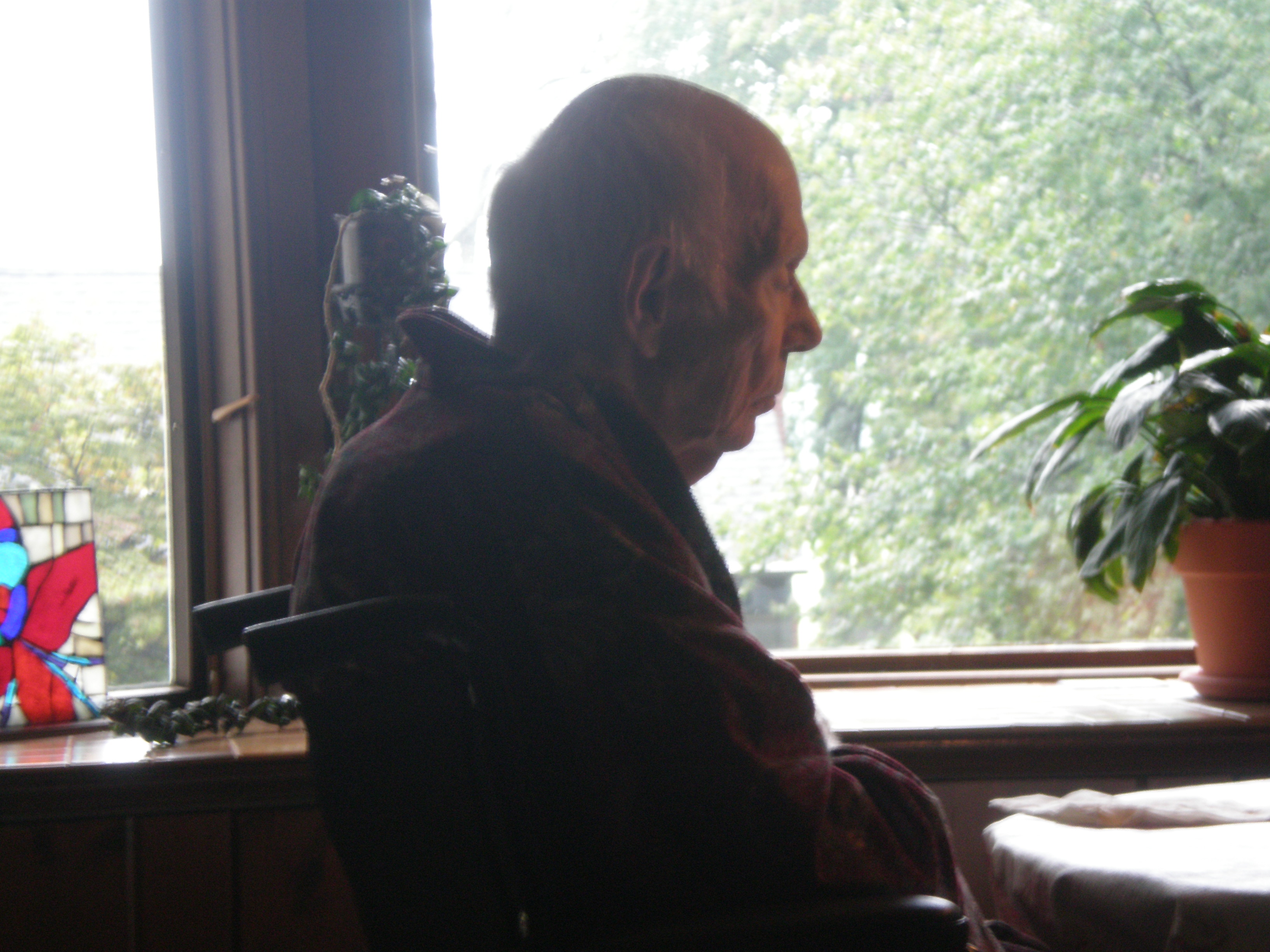
Dad in 2012, when life was almost all being, almost no doing.
Dad in 2012, when life was almost all being, almost no doing.

Posted in Psyche | Tagged , , , , , , , , | Leave a comment

Success, Then Poverty: William McPherson’s Story

I recently wrote a post that alluded to the struggles of the working poor after they reach retirement age. It’s not just the working poor that spend their last years mired in financial difficulties, though. Consider the lot of a Pulitzer-winning journalist who now is elderly and impoverished.

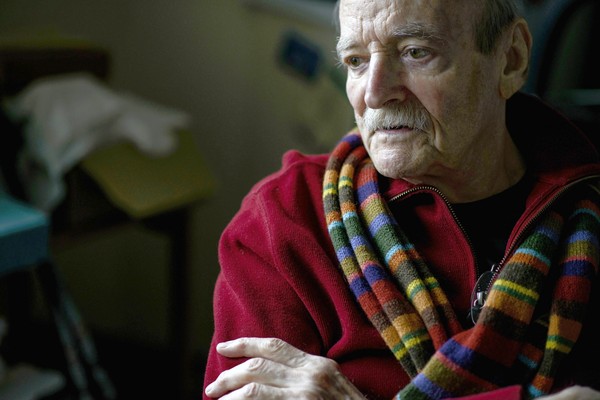
William McPherson. Image by Matt Roth, Chicago Tribune

William McPherson. Image by Matt Roth, Chicago Tribune.

William McPherson had a successful career as a journalist, working steadily for over 25 years and intermittently for another 8 years at the Washington Post, earning a Pulitzer Prize in the process. You would think that, at age 81, he would be established in a comfortable retirement. Instead, as he detailed a few months ago in an article in The Week (excerpted from the Hedgehog Review), he is penniless. He does receive a  Social Security check and a  pension from the Post, but both are quite small. In midlife, he wanted to work on projects other than those at the Post, and so took several leaves of absence. Here’s what happened then:

“As the last leave rolled on, the Post suggested I come back to work or, alternatively, the company would allow me to take an early retirement. I was 53 at the time. I chose retirement because I was under the illusion — perhaps ‘delusion’ is the more accurate word — that I could make a living as a writer, and the Post offered to keep me on its medical insurance program, which at the time was very good and very cheap.”

That was in 1986. McPherson had a retirement account and a margin account that he invested in the stock market. He also anticipated drawing a pension at age 65. He didn’t think he had to worry about money:

“I’d wanted to explore and write about Eastern Europe after the fall of the Berlin Wall, which I did for several years. It was truly a great adventure: It changed my life, and it was a lot more interesting than thinking about what it cost, which was a lot. There’d always been enough money. I assumed there always would be.”

While he was overseas, he turned his margin account over to someone else to manage, eventually losing that money. He had a major heart attack and developed COPD. He did start receiving pension payments on schedule, but inflation has eroded over half of the value of what he receives.

McPherson lives in a rent-subsidized apartment, and is able to write a little to make ends meet. Still, life uncushioned by any savings is difficult:

“If you’re poor, what might have been a minor annoyance or even a major inconvenience becomes something of a disaster. Your hard drive crashes? Who’s going to pay for the recovery of its data, not to mention the new computer? I’m not playing solitaire on this machine; the hard drive holds my work, virtually my life. It is not a luxury for me but a necessity. I need dental work. Anybody got $10,000? Dentists are not a luxury. Dental disease can make you seriously ill. Lose your cellphone? What may be a luxury to some is a necessity to me. Without that telephone and that computer, my life as I have known it would cease to exist. Not long after, so would I….. My daughter and son-in-law paid for the dental work. Sometimes, I find it deeply humiliating that I am dependent on such kindnesses when I would prefer that the kindnesses flow the other way. Most of the time, though, I am just extremely grateful for the help of family and friends.”

Many elderly adults are much worse off than McPherson. Still, his story is a reminder that professional success and years of work for a fairly generous employer don’t guarantee that one won’t wind up poor. The lesson to learn from McPherson’s story is probably not that we shouldn’t take risks, for much of what is most rewarding in life involves risk. Perhaps, though, we should be more aware of where risks lurk and careful in deciding which of these risks are worth taking.

Posted in Body, Culture | Tagged , , , , | Leave a comment

Retiring Among the Like-Minded…Or Not

Ever since switching from full time to part time employment I’ve been thinking about what constitutes a good retirement. I’m sometimes surprised by who has something to say about the issue. Jack Dickey, a 24-year-old writing for Time magazine, put together a piece last October about retirement prospects for his generation. He describes retirement lifestyles, in particular the lifestyle that had its inception in 1954 with the opening of the first Sun City development (Wikipedia gives a different opening date: January 1, 1960). Sun City is a restricted age residential community with a golf course and other recreational amenities located in Arizona. Dickey reports that older adults currently have a choice between about 50 retirement communities named after Del Webb, the developer who pioneered the Sun City concept.

Parade at Sun City. Photo credit: Time Magazine

Parade at Sun City. Photo credit: Time Magazine

Dickey toured one of these communities, Sun City Carolina Lakes, south of Charlotte, NC. After ticking off facts about the community he learned from his tour guide, Dickey suggests that the appeal to older adults is not so much the physical characteristics of Sun City as the cultural environment:

“But the social climate, more than the grounds, is what draws seniors to Sun City. In conversations with so many residents, the phrase like-minded people pops up. In exchange for surrendering lifelong friendships, the kind forged by happy accident in heterogeneous communities, seniors often seek out places where the residents act the same as them and do the same things they do. (Imagine picking a college, if college had no classes and lasted 20 years.) So the people here are mostly retired professionals, mostly friendly, mostly from the East Coast, mostly active, mostly with pensions and grandkids, mostly conservative, nearly all white.”

Dickey thinks that such a development will never appeal to millennials. He predicts his generation will dislike homogenous communities: “I can hardly fathom enjoying a life in which I interact only with people my own age, people largely just like me, with all the same cultural points of reference. Besides, I can get that free on Twitter.”

Wikipedia reports that 98.44% of residents at the original Sun City are white. That doesn’t leave much room for diversity! I fit the Sun City demographic fairly well (OK, I’m not politically conservative, so there’s one difference), but I’ll never live there. I would find a social environment where everyone is like me to be terribly drab, like eating nothing but bland, seasonless food. I want to be around people of different ages, ethnicities, and socioeconomic groups. I have some such range in my life now, especially in regards to age. In the 48 hours before writing this, I conversed with people ranging in age from their early 20s to their late 80s, with only one within five years of my age. It was great! Rather than giving this up for homogeneity, I hope for even more diversity when I’m fully retired.

Dickey also points out that the life courses of older adults are likely to diverge considerably following retirement:

“In middle age, we’re all more or less the same. Everybody works, and everybody’s unhappy. But when age 65 rolls around, our differences get magnified.

“In retirement, those who had good jobs can play tennis all day and work part-time: consulting, advising, expert-witnessing. But those who did manual labor without the protection of a pension plan will have sore backs and need full schedules, hoping for scraps of service labor to be thrown their way.”

Social Security–the U.S.  government retirement system meant to provide a financial safety net for retirees–doesn’t actually deliver the sort of security that its name implies. Though there is less outright poverty among the elderly than there used to be, there are far too many older adults living out their last years in straitened circumstances. Yet much of this near-poverty is hidden from view.  I hope that those of us who have resources to shelter us from poverty’s cold breath won’t isolate ourselves from poorer age-mates but will instead make them part of our lives. We have a lot to learn from each other.

Posted in Culture, Relationships | Tagged , , , , , , | Leave a comment

Retirement: “Do we have to do what we want to again today?”

Tournier Learn to grow oldI’ve recently been reading Learn to Grow Old, published in 1971 by Swiss physician Paul Tournier. Dr. Tournier practiced what he called the medicine of the person, an integrative approach to care of body, mind, and spirit that now would be considered a form of holistic medicine. Tournier suggested that most people are poorly equipped for retirement. He suggested that preparation for old age in general and retirement in particular start in midlife:

“In order to make a success of old age, one must begin it earlier, and not try to postpone it as long as possible. In the middle of life we must stop to think, to organize our existence with an eye to a still distant future, instead of allowing ourselves to be entirely sucked into the professional and social whirl.”

This post will consider one of the reasons Tournier thinks such preparation is needed, namely the move from a highly structured schedule to one with considerably more flexibility. We have more free time, but may not know how to allocate it. Tournier reflected as follows:

“No I am not so busy, and that is the privilege of my age. The more free time one has, however, the more difficult it is to organize it properly.”

Extra time is like discretionary income. Whether it’s money or time, when there is only enough to cover the basics, that’s where it goes. When there is extra, though, it’s not as easy to figure out what to do with it. I work only part time now, and I handle time differently than I did when I worked full-time and was a single parent, or when I worked a full-time job and another one on the side. I waste some time, but, more than outright waste, I spend time on things that have some value but not as much as I would like. For example, on Facebook, I’m not lured by videos of stupid pranks or perplexed cats (my apologies to cat video fans), but I bite more on news links than I would like to. I’m over-informed about some things that don’t matter much–not a terrible problem to have, but also not the best investment of my time.

Even if we think we know what we want to do when we step away from full-time work, we may not feel the same when the time comes. Tournier says, “A hobby may give us great pleasure when we practise it for a few hours, as a change from our work; but after retirement it may lose much of its attraction, when it is the only thing left with which to fill our lives.” He was writing at a time when most people retired to a life of leisure, and the problem of retirement was how to spend that leisure on satisfying and meaningful activities. Now, we are in an era of “active retirement,” a tilt-a-whirl of part-time work, volunteering, family responsibilities, hobbies, travel, recreation, and social engagements. Still, the problem is the same: the regimentation of the previous decades of our lives has been replaced by tremendous choice. As Tournier puts it, in retirement we are at liberty, and most of us don’t know how to handle liberty.

In their book Successful Aging, John W. Rowe and Robert Kahn compare the elderly in our society to the small child in an ultraprogressive nursery school who asked plaintively, “Do we have to do what we want to again today?” Some days it would be nice to have a little direction! On the whole, though, this is the freedom we’ve spent our lives working for, and most of us wouldn’t willingly don again the straightjacket we once wore. Nevertheless, it is a challenge to figure out how to use this extra bonus of time well.


Posted in Culture, Psyche | Tagged , , , , , | Leave a comment

Ash Wednesday: You’re Gonna Die

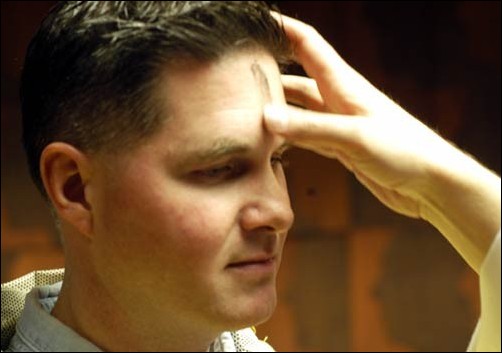
I’m writing this a few days before Ash Wednesday, the beginning of Lent in the Christian calendar. Most Ash Wednesday services give participants the opportunity to have ashes–a symbol of mortality–rubbed on their foreheads. The presiding minister says something like “Remember that you are dust, and to dust you shall return.” I remember.

Ash Wednesday (image from http://thecall.rts.edu)

Ash Wednesday (image from http://thecall.rts.edu)

I think of death more than I used to. Death is nearer to me than it used to be, and not just in the sense that each day brings me closer to that inevitability. A few years ago, I read  Ernest Becker’s The Denial of Death, with its thesis that we humans seek to evade our fear of death by engaging in immortality projects–activities as diverse as accumulating assets, going to war, running marathons, and giving endowments, all with the intent of demonstrating our vitality or extending our influence beyond the grave. Now, when I hear of such activities, I wonder whether the perpetrators are motivated by an attempt to evade thoughts of death. Death has also seemed  closer to me after my father’s passing five months ago. I’m his oldest child, and it’s just a matter of time before I follow him.

I don’t expect to die soon–though none of us knows what the future holds. It’s more that I’ve become increasingly convinced that to ignore the reality of death would result in my trying to live as an “amortal.” The term comes from a 2011 Time article that reported favorably on those who lived as if neither time nor death mattered. Katherine Mayer, the author of the article, offered the following definition:

“The defining characteristic of amortals is that they live the same way, at the same pitch, doing and consuming much the same things, from their late teens right up until death.  They rarely ask themselves if their behavior is age-appropriate, because that concept has little meaning for them.”

I wrote at the time about a previous article in which Mayer had nominated several public figures as good examples of amortality:

“Madonna and Mick Jagger seem apt nominees, since they both cavort in much the same manner they did decades ago.  Mayer also includes Simon Cowell on the basis of his Botox use, Nicholas Sarkozy for his volatile temperament, and Joan Rivers for her “oddly undatable face” and “relentless pace.”

One of these amortals has already proved mortal; the rest continue on apace. For me, though, I am content knowing that my energy is decreasing and I probably won’t accomplish as much as I used to. I won’t be acting the same way I did when I was in my teens, or even in my 40s and 50s. Irregardless, life will be good. On Ash Wednesday, I’ll welcome the ashes and remember that to dust I’ll return, grateful for the many wonderful years I’ve had thus far between my coming into and my going out of this world.

Posted in Culture, Death | Tagged , , , , , , | Leave a comment

Retirement Leisure and the Protestant Work Ethic

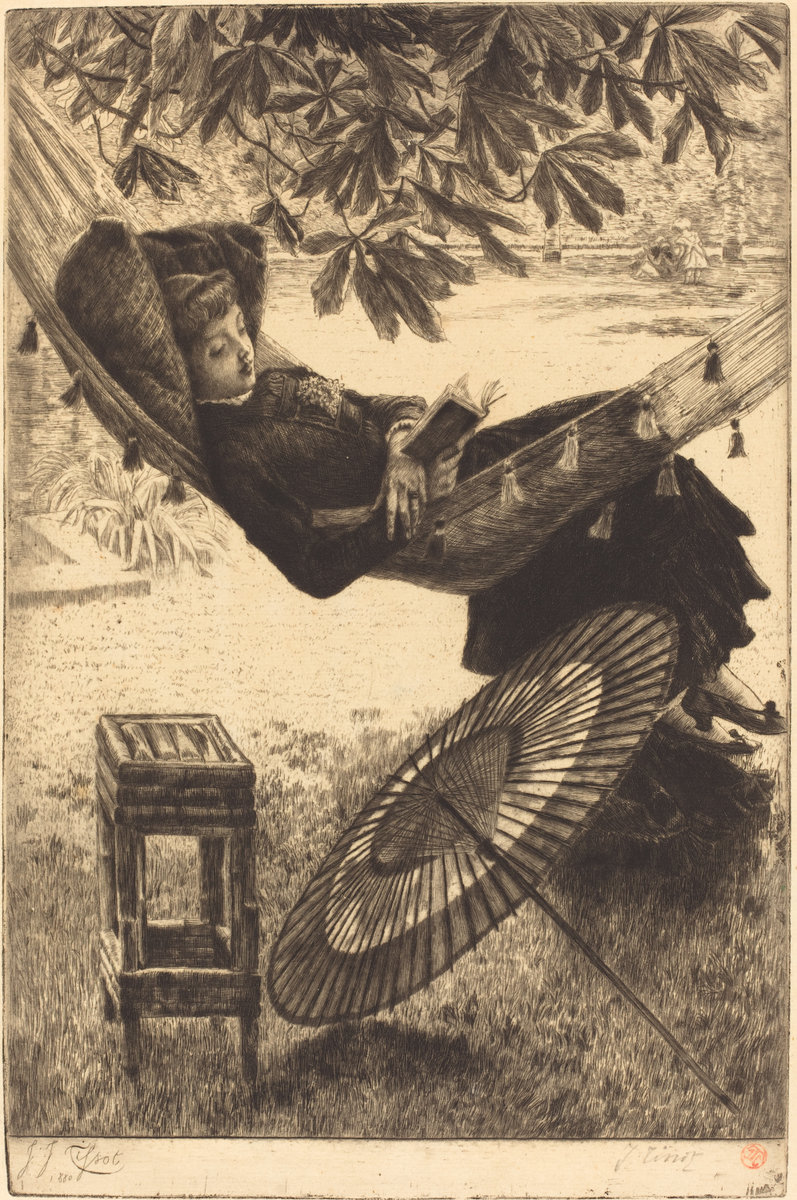
I’ve written before about retirement and the leisure ideal. I described how in the middle of the 20th century government and business in the U.S. wished to get older workers out of the workforce to make way for younger workers. Many older workers resisted. Government and business responded by providing Social Security and pensions, making retirement economically feasible. They also sought to convince older workers that they weren’t being pushed aside but were being rewarded by a life of leisure for their many years of dedicated service. This campaign worked, and by the 1960’s a retirement devoted to leisure activities was seen as ideal.

“The Hammock,” by James Jacques Joseph Tissot. Courtesy National Gallery of Art, Washington.

“The Hammock,” by James Jacques Joseph Tissot. Courtesy National Gallery of Art, Washington.

This preference for a relaxed, unstructured retirement has changed in recent years. “Active retirement” has become more popular, and the majority of workers want to spend at least some of their time working. A 2013 Merrill Lynch/Age Wave survey found that 71% of people 45 or older wanted to work in retirement, and only 29% said they never wanted to work again.

Is the change towards working in retirement a good change? Would we be happier and healthier if we exited the workplace entirely? Or is remaining in the workforce at least part time beneficial for us? Active retirement advocates such as Ken Dychtwald point out several benefits of remaining in the workplace. Dychtwald says the following:

“Research shows that people who continue to work in retirement maintain sharper minds than those who don’t work. Four out of ten retirees say that work makes retirement more enjoyable, and retirees who work are almost 40% more likely to report being in good health.”

I wonder whether, for those in the U.S., an additional factor in the desire of so many older workers to remain in the workplace is our favorable attitude toward employment. As a nation, we have longer workdays and take fewer vacations than other wealthy countries. We believe in the value of hard work. Much of this ethos is derived from What Max Weber called the Protestant Work Ethic–the Calvinist belief that the elect were to spend their time on this earth being productive, and that such hard work and austerity was a sign they were truly among God’s chosen people. The concept was secularized as it spread from believers to the broader culture, so that hard work is regarded by many as a sign of virtue without reference to one’s eternal destiny. Some commentators have wondered whether we’ve taken our work ethic too far. Here is Andrew Sullivan on the subject:

“I’m a pathologically hard worker, and for me, the American dream remains not only intact, but still inspiring. I believe in work. I don’t want the welfare state to be a cushion rather than a safety net. At the same time, it seems to me that as a culture, we have a work ethic that can be, and often is, its own false idol.”

Might we be so convinced about the value of hard work that we won’t allow ourselves to leave the workplace even in retirement? Doesn’t this work-no-matter-what mentality reduce our value as human beings to only what we can produce? Perhaps the benefit of leisure–whether in retirement or before–is that it serves as a corrective to such a diminished conception of who we are.

These thoughts remind me of another concept that affirms the value of ceasing from work, namely the notion of Sabbath rest found in Judaism and Christianity. I’d like to discuss that concept and how it compares to leisure in a future post.

Posted in Culture | Tagged , , , , | Leave a comment

The Down Side of Generativity

Dr. Sid Gilman. Photo from the New York Times

Dr. Sid Gilman. Photo from the New York Times

Last October, the New Yorker published an article about the biggest hedge fund scandal of all time. The scandal involved insider trading by billionaire hedge fund manager Steven A. Cohen and his fund, S.A.C. Capital Advisors. In 2008, a clinical trial of the drug bapineuzumab, which was thought to be a breakthrough for Alzheimer’s treatment, ended after mostly negative results. Right before unfavorable information about the drug was released, Cohen’s fund switched from a three-quarter billion dollar investment in pharmaceutical companies Elan and Wyeth, which had invested vast sums developing the drug, to a huge bet against those companies. Elan and Wyeth stock fell on the information, netting Cohen 275 million dollars. The problem was, Cohen’s firm was privy to insider information, and trading on such information is a crime.

How had the results of the drug trials leaked out? As Patrick Radden Keefe tells in the New Yorker article, the leaker turned out to be Dr. Sid Gilman, 76 years old at the time. Gilman had been the chair of the Neurology Department at the University of Michigan Medical School for many years and was privy to the details of the bapineuzumab study. Was Gilliam trying to enrich himself through the disclosure? Not at all. In fact, he never intended to leak the information.

Gilliam had come to the U of M in 1977, and had a productive career despite a personal tragedy: in 1983, the oldest of his two sons committed suicide. Whether in reaction to this loss or for some other reason, Gilman became a mentor to others. Keefe puts it like this:

“Over the years, however, Gilman became a father figure to dozens of medical residents and junior colleagues. ‘Helping younger people along—that was a constant,’ Kurt Fischbeck, a former colleague of Gilman’s who now works at the National Institutes of Health, told me. Gilman was ‘incredibly supportive’ of younger faculty, [protégé Anne] Young said. ‘He would go over grants with us, really putting an effort into it, which is something chairs rarely do’.”

In 2006, Gilman received a call from Mathew Martoma, who had recently joined S.A.C. as an analyst for healthcare stocks. Martoma requested that Gilman serve as a paid consultant, and Gilman agreed, with the understanding that he would not share any information that wasn’t publicly available. They talked often over the next few years. Gilman found Martoma to be a bright and curious young man who seemed to share the researcher’s passion for finding an Alzheimer’s cure. So, when Martoma asked for details about the bapineuzumab trial, Gilman thought it was just a matter of curiosity, not an attempt to acquire confidential information. When Martoma pressed, the results “slipped out.”

Investigators eventually uncovered all of this, and Gilman’s career ended in disgrace. Martoma fared worse; he began a nine-year prison sentence in November, 2014. Gilman testified in Martoma’s trial, and, during his last day on the stand, was asked what set Martoma apart from other investors he had dealt with. Here’s his reply:

“He was personable…. And he, unfortunately, reminded me of my first son. In his inquisitiveness. His brightness. And, sadly, my first son was very bright also, and committed suicide.”

As I wrote recently, generativity, a term coined by psychonalyst Erik Erikson, consists of creating or nurturing some project or person that will outlast oneself. Those who mentor, instruct, or encourage those who are younger or less experienced are being generative. Generativity is characteristic of well-adjusted adults in midlife and beyond, and is considered a mark of emotional maturity. Yet, as with Dr. Gilman, a desire to help others can leave one vulnerable to manipulation. I wonder how many seniors who fall for scams are simply interested in helping some nice young person who, unbeknownst to them, is actually a con artist?

As we age, it’s natural that many of us want to help those younger than us. It’s important, though, to be mindful that a small subset of those we’re interested in helping intend to take advantage of us. Be generative, but do so cautiously.

Posted in Psyche, Relationships | Tagged , , , , , | Leave a comment

Generativity

Generativity is a quality that psychoanalyst Erik Erikson associated with a healthy middle adulthood. Erikson thought that around midlife it is common to develop an interest in doing something that will outlast oneself. Earlier in adulthood, most of us focus on personal achievement, whether this takes the form of a successful career, a good income, or intimacy with a significant other. Usually around midlife, though, many of us move from being primarily concerned about self-advancement to being as much or more concerned about the future welfare of our descendents, students, or younger colleagues. George Vaillant director of the Harvard Developmental Study, wrote that generativity “involves the demonstration of a clear capacity to unselfishly guide the next generation. Generativity reflects the capacity to give the self—finally completed through mastery of the first three tasks of adult development—away.” (Aging Well, p. 47)

George Vaillant

George Vaillant

Vaillant says that “when generativity is attempted before its appointed time it may fail.” By this he didn’t mean that no one younger than 40 should try to teach or assist others, just that younger adults should be thinking about their own growth more than the growth of others. In particular, he found that many women in his study had given of themselves too fully in early adulthood and thus didn’t develop the internal strength to be able to later extend themselves to others out of care and compassion rather than out of obligation and guilt.

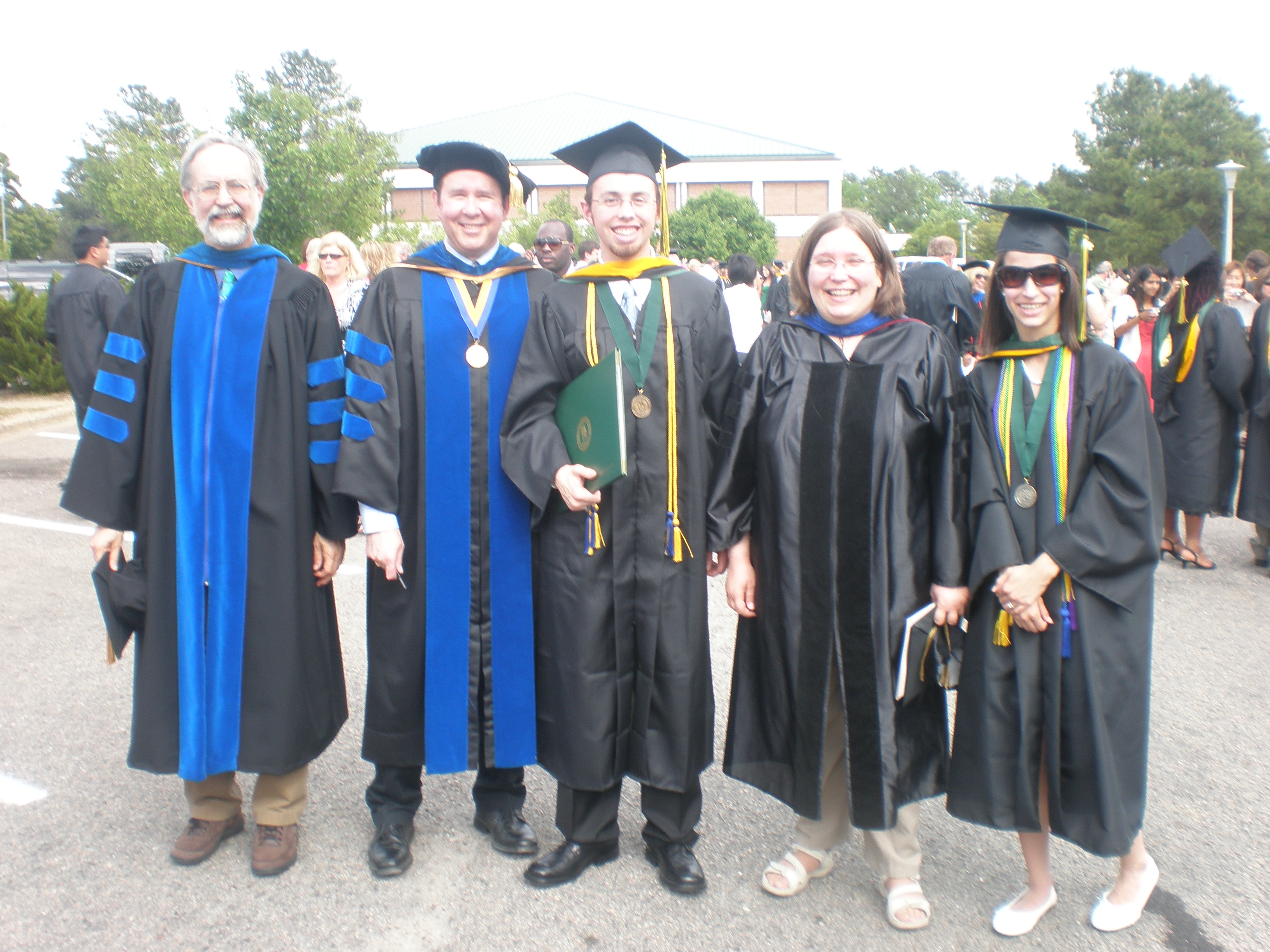
Though, as a psychologist, I have been in a caregiving profession most of my working life, I was generative only as a parent, not in my job, during my 20s, 30s, or early 40s. That started to change as I approached 50. I was working as a psychotherapist at a large multidisciplinary clinic, and was regarded as a successful mid-career professional. Gradually, I noticed that my internal sense of satisfaction with my career started to change. I knew I was doing a good job with clients, but simultaneously I became constantly aware that I was playing a role–the role of the caring, wise therapist. Eventually, this role-playing started to seem absurd. Looking back, I think I was starting to realize that I wouldn’t be satisfied just coasting along for the next 15 or 20 years until it was time to retire. What could I do to banish this odd self-consciousness and again be fully engaged in what I was doing? I decided that my work would be more meaningful if I could teach something of what I had learned during the course of my career to college or university students. Thus, I was interested in generativity.

I revised my resume and started looking for jobs. It was incredibly hard to find a suitable academic position—college psychology departments are mainly interested in hiring young, recently trained psychologists, not middle-aged folks who only have experience and maybe a little bit of accumulated wisdom to recommend them. Still, at age 53 I was hired as a professor at a small college near where I lived. For the next 11 years, I had a wonderful time introducing scores of young people to the field of psychology and working closely with a smaller number of advanced students who wanted to become counselors, therapists, or psychologists themselves. I’m pleased that some of my former students are now themselves helping others using the skills I helped them develop.

My College Prof Days--With Graduating Psych Majors and Psych Faculty, 2009

My College Prof Days–With Graduating Psych Majors and Psych Faculty, 2009

Though Vaillant thought we are best suited to become generative in midlife, some people develop this focus earlier, and others do so only in late adulthood. Is generativity just a passing phase? Not at all. Once it attains importance for us, generativity is not likely to be something to do for a while and be done with. I’m no longer teaching, but it’s becoming more, not less, important to me that I assist those younger than me. I see continued generativity in many people older than me, those in their 70s and 80s. I hope that, when I reach that stage of life, I’ll still have opportunities to guide and encourage my grandchildren and other young people who are trying to make their way in the world.

Posted in Psyche, Relationships | Tagged , , , , , | Leave a comment

Adaptation at the Movies

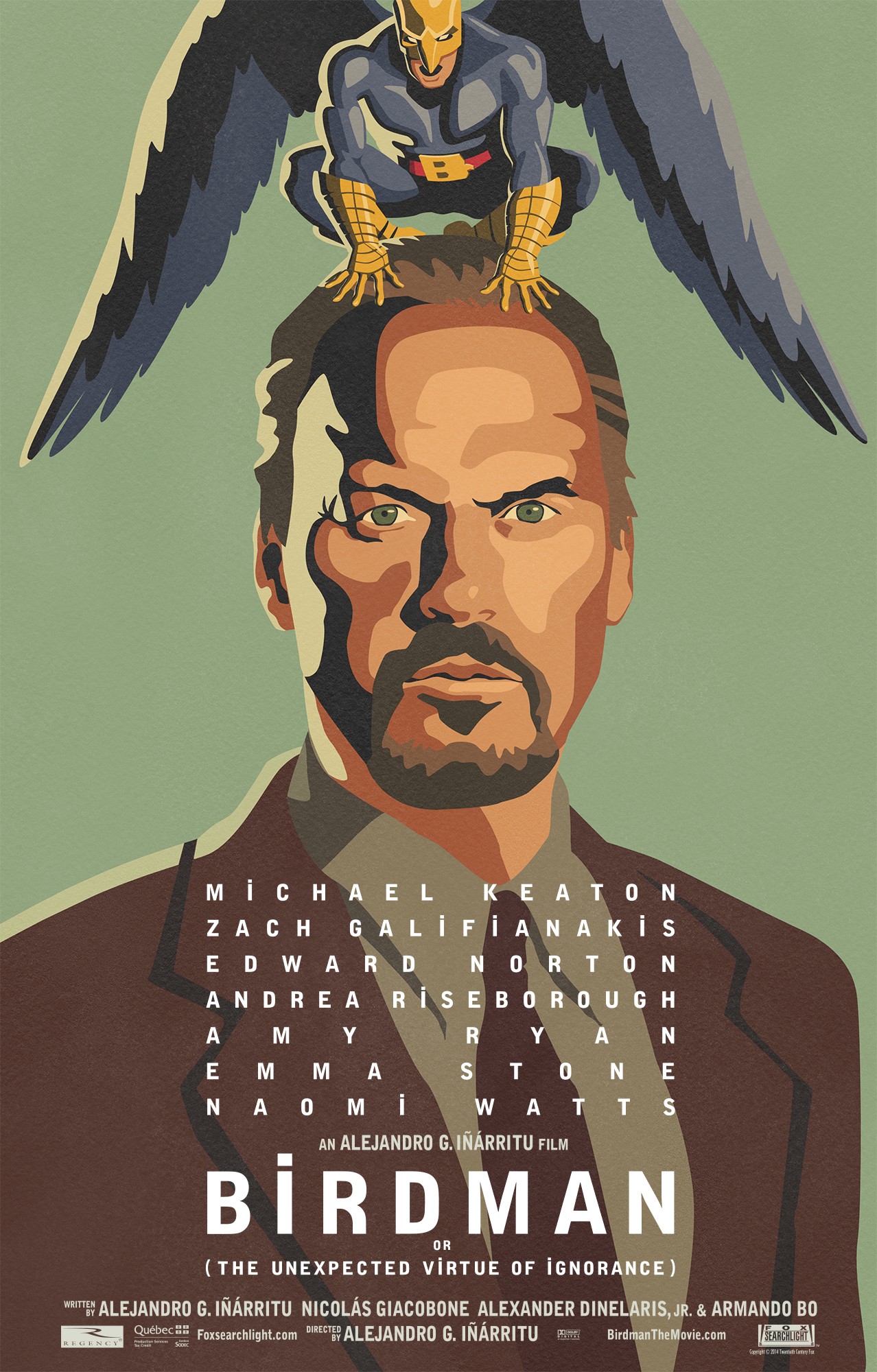
BirdmanPoster

I recently wrote a reflection on Birdman, the Michael Keaton film about an actor who played a superhero in the ’90s and now is trying to resurrect his career by staging a play. I described the “Birdman” voice that only Riggan, Keaton’s character, could hear–telling him that he was better than others, and asserting that those around him were scheming to deprive him of the recognition he deserved. In other words, the voice was megalomaniacal and paranoid. I am going to write here about Riggan from the perspective of this blog; in other words, I’m going to look at how he is handling aging.

We don’t know how old Riggan is, but he is definitely past midlife. His former celebrity as a movie superhero was twenty years earlier. Keaton himself is 63, and he looks it. Midlife is a time of reappraisal, of examining our accomplishments to that point with a critical eye. Pretty much all of us are forced to conclude that neither we nor our accomplishments are exceptional. This diminishes or deflates the ego. Midlife is also a time of realizing that our lives are about half over. Our eventual deaths become more salient. As I described it a few months ago, “When we then think of those accomplishments in light of our eventual deaths and the centuries afterwards, during which all we did will be forgotten, our little stack of successes seems even punier. Eventually, all we can do is acknowledge that we will never be what we dreamed of being ”

What if we have a primitive style of adaptation that doesn’t allow us to see any of us about ourselves, though? What if we use the psychotic defenses of paranoia, hallucination, and megalomania? What, in other words, if we are like Riggan? Then we can’t come to terms with our limitations and with the prospect of our eventual death. We’ll be driven to assert our greatness, even if we have to live in a fantasy world in which we alone are supreme. This is what his inner voice does for Riggan; whenever he suffers a setback–a performance goes badly, another cast member receives more attention than him, or a theater critic threatens to eviscerate his play–there is Birdman, assuring Riggan that he is great and all of these hassles are beneath him.

Adapting by way of megalomania also insulates one from having to contemplate mortality. Birdman assures Riggan that he can go back to his superhero role, as if the years since he left that phase of life don’t matter and he is still young. The problem with this way of coping is that mortality has a way of slicing through even the thickest defenses. Riggan describes to his ex-wife riding in a plane that was shaking violently. He feared that it would go down, but, even more, feared that, when his daughter opened the Times the next day, his picture wouldn’t be on the front page. He then adds, “Farrah Fawcett died on exactly the same day as Michael Jackson.” In other words, not only does Riggan fear dying, he fears that something more important than his demise would have occurred that day, and he would be denied being immortalized in print. There’s an underlying terror of insignificance here. The problem with primitive defenses is that what’s behind them hasn’t been tempered by gradual exposure to reality, so, once the defenses are breached, what remains is brittle and weak.

During the course of the film, Riggan doesn’t grow: he doesn’t become more accepting of his limitations or able to acknowledge he isn’t as important as he wishes he were. The same happens to us if we use extreme strategies to avoid realizing that we haven’t succeeded as we had hoped and that age is diminishing our capacities. How much better it is to adapt as does another character in the film, Lesley. Lesley is played by Naomi Watts, who is 46, so she is also in midlife. She tells Riggan that it was always her hope to be a Broadway actress. She is thankful that she had the chance, and will be glad to have been in the play even if it is cancelled after opening night. I hope that I look at life more like Lesley than like Riggan. I’m glad for the opportunities to do what I did. Regardless of how I’m remembered after I’m gone, I’m grateful for all the grace I received.

The movie’s epigraph is the following quote from Raymond Carver:

“And did you get what you wanted from this life, even so?”

“I did.”

“And what did you want?”

To call myself beloved, to feel myself beloved on the earth.”

It doesn’t seem that Riggan’s defenses would ever permit him to feel beloved. Famous, maybe, or relevant or memorable, but not beloved. Lesley, on the other hand, has a chance of calling herself beloved. That, too, is what I hope that at the end of life I will be able to call myself.

Posted in Psyche | Tagged , , , , , , | Leave a comment

Dad, Descartes, and Dementia

My dad’s dementia worsened over the course of several years. It was quite disturbing to see his memory loss, confusion, difficulty expressing himself, and inability to perform even simple tasks. The changes in him raised questions for me, questions which I wrote about as follows a year and a half ago:

“So is he even the same man as the one who raised me? I started to think of his life as being over. I wondered why God hasn’t taken him. I even wondered about his faith. Is he still capable of believing in God? How can he think about what is true, noble, right, pure, lovely, or admirable (Phil. 4:8) if he can hardly think at all?”

I did come up with answers to these questions, and submitted a short piece describing some of those answers to The Banner, a magazine published by the Christian Reformed Church in North America. They accepted my article and published it in their December issue. You can find the online version of the article here. When I thought carefully about what it means to be human, I realized that dad was still fully human and remained so all the way to the end of his life. I hope others who have friends or relatives with dementia will find some encouragement in what I’ve written.

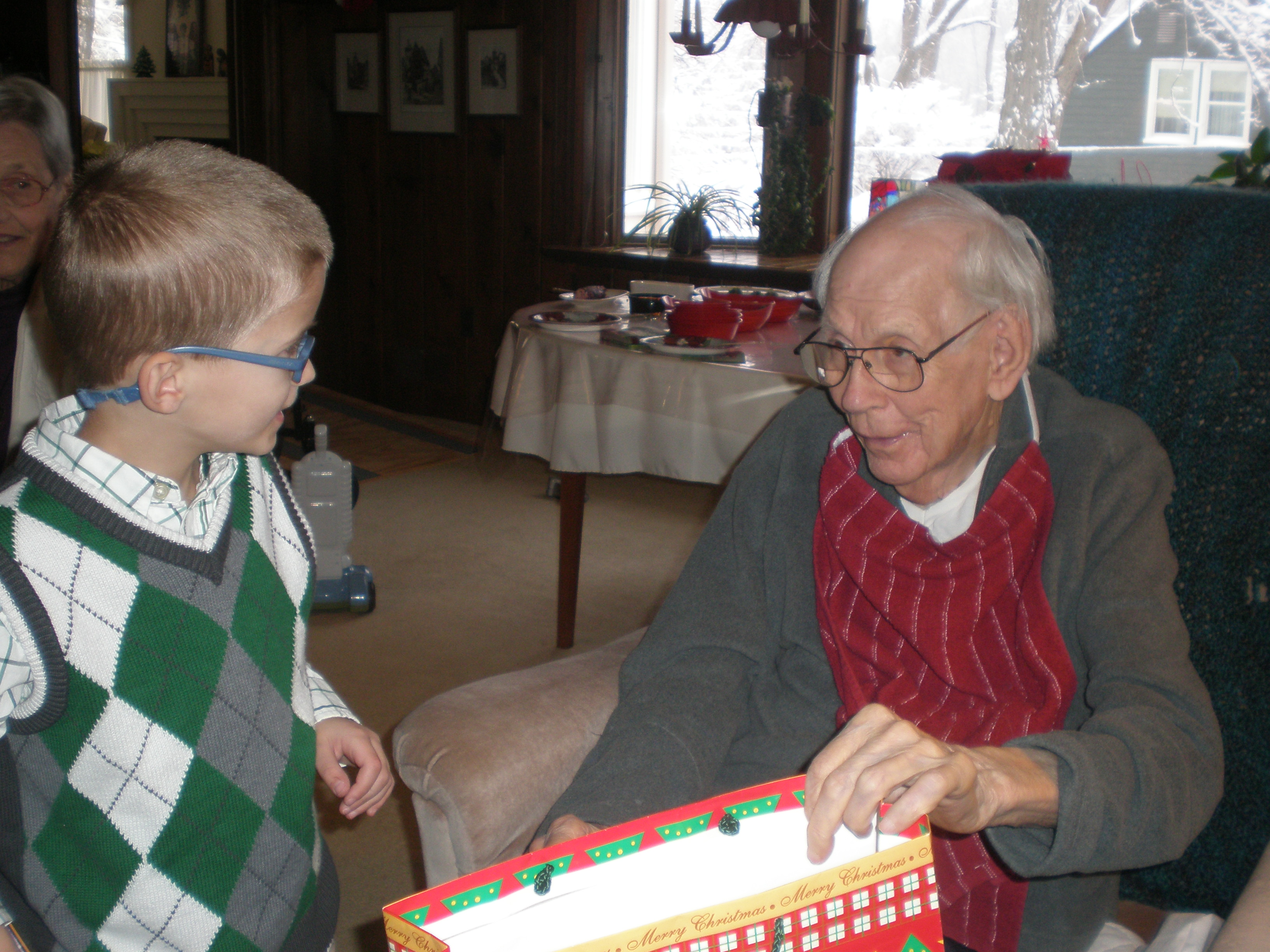
Dad With His Great-Grandson Theo, Christmas, 2013

Dad With His Great-Grandson Theo, Christmas, 2013

Posted in Psyche, Spirit | Tagged , , , , | 2 Comments