On Not Starting School

Methodist

The school year has started, but not for me; I’m entering my second year of retirement from Methodist University.  Last fall, the transition from full-time employment was eased for me since I taught an online class.  This fall I’m not responsible to teach anything to anyone.  It’s odd for school to get underway without me being there.  The experience is like standing on a railway platform watching a train pull out of the station; my ticket says that I’m to take a different train, but it still seems that it’s a big mistake to not be on board.

The problem is not that I want to be on the train. In fact, I’m glad to be free of the obligations to teach, grade papers, attend committee meetings, advise students and the like.  Neither do I have difficulty filling the time that I previously devoted to my job.  Between helping my parents, writing, and maintaining a clinical practice in two states, I have plenty to do.  Rather, my issue is that teaching is tied to my sense of who I am.  I’m a college prof, so what am I doing away from the classroom this time of year?

I recently talked to someone about my age who taught for 30 years—much longer than I did—and retired seven years ago.   She found the first year to be very difficult; the impulse to start preparing for the school year was incredibly strong.   Now, though, she gives little thought to the start of school, and, when she does, she is relieved not to be there.  She said this about what she missed: “I think the hardest thing about retiring was the relationships.  After all those years at that one school, I was no longer a part of it.  Things went on without me almost as if I had never been there.”

As was the case with her, in an instant I went from being part of an intricate and absorbing web of relationships to being an outsider.  When I go back to the university and walk the halls, like I did last week, I paradoxically feel both that I am a part of that place and a stranger to it.  I know most of the faculty members and we share a history, yet I didn’t go through last year with them, and am not going through what they are going through now.  I still have good relationships with many of my former colleagues, but I’m no longer part of their social system.


Source: Thompson Information Services

Source: Thompson Information Services


Workplaces are in some ways like families, but not in how they handle loss of a member.  Someone who leaves a family via death, divorce, or other means leaves behind an empty space that is not soon, if ever, filled, but someone leaving a workplace has barely left their seat before someone else has taken it.  Families grieve, but workplaces don’t, which makes families more a place of human community than workplaces can ever be.

Posted in Culture, Psyche, Relationships | Tagged , , , , , , , | Leave a comment

Gray Divorce

Relationships are as important in the second half of life as in the first half.  Unfortunately, relationships in mid- and late-life are not immune to struggle and even failure.  One recent phenomenon is an increase in divorces among middle aged and elderly couples.  I recently talked about what have been termed “Gray Divorces” with Dr. Peter Everts of Psychology Associates, the practice where I also work.  Peter is a clinical psychologist, having earned a Ph.D. from Fuller Seminary Graduate School of Psychology.  He has more than 30 years of experience with emphasis on issues related to marriage, to divorce and to trauma.  Here is what Dr. Everts had to say: 

Bob: Could you tell me about the part of your practice that has to do with divorce?

Peter Everts

Peter Everts

Peter: As my career has evolved, one of my specialties has been working with divorcing and post-divorce couples that have problems communicating as co-parents with kids.  In 2002, I took a training in divorce mediation.  So in the past decade I’ve had some opportunity to help couples who wish not to go to court to work out differences using mediation.  I also was trained in 2007 as a collaborative divorce professional.  The two roles that are associated with that training are a divorce coach and a child specialist.  Couples who choose Collaborative Divorce say from the beginning that they will make agreements about how to separate assets and to develop a parenting time plan if they have minor children without going to court.  The process employs attorneys, mental health professionals, and sometimes financial specialists assisting the family.  l’ve also been a trainer in collaborative divorce, and have been involved in doing assessments for the court. Thus, divorce has become a specialty for me.

What have you observed regarding divorce with older adults?

What’s been interesting to me is that, though the divorce rate in our country has evened out, there has been some slight decrease in the divorce rate for younger age people.  There have been some sociological reasons for this such as it being more acceptable to live together and people marrying later.  What’s fascinating is that if you compare the average length of a marriage today with the average length of a marriage back in the 19th century when the average life expectancy was about 45, it’s about the same.  The average length of a first marriage is still about seven to eight years.  It’s about the same stats, but for different reasons.  Currently, the age range where there is an increase in the divorce rate is over 50.

Denise Tamir

Denise Tamir

I’m going to quote here from a mediator named Denise Tamir.  Her article is on the website mediate.com.  She states, “Sadly, the divorce rate among couples over 50 has skyrocketed from less than 1 in 10 in 1990 to 1 in 4 today.”   She also adds that two-thirds of the time it’s the wife who asks for the divorce.  She’s using research by Susan Brown, the co-director the National Center for Family and Marriage Research at Bowling Green State University who is author of a book called The Gray Divorce Revolution. 

That’s a big change in divorce rates.  What seems to be responsible?

Denise Tamir points out there is less stigma about divorce.  Another factor is the entrance of women into the workplace several decades ago.  As women become more financially independent, they feel less trapped in a marriage.  Women can now support themselves and choose to do so when they are unhappy in a marriage.  Also, people are living longer.  When a woman realizes that she is unhappy say in her 50s, she contemplates three or more decades of unhappiness with her spouse.

In recent years older adults have become more likely to enter therapy.  It is sort of a parallel phenomenon.  In both cases, people are saying, “I have quite a few more years left and I don’t want to be miserable.”

Susan Brown

Susan Brown

Exactly.  Tamir quotes Susan Brown as saying that in the 1950s and 60s, marriage was role-oriented. As long as partners fulfilled their roles, the marriage was considered successful.  Now, personal happiness is much more valued than fulfilling a role.  So today couples focus on fulfillment rather than roles, and are often more concerned with what they get out of the marriage rather than what they put in.  It’s more about “What’s my level of satisfaction” rather than “Did I do my job.”  A lot of women are saying, “I’m not happy.”

Typically we think of the Boomer generation as more interested in fulfillment whereas previous generations were focused on roles. 

I think that’s a big part of it.  Another factor that Susan Brown mentions is the complex marital histories of the spouses.  Most couples who divorce in their 50s are on their second divorce.  Having been married before statistically doubles the risk that the second marriage will also end in divorce.  We know that the risk of divorce increases with each additional time you are married.  If your second marriage is failing and you don’t have kids in common, whatever bond you have with the other spouse’s children isn’t as much an inhibitor of divorce.  And if you haven’t been successful at solving the more complicated issues of loyalties and bonds and attachments in a second marriage and are unhappy in it, I can see why those in their 50s and beyond may be more susceptible to divorce.  Tamir goes on to state that couples in their 50s who have already gone through a divorce typically choose to more quietly divorce. They typically don’t go to court, look to solve their differences, and try to come to a sort of kitchen-table agreement about how to put an end to their marriage.  They’ve gone through the divorce wars earlier on and have seen the damaging consequences of too much fighting. So clinically I don’t see these couples, because they are saying, “OK, the second marriage failed, we don’t need to run by all these professionals, we kind of get what has to happen here.  Let’s not make this a bloody divorce.”

So in essence, they’ve got more wisdom now, and they apply that to divorce.

Right.  This isn’t their first time around.  That may explain why I haven’t seen many of these second marriages that have failed.  I mostly deal with first-timers.  Clinicians working with couples all know that one factor contributing to divorce is the empty nest syndrome.  When all the kids are out of the house, if there isn’t a firm friendship foundation based on having nurtured the relationship through the years, there is often a crisis and sometimes a divorce.  That typically happens in the 40s or 50s, depending on when you started your family.  Having children serves as a focus for why couples stay together.

The empty nest is one time when there can be a crisis.  Retirement is another one.

I recently attended a workshop on the unique features of older couples who divorce.  One case study we discussed was a couple who were coming to the end of their marriage.  She was a teacher who was nearing the end of her career and he had become disabled earlier.  It was a situation where each of them had sufficient income to live separately.  Some of the attorneys who were present pointed out that one of the problems that often occurs with a divorcing older couple is that, however you divide the assets, there isn’t a whole lot of time to gain back what you lost.  Being near the end of your life and on a limited income, one question is, “How will each of us make it?”

It certainly is more expensive to establish separate households again.

Right.  Another issue is the effect on the children.  I think the better literature says that divorce is difficult for children no matter what their ages.  When an older couple divorces, they typically don’t have dependent children.  But often there are children and grandchildren who will be impacted by this divorce decision.  It has profound ramifications for this family system.  Now what are you going to do about holidays, vacation times, and inviting grandma and grandpa to baptisms and christenings and school events?  All those things have to be negotiated.  You don’t just have minor children, you also have relationships with adult children and their children.  It makes life complicated.

I would think that another issue with older couples divorcing is the loss involved.  When younger people divorce, there’s often a prospect of replacing the lost relationship.  When the divorce occurs later in life, that might not be as feasible.

When you’re divorcing in early life or mid-life, you have the chance of developing another history, another story.  If you divorce later in life, even if you have 15 or 20 years left, there’s a natural transition, an adjustment to loss, but then how do you form new histories? It’s hard to do that.  It’s not totally up to the divorcing couple.  It’s also how other people respond to the divorce.

Thanks so much for your insights.

Posted in Culture, Relationships | Tagged , , , , , , | Leave a comment

Social Media Might Reduce Discomfort with Death

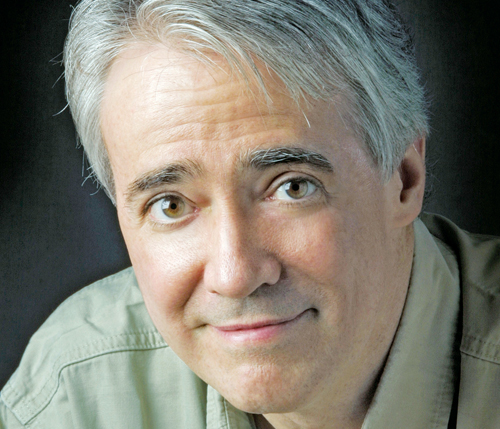
Scott Simon

Scott Simon

NPR host Scott Simon recently attracted considerable attention when he turned what many consider a private event into a public one.  As he sat with his mother while she was dying, Simon tweeted about her last days to his 1.3 million followers.  As a recent Atlantic article by Paul Bisceglio pointed out, Simon’s openness about what was taking place runs counter to a century-long tendency in the U.S. towards avoiding public discussions of dying.

As a culture, we have become quite uncomfortable with death, as evidenced by the awkward attempts to provide consolation that occur during the visiting hours at funeral homes. Is “At least he didn’t suffer long” insensitive to the family’s desire to have him as long as possible?  If I say “She’s in a better place,” don’t I seem to be claiming special knowledge of the afterlife?  Paradoxically, our efforts to be sensitive to the distress of family members often result in insensitive or insincere condolences.  Our discomfort is often sensed by the bereaved and adds to their distress. As Meghan O’Rourke noted in a 2010 New Yorker article, “Many mourners experience grief as a kind of isolation—one that is exacerbated by the fact that one’s peers, neighbors, and co-workers may not really want to know how you are. We’ve adopted a sort of ‘ask, don’t tell’ policy.”

Our reticence about death and dying contrasts with the way that most cultures deal with the topic.    As O’Rourke noted, in many locales public rituals such as communal wailing, washing the body, and special clothes for the bereaved make death a community event.  In the US, though, we’ve tended to interiorize the reaction to a loved one’s death—we favor private grief over public mourning.  Even funeral services, ostensibly the place for public mourning, have tended to become  celebrations of the person’s life instead of an acknowledgement of the suffering engendered by his or her death.

Perhaps our discomfort with death is a result of not having much of a script of what to do when it enters the room.  A well-established public ritual would provide welcome guidance. For such rituals to develop, we need to be more open about death and dying.  We originally lost our first-hand familiarity with death when it left the home to take up residence in the hospital or nursing home, specialized institutions for dying.  As with Scott Simon’s tweets and blogs such as An Only Child’s Journey into Parent Care, what takes place in such institutions is now becoming more accessible.  Social media seems to be reacquainting us with death, and in the process freeing us from a century of discomfort in its presence.

Posted in Culture, Death | Tagged , , , , , , , , | 2 Comments

Who Is Art For?

This Friday, August 23, Square Inch Community Church, which I attend, will sponsor Inchfest, a music and art festival.  Judging from photos of the crowd at last year’s festival, no more than 10% of those in attendance were middle age or older.  Why don’t more of us midpoint-and-beyond adults show up for such events?  Have we lost interest in creative endeavors?  Have we become indifferent to the art and music being made by others?  I don’t think so!  In fact, the arts remain important for many of us, as I point out in the piece I wrote for Inchfest, reproduced below.  I’ll be at Inchfest this year, and hope there will be more gray hairs in the crowd than the ones I bring! 

Inchfest 2012

Inchfest 2012

As a teenager, you learn a few chords on the guitar and start a band in your basement.  Or maybe in college you take a photography class and carry a camera around for a while, shooting pictures of whatever catches your eye.  Of course you give up your artistic interests when you get a job.  Life is just too busy for art.  The only time you will ever do anything artistic again is when you’re in the nursing home and the activities director has you stringing beads or cutting pictures out of magazines and pasting them in a scrapbook.  Art is only for the young, right?

Wrong.  That’s what New York Times writer Judy Greene learned when she interviewed several middle-aged or elderly adults who left their careers to pursue some form of artistic endeavor.  She introduces her readers to:

  • Bud Tower, a stockbroker who began writing songs in his spare time, then at age 51 moved to Nashville to write full-time. His songs have been recorded by Hank Williams, Jr. and Lynyrd Skynyrd.
  • Judy Greenberg, who studied art in college but left it to work as a representative for children’s clothing manufacturers.  After the death of her son, she returned to art, quitting her job at age 65 to make collages combining painting and printmaking.
  • James Hime, a lawyer who in his mid-40s left his position with a New York firm to become a mystery writer.  So far he has had three books published.
  • Ed Gillow, who decided after 27 years of working as an engineer and consultant that he would rather be an actor.  He started as an extra on TV shows and subsequently moved to speaking roles.

Art released these talented individuals from the prison of workplace drudgery to roam broad vistas of exploration and invention.  But what about those of us who are too old, frail, or worn down by life to launch a second career?  Aren’t those in their 70s, 80s, and 90s past the point where it makes sense to pick up a paintbrush or spin a potter’s wheel?

John Huskey, president of a company that builds apartments for seniors, used to think that way.  As described by NPR, Huskey laughed when a colleague suggested that he entice new residents to a slow-to-fill development by offering a writing class.  He reluctantly went ahead with the class only to find that seniors flocked to it.  He subsequently developed two senior artist colonies featuring theatre companies, painting and sculpture studios, and high-quality instruction.  Even residents with no prior artistic experience are finding fulfillment through the arts.

No, art isn’t just for the young—or for the middle-aged or the old.  Art is for life.

Posted in Culture, Psyche | Tagged , , , , , , , | 1 Comment

Deep Time

Do we experience time differently when we are elderly?  We all sense time passing more quickly as we age, but in what other ways is time different? 

Richard Rohr, in his book Falling Upward: A Spirituality for the Two Halves of Life says that those who have “fallen upward” by giving up ego strivings and thereby achieving a new simplicity are more prone to live in “deep time.”  He explains this as follows: “In deep time, everybody matters and has his or her influence, and is even somehow ‘present’ and not just past.”  Deep time erases the barriers that the years erect between us: “Once a person moves to deep time, he or she is utterly one with the whole communion of saints and sinners, past and future.”

I don’t live in deep time in the sort of total way that Rohr describes.  I do think I’ve tasted from that dish more often as the years have passed, though.  One such occasion occurred when I first visited Europe in 1999.  I was 51 at the time, and so was well into midlife.  Visiting the battlefield at Waterloo, I imagined not only the battle but the bodies that must have covered the land afterwards.  I thought of parents, wives, and girlfriends who anxiously awaited news, and the thousands of messages that confirmed their worst fears.  I thought of the battlefield being visited through the following decades by grieving family members, with their flow gradually ebbing through the years, until at last there were no more visitors who were paying homage to someone they had known personally, just us tourists, gawking casually at the scene as if we were passers-by at the site of an accident.  All this came to me at once, and I felt as if the battle and its aftermath were not separated from me at all.  I entered the past again a few days later when I stood before the ossuary at Verdun, which contains the remains of 200,000 unidentified WWI soldiers.

The Memorial at Waterloo

The Memorial at Waterloo

The Ossuary at Verdun

The Ossuary at Verdun

I have had more frequent (though not as powerful) visits to deep time in the past year.  Last summer, I came back to Grand Rapids, Michigan, the city where I grew up, to help my elderly parents.   As I drive around town, I pass by places that I remember from the fifties and sixties—the school where I attended kindergarten, the house where my great-grandfather lived, the building that used to house my dad’s business.  Such places evoke memories.  I enter deep time when the memories of these places are more real to me than my present experience of them.  What is now the Westsider Café is to me still Zoot Hardware, with a room in the back where I could go to look at the toy trains and model kits.  It seems as if, somewhere in my parent’s basement, I must still have a ‘54 Chevy model that I bought there and carefully constructed, as well as a model of that modern marvel, the USS Enterprise aircraft carrier.

My sense of deep time also connects me to events that actually antedated my own memories.  As a high school freshman, I attended classes in the Mad (i.e. Madison) building, a stunning but decrepit Victorian edifice where my grandmother had gone to school fifty years earlier.  The building was closed the next year and torn down a few years after that, but it is still very real to me, with the memory connecting me not just to my adolescence but my grandmother as a young woman.  Similarly, there is a building on West Leonard Street that for me is forever connected to the store my great-grandfather ran there and to his success as a local businessman (alas, the family’s good fortune didn’t survive the Great Depression).

In various other ways, time seems to separate me from the past less than it used to.  Since becoming a grandparent, I also feel less separated from the future.  I think of my three grandchildren inhabiting a world I’ll never see, and that makes the mid-21st century more real to me.  Perhaps I’ll enter into deep time more and more as I age.

Some older adults with dementia mistake a visitor for a long-deceased relative or think that their child is actually a parent.  They certainly are confused, but I wonder if another way of thinking about their perceptions is that they are living in deep time.  Ordinarily, we experience the present as more real than the past, but many with dementia no longer experience that gradation of time.  Perhaps for them time slopes the other way—the present is harder to reach than the past.  I appreciate the value of living in deep time, but I hope not to go that deep!

One other thought about deep time: Jesus told the authorities, with whom he was having a dispute, “Before Abraham was, I am.”  The common interpretation of this, supported by the context, is that he was making a claim about his divinity.  I wonder if he was also saying that he lived in deep time?

Posted in Psyche, Spirit | Tagged , , , , , , , | 5 Comments

Preparing for an Aging Population

A recent USA Today article by Sharon Jayson considers whether the country is prepared for the tremendous increase in the number of seniors that will occur in the next few decades.  Not surprisingly, Jayson concludes:  “Despite some pockets of progress, demographers and aging experts say the USA is ‘hugely behind’ in readying for the onslaught of aging adults, fueled by the 76.4 million-member Baby Boom generation.” USA Today suggests there are five areas where preparations should focus: health care, housing, transportation, keeping seniors productive and engaged, and caregiving.

Jayson cites demographer William Frey’s assertion that “Baby Boomers are driving the move to stay in their hometowns — and homes — rather than flocking to traditional retirement meccas such as Arizona and Florida, as many of their grandparents and parents did.” Given the increasing numbers of older adults who plan to age in place, cities throughout the country will have to take the lead in providing increased services to seniors.  Given the strained finances of so many cities, it will be quite a challenge to fund such services.  Still, some cities are actively working to create the needed resources.  Jayson provides Austin, Texas as an exemplar for that process.

Austin, Texas, a city that is actively preparing to meet the needs of seniors.  Image: Wikimedia Commons

Austin, Texas, a city that is actively preparing to meet the needs of seniors. Image: Wikimedia Commons

The article briefly describes problems related to each of the five areas USA Today identified as important.  There isn’t much I found surprising in the recitation of needs in these areas, except for some statistics pertaining to caregiving.  According to a recent Pew Research Center survey, in 2012 39% of adults in the US served as a family caregiver for an older adult, up from 30% in 2010.  That’s quite an increase.  Almost 2 in 5 adults are providing care to an elderly relative or friend!  There’s more to come; as the article notes, longer life spans mean that the numbers of Americans age 85 and older will increase substantially.  Many of these “oldest old” members of society will be frail and in need of assistance.  The Pew survey found that almost half of adults expect to provide care for an older adult at some point.  We who now serve as caregivers are already legion, and many more will join us in the years to come.

Posted in caregiving, Resources | Tagged , , , , , | 2 Comments

“I Wish I Didn’t Work So Hard”

Earlier I described the list of top regrets of the dying compiled by former hospice caregiver Bronnie Ware.  In that post I considered the first such regret, namely that many dying people wish they had lived a life true to themselves rather than a life that others wanted them to live.  This post is about Ware’s second regret, namely “I wish I didn’t work so hard.”  Ms. Ware reports that all her male patients had this regret.  Though the complaint was less common among her female patients, many hadn’t worked full-time.  I wonder whether later generations of women will, like the men, eventually rue the amount of time devoted to their jobs.

Why do adults work so much?  Is it about the money?  I’ve worked roughly 50 hours a week for most of my adult life, and, if asked why I worked so much, I usually would have answered in terms of money.  “I have a growing family to support,” I would have said; later, was “I’ve got to pay my kid’s tuition bills,” and, still later, “I need to save for retirement.”   I did manage to provide reasonably well for my family and now have more saved for retirement than the average person reaching the end of their working years (but not so much that I regret having focused too exclusively on saving).

Methodist University--Where I spent the last 10 years working hard.

Methodist University–Where I spent the last 10 years working hard.

We work too much for reasons other than money, of course—we even desire money for reasons other than what it can buy.  Ted Turner claimed, “Life is a game. Money is how we keep score.”    For millions, the workplace is a playing field on which they can prove themselves.  Even if their efforts are benign—trying to exceed one’s personal goals rather than trying to defeat or humiliate rivals—the very fact that work is a venue for personal accomplishment can result in too much fondness for the workplace.  We call those for whom such fondness becomes extreme “workaholics.”  The implication is that work has become an addiction, an attempt to quench a craving that can never be sated.

There are other non-financial reasons to work a lot besides trying to prove oneself or being a workaholic.  Some people find their work highly enjoyable and prefer being there to anywhere else.  Some feel an all-consuming calling to some particular endeavor; in the most extreme cases, this calling inhabits them to such a degree that that they give up all semblance of having a life apart from work.  Did Mother Teresa keep any aspect of her life separate from her mission to help the poor?  It seems not, yet I doubt that at the end of her life she would have told a hospice nurse that she regretted having worked so hard.

Sample Budget for McDonalds Workers.  Image: theatlantic.com

Sample Budget for McDonalds Workers. Image: theatlantic.com

My reflections in the last two paragraphs pertain mostly to employment in middle class occupations.  For some, working constantly is not about saving for the future or seeking to prove oneself, but about immediate necessity.  A recent article in The Atlantic notes that advice provided to McDonalds employees on financial management assumes that, in order to meet basic living expenses, a minimum wage employee would need to work two full-time or nearly full-time jobs.  Unfortunately, about half of newly created jobs in the U.S. are low-paying positions.  It’s not difficult to imagine these low-wage workers nearing the end of life and realizing that, out of necessity, they had worked constantly.  Will they experience regret, or will they just feel cheated?

As for me, I used to wonder whether I would eventually regret working as hard as I did, but I don’t wonder that any more.  When I realized my parents would need assistance, I resigned from my full-time job and now work less than half of what I used to.  I had wanted to work a while longer to bolster my retirement savings, but decided that my parents’ needs were more important.  (I wrote in more detail about the decision here.)  I did work long hours for lots of years, but putting my parents ahead of my job did help me resolve my doubts about my motives for working as hard as I did.  I’m content with the choices I made.

Posted in Culture, Psyche | Tagged , , , , , , | 2 Comments

“It’s Never Too Late to Turn to a Life of Crime”

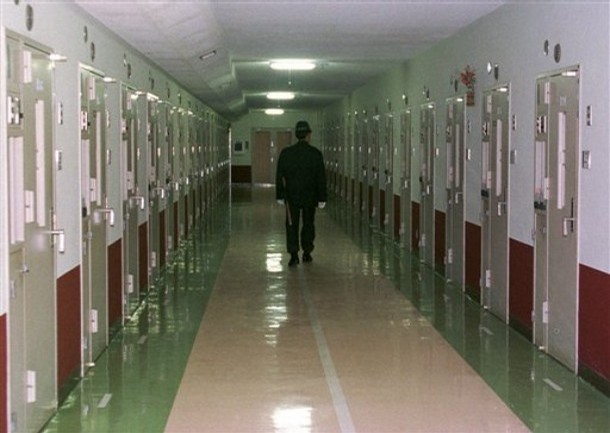
The above observation comes from a report in Bloomberg Businessweek about a petty crime spree among Japanese senior citizens.  Crime by those over 65 doubled over the last decade, even though the total crime in Japan declined by 17%.  According to Yoshiaki Nohara and Andy Sharp, authors of the article, shoplifting accounted for 59% of crimes committed by elderly offenders.  Shoplifters in Japan are now more likely to be older than 65 than in the 14-to-19-year old age group that we usually associate with such crimes.

Why the surge in senior pilferage?  Businessweek attributes the crime wave to cuts in benefits received by the elderly.  The country’s national debt is soaring, and Prime Minister Shinzō Abe plans further cuts to welfare spending, so if anything financial pressures on seniors will increase.  It doesn’t help that an additional 4.5 million people will join the ranks of retirees during the next 10 years.

Not all the seniors who shoplift are in financial straits, though.  Yuji Ozaki, a security officer at Zenkoku Security Guard in Tokyo, suggests that the traditional support system is breaking down and the elderly are cut off from society.  He says, “In the old days, someone used to talk to them when they shopped downtown. But now they only have big stores nearby, and nobody talks to them. I think they get kind of frustrated and do it when they lose interaction with the neighborhood.”  In other words, many of the older adults are isolated from others and yearning for interaction.  There’s always some way of getting reconnected with society, though, even if it involves pocketing some rice balls or sake.

Japanese Prison.  Image from tokyo5.wordpress.com

Japanese Prison. Image from tokyo5.wordpress.com

Japan is the first swelling of the grey tsunami that worldwide is expected to add over 1.2 billion people over age 60 by midcentury.  According to the World Bank, 24% of the population of Japan is 65 or older, compared to 17% of the population of France, 14% in the U.S., and 3 % in Kenya.  Pretty much all first-world countries are expected to face significant social strains due to aging populations.  Let’s hope that doesn’t include a worldwide proliferation of grey-haired criminals!

Posted in Culture | Tagged , , , , , , | Leave a comment

Spirituality for Life’s Second Half

A book that I’ve been reflecting on since reading it a few months ago is  Falling Upward: A Spirituality for the Two Halves of Life by Richard Rohr.  We humans think about and experience spiritual realities differently as we mature, and Rohr offers a valuable perspective on the changes that occur.  In this post, I’ll describe Rohr’s take on spiritual maturation in late life.

Falling UpwardAccording to Rohr, the task of the first half of life is to build a container.  Rohr seems to be referring here to what psychodynamic theorists call the ego—a sense of self, a collection of competencies, defense mechanisms, relational skills, and the like. Having such structures helps us meet the concerns of early adulthood, which Rohr lists as “success, security, and containment.”

Rohr holds that the task of the second half of life is “to find the actual contents that this container was meant to deliver.”  I initially thought that Rohr was referring to Carl Jung’s theory of individuation, and there certainly are similarities.  Jung thought that the polarities—contrasting elements—of our inner reality develop unevenly in the first half of life because we emphasize one pole while denying or suppressing the other pole.  Later in life we achieve more rounded development, i.e. we individuate.  More specifically, we develop the neglected aspects of our psyches and explore the shadow, that aspect of ourselves that we initially disown.  It seems that Rohr agrees with all of this, but sees the process as spiritual as well as intrapsychic.  He takes Moses at the burning bush as a metaphor for the experience of God in late life; genuine encounter with God involves a burning which consumes that which is insubstantial, the false self.  For Rohr, the container constructed in early life is later filled with this burning presence of the divine.

Not everyone matures from the self-oriented preoccupations of early adulthood into an elderhood characterised by wider concerns.   To make the transition, there must be some sor of loss, some “necessary suffering.”  As Rohr puts it,  “The supposed achievements of the first half of life have to fall apart and show themselves to be wanting in some way, or we will not move further.”   Even then, only those who have built a sturdy container in the first half of life—who have learned well the lessons their society has to offer and have developed good ego strength—are not destroyed by such falling but are transformed by it.

Rohr, like Jung, thinks that this process of transformation is portrayed in myths and fairy tales.  He follows Joseph Campbell in seeing the monomyth of the hero (or heroine) as  symbolically portraying the movement between the two halves of life.  I was particularly intrigued by some of the characteristics that Rohr finds in second-half spirituality:

  • The experience of God in the second half of life is a form of homecoming.  Our yearning for home is satisfied by discovering God’s Spirit abiding in us.
  • Second-half spirituality is an escape from the prison of the false self and a discovery of the true self
  • Having found his or her true self, the person lives beyond the bounds of time and space; he or she enters a boundless realm where communion with others transcends temporospacial divides.
  • The person is self-accepting, with no further need to prove anything either to others or to themselves.
  • “You come to expect various forms of halfheartedness, deceit, vanity, or illusions from yourself.  But now you see through them, which destroys most of their game and power.”

This is definitely not a how-to book; there are few practical suggestions.  Instead, it is a catalogue of the features of mature spirituality and a description of how they come about.  Rohr’s writing tends to be allusive and vague; I often wished for concrete examples or exact definitions.  Nonetheless, Rohr’s broad points are clear.  I do recognize some of the features of second-half spirituality in myself—or, more precisely, I recognize some movement towards those characteristics.  I’m more self-accepting and seem to have fewer illusions about myself, for example.  I may never experience the full flowering of such qualities.   To the extent that I’m self-accepting, though, I won’t judge myself over lack of progress along that path.  Que será, será.

Posted in Psyche, Resources, Spirit | Tagged , , , , , , , | Leave a comment

When Caregiver Guilt is Excessive

In an earlier post I wrote about guilt felt by caregivers.  I noted that feelings of guilt are appropriate when they result from having done harm or failing to meet one’s responsibilities.  In many cases, though, feelings of guilt aren’t connected to an actual offense, or are much stronger than the offense warrants.  In my psychology practice, I’ve often dealt with clients tormented by such feelings.  This post discusses some of the reasons that people who take care of others have disproportionate feelings of guilt.

Excessive guilt when caring for others can be the result of thoughts or feelings that are different from what the caregiver thinks they should have.  Thus, a client who had been abused by her father regularly visited him years later when he was in a nursing home but  didn’t feel any warmth toward him.  She commented, “It’s pretty terrible that I don’t have more feelings for my own father.”  It was difficult for her to recognize that it was her father’s past behavior, not any deficiency on her part, that had quenched her affection.  Similarly, some grown children feel guilty for still having anger at a parent, sibling, or mate who years before had harmed them.

Excessive guilt can come from a childhood of being held responsible for the welfare of others.  A friend’s mother had been chronically depressed and blamed her children for her misery.  My friend took this to heart; throughout life, whenever anyone she knows is suffering in any way, she has felt guilt, thinking, “If I was more helpful to them they wouldn’t feel so bad.”

The friend mentioned above also shows another tendency that guilt-prone caregivers have–an exaggerated idea of how much difference they can make in someone else’s life.  After a lifetime of trying and failing to fix the lives of those around them, clients typically feel relief when they realize that making others happy is not within their power.

Another idea that can lead to excessive guilt is that it is wrong to laugh, enjoy oneself, or even to have time to oneself if someone else is suffering.  One client refuses to go on vacation while her brother, who has no family but her, suffers from a disabling medical condition that is likely to last years.  “It’s wrong to go and have fun when life is so difficult for him,” she reasons.  It’s even possible to feel guilt over having received benefits while caring for another, as did this mom who realizes that she experienced gains as well as losses during the sickness and death of her son.

Guilt is closely related to self-blame, and self-blame often comes from the strong drive we have to make sense of events, to find an explanation for why they occurred.   Often, the suffering, struggle, or disability of the one who needs care is so profound that we yearn to find someone or something to hold accountable. This urge to blame often takes an inward turn; many caregivers put themselves high on the list of suspected culprits.  Thus, in a letter she wrote to herself, a blogger who calls herself “Mrboosmum” struggled to understand her son’s premature birth and brain damage.   She wrote “It’s not your fault,” but at the same time acknowledged that in part she still thinks she’s to blame.

Another reason for excessive guilt is that many caregivers are caught between conflicting demands.  This is the essence of being in the “sandwich generation,” having responsibilities towards both growing children and aging parents, often along with work responsibilities and other time commitments.  There is no way to do it all, and the caregiver focuses on what doesn’t get done while ignoring what has been accomplished.  Such guilt stems from thinking that one should be able to do the impossible.

Painting by Mark Bowers/Ann Nathan Gallery

Painting by Mark Bowers/Ann Nathan Gallery

So there are myriad ways in which guilt, a helpful emotion when channeled to legitimate duties and commitments, can overflow its banks and flood the psyche with toxic, unrealistic dictates.  As a therapist, I have asked literally hundreds of clients drowning in guilt to reflect on whether their expectations for themselves were realistic and healthy.  Often, the question that helped the most was, “Would you hold someone else to the same standard that you’re holding yourself to?”  In many cases, this process of exploration resulted either in the realization that there was no reason at all to feel guilty or in the reduction of guilt to a much-diminished and well-bounded sense of having fallen short, with this sense usually then leading to appropriate remedial actions.  I encourage all caregivers burdened by feelings of guilt to talk to a pastor, therapist, or wise friend who can help them assess the legitimacy of their feelings.

Posted in caregiving, Psyche | Tagged , , , | Leave a comment