If We No Longer Retire, What Will We Do When We Get Old?

I’ve been writing about retirement and leisure.  First, I considered the fact that the majority of older workers don’t have the money to permit them to totally leave the workforce.  I then looked at the history of retirement, discovering that it is a relatively recent phenomenon spurred by industrialization and was embraced only when initially reluctant potential retirees were persuaded that a life of leisure was a reward for years of hard work.  I also looked at the concept of leisure, finding that the life of leisure pursued by late-20th Century Westerners is dissimilar from earlier forms of leisure such as the Greek ideal of leisure or the conspicuous leisure of aristocrats described by Veblen. I haven’t yet considered the question of whether leisure the best way to spend the last decades of life.  Should we work to provide such a life for as many of us as possible, or isn’t the life of leisure worth fighting for?

Leisure means time free from work or other responsibilities; as such, there isn’t much objectionable about it, though it is possible to object to how it is used.  I could free myself from work so that I would have plenty of time to write hate-filled rants; such a life of leisure would have little to recommend it.  I could instead do something admirable with my free time, such as feeding the hungry, or I could do something fairly neutral in terms of its effect on human well-being—playing tennis or taking up ballroom dancing, let’s say.  Leisure thus doesn’t seem to be inherently good or bad; its value depends on how it is used.

No longer what we aspire to do in retirement? Image from www.comingunmoored.com/2009

No longer what we aspire to do in retirement? Image from http://www.comingunmoored.com/2009

When it comes to those of us who have reached retirement age, leisure is being used in ways that seem less leisurely.  I’ve already referred to the tendency for older workers to stay in the workplace at least part-time instead of devoting themselves fully to a life of leisure.  Another trend is that leisure among older adults is changing away from the pursuit of pleasure to the pursuit of significance.  Rather than escaping to segregated, entertainment-oriented communities for the elderly, older adults are looking for ways of remaining meaningfully engaged with and actively contributing to others.

Take for example a recent article in the Huffington Post titled “Four Rewarding Alternatives to Retirement.”  The four alternatives—volunteering with the Peace Corps, serving as a fellow with a non-profit agency, teaching English abroad, and starting a business—all are framed as combining personal satisfaction with contributing to the public good.   Not only are those nearing retirement age interested in remaining actively engaged, but younger generations of workers seem to have the same preference.  Recently I asked a group of young adults (I’m pretty sure that they all were between 20 and 40 years old) what they thought about retirement.  The response was pretty well summed up by the comment of a recent college graduate: “Well, I’m always going to want to be doing something.” 

So, if just about everybody plans to keep on doing something productive or meaningful, should we still call what we do “retirement”?  The Free Online Dictionary defines “retire” as “to withdraw, as for rest or seclusion.”  (Going to bed and withdrawing from an occupation are the second and third definitions, respectively.)  Most of us older adults don’t plan to withdraw for rest or seclusion, and many of us don’t even plan to completely leave our occupations.  (We presumably will still retire to bed.)  Our language no longer matches our practice.  Let me close, then, with the question: what should we call the change in activities that many older adults make after years or decades of full-time work in a particular occupation? If “retirement” is a misnomer, what term is a better fit?

Posted in Culture, Psyche | Tagged , , , , , , , , | 2 Comments

Meeting Our Parents, Again

Jan Wilberg, blogging at Red’s Wrap, wrote a beautiful post recently in which she imagines traveling back in time and meeting her parents before they became her parents. She then performs a sort of time travel by reflecting on a few photos of her father taken when he was a young man. In response to the picture of him that I’ve reproduced below, she wrote:

Roy in Red's Wrap“When I knew him, my father didn’t turn his collar up like he has it in this picture. By the time I showed up, he had left his debonair self on the dresser forever; I never knew it was there until I saw this picture a few years after he died. I’ll tell you, seeing the photos explained a lot to me about why my mother fell for him and why her family was so wary. Right around this time, he was playing his horn in dance bands to make extra money. Can’t you see him in a dance hall, the ladies all over him? I sure can.”

She goes on to muse about the benefits of knowing who our parents were back then:

“It could change so much about our relationships with our parents if we could have even a sliver of a clue about the people they were before they were in charge, when they had only themselves to worry about, when they thought they could do anything.”

Such travel back to know our parents before they donned the respectable yet confining roles of family patriarchs and matriarchs is a way of freeing them. It grants them independence, something I’ve previously suggested is necessary if we are to attain our own independence from them. That young supply sergeant coming home from the war, taking a few business college courses so that he could get a job and have the wherewithal to marry his high school sweetheart; or that woman barely out of her teens who had sent him letters and waited eagerly for his return—do I need to concern myself with gaining their approval for how I conduct my life, or judging what they did with theirs? Thankfully, no; nor do I need to have such concerns towards the elders they became.

Posted in Psyche, Relationships | Tagged , , , , | Leave a comment

The History of Retirement

In an earlier post, I discussed the failure of most workers in the US to save for retirement, with the result that many will continue working longer than the previous generation of older adults.  To put this change regarding the timing of retirement in perspective, this post will discuss the history of retirement and of the associated notion that the last decades of one’s life should be devoted to leisure.

Before the mid-nineteenth century, everyone continued to work as long as they were able.  However, as described in a multi-page post at the website The Next Hill, lifelong employment became problematic when the economies of Western nations changed from agrarian to industrial in the late 1800s. The issue was that elderly workers weren’t fast or strong enough to keep the machines running at maximum efficiency.  Societal attitudes towards the elderly became more negative, and factory owners increasingly relied on mandatory retirement rules to rid themselves of older workers.  The elderly seldom wanted to leave the workplace, but most had little choice.  Retirement wasn’t sought after; it was imposed.

The massive unemployment of the Great Depression accelerated the progression of negative attitudes toward older workers.  Such workers were viewed as filling slots that otherwise could go to the young and able-bodied.  The federal government offered Social Security as an inducement to get these workers to retire.  Older workers were needed again during World War II, but, following its conclusion, the pressure was again on such workers to step aside and make way for the young.  To this end, government, labor, and business worked to reframe retirement.  It was presented not as a punishment for getting old, but as a reward for years of faithful service.  Gradually, older workers developed more favorable attitudes toward retirement, eventually culminating in the view that retirement constituted “the Golden Years,” a time of leisure.  Business sweetened the financial inducements for retirement; by 1975, over 55% of private sector employees had private pension plans available to them. The prospect was of ever-earlier retirement and, with longer lifespans, decades of leisure after exiting the workforce.

It hasn’t worked out that way, at least in part because businesses, seeking to grow ever more efficient and burdened with pension obligations, decided to cut or eliminate pensions.  Thus, the average age of retirement, which decreased over the course of many decades, is now increasing.  The accompanying chart comes from a Gallup poll asking retired Americans the age at which they retired.  The average age reported went from 57 in 1991 to 61 in 2013.  Since the question was asked of all retirees, including those who retired decades ago, it’s reasonable to suspect that the average age at which workers are currently retiring is even higher.  When nonretired workers are asked when they expect to retire, 37% say they don’t plan to do so until after age 65.  Ten years ago, only 22% expected to delay retirement that long; in 1995, only 14% expected to do so.

gallup--retirement age

The question that remains is, once having accepted the idea that the last decades of life should be a time of diminished responsibility and of leisure, will workers continue to long for that increasingly elusive ideal?  Will they instead make a virtue of necessity and return to the view that predated the leisure ideal, namely that it’s desirable to work as long as possible?  Or will middle-aged workers find some way to combine these views?  I will post some thoughts on the leisure ideal on my other blog,Life Assays.

Posted in Culture, Psyche | Tagged , , , , , , | Leave a comment

In the Middle of the Night…

Brian Loging, blogging as “The Wannabe Saint,” wrote recently about waking up with Billy Joel’s song “In the Middle of the Night” running through his head. As he listened to and thought about the song throughout the day, he realized it was related to feelings of discouragement stemming from a lack of direction. He concluded that we often don’t know where we are going but have to keep walking in the dark, looking. Good point. I’d just add that we humans have two types of vision receptors in our eyes, named rods and cones. Cones are responsible for color vision, vision in bright lighting, vision when we are looking directly at something. When we feel lost, we desire that sort of vision, in which we see clearly and know exactly what is going on. Rods are responsible for vision in dimly lit conditions, especially in the periphery of the visual field. They see only black, white, and shades of gray. Often, the only answer we get to our seeking is what we see dimly, in the near dark, out of the corner of the eye, the sort of vision that only rods provide. We aren’t even sure that we saw anything. Faith is knowing that such sightings are just as real as what we see in the noontime brightness.

Posted in Spirit | Tagged , , , | Leave a comment

Reinvention or Renewal

I read quite a few blog posts having to do with older adulthood.  Several months ago, I started noticing that, among posts giving advice about how to age successfully, one frequent theme was self-reinvention.  Such advice is often given to those faced with unwanted changes—the loss of a job, the end of a relationship, the toll time levies on appearance.  We don’t have to put up with such diminishments, we’re told.  We can re-invent ourselves, melting down who we were and pouring ourselves into whatever mold we choose.  Thus freed from former troubles, the “new me” can go on to do bigger and better things.

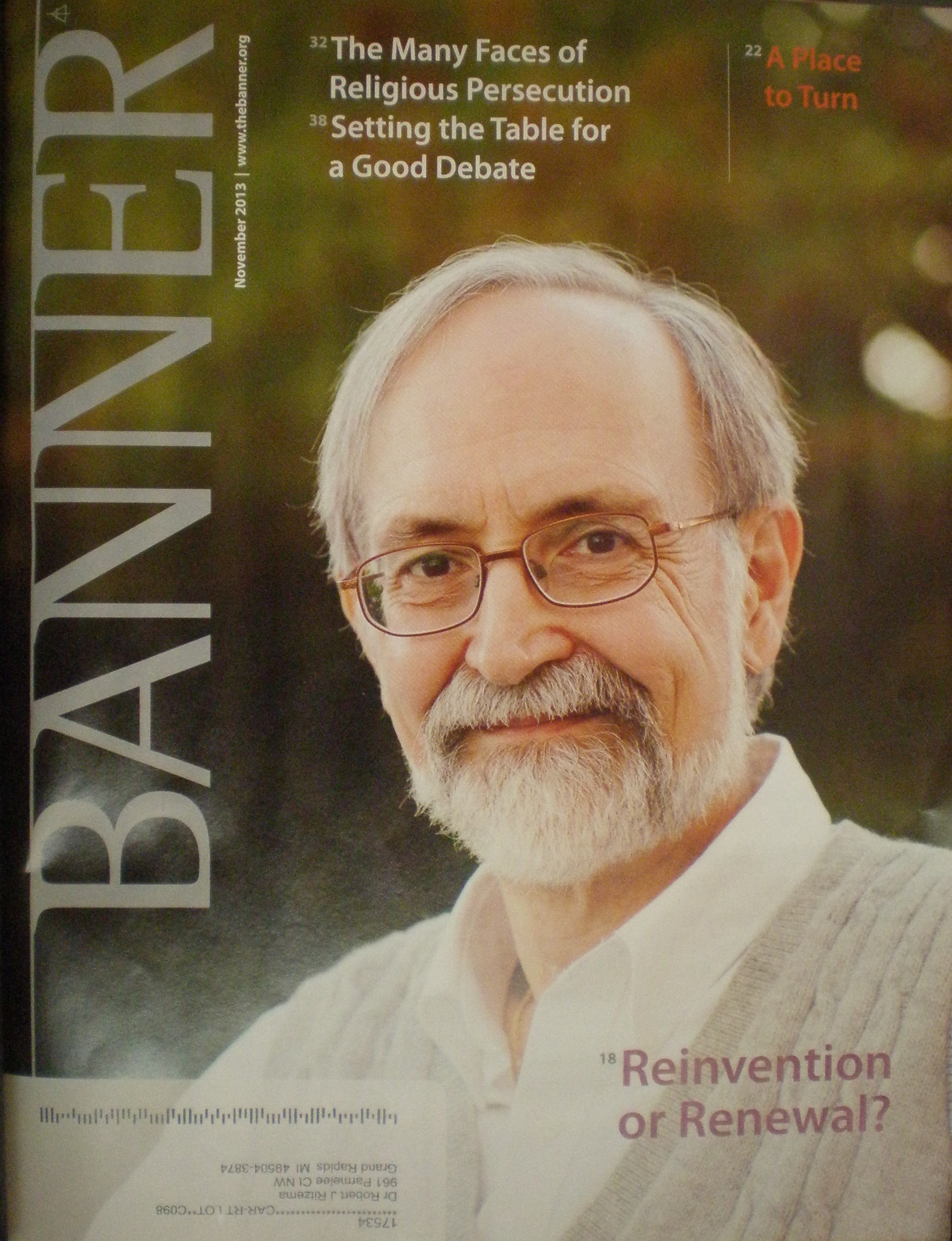
OLYMPUS DIGITAL CAMERAThese recommendations are well-meaning and seemingly innocuous.  However, as I thought about it, I realized that my past efforts to re-make myself produced cosmetic changes at most.  Deeper, more lasting transformations didn’t come from my own efforts.  They were instead the result of events or encounters that I had no way of anticipating—troubled relationships, disappointments at work, calamities experienced by those close to me.   My faith doesn’t permit me to see such experiences as a random pummeling administered by an impersonal universe.  Instead, I believe that what happens to me comes from the hand of God, and has the effect of shaping me to become more of the person He would have me to be.  I found that in the Bible the term “renewal” is often used to refer to personal change that comes as the result of God’s initiative.  I wrote an article about the two ways of change—by personal effort or in response to God’s guidance—and titled it “Reinvention or Renewal?”  It was accepted for publication by The Banner, a magazine published by the Christian Reformed Church, and was printed in the most recent issue.  The online version can be found here.

I would like to ask readers of this post their thoughts about this distinction between reinvention and renewal.  Which best describes the way that changes in your life have occurred?

Posted in Psyche, Spirit | Tagged , , , , , , , | 2 Comments

Retirement Is Changing: Is That Good Or Bad?

Tom Palome

Tom Palome–The new face of retirement?

Most of us who have reached midlife but have not yet retired can’t count on an employer-provided pension plan to provide for us in retirement.  Social Security benefits by themselves provide only a bare-bones financial skeleton to support us, so we know we’ll have to save if we hope to be at all comfortable when we stop working.  It’s either that or spending our golden years as a Wal-Mart greeter or McDonalds burger-flipper. Those of us who think that won’t happen to us would do well to contemplate Tom Palome, a former vice-president for marketing at Oral-B, who at age 77 is back at work flipping burgers at a golf course grill and demonstrating products at Sam’s Club.

So, how are we doing at preparing for retirement?  Not well, according to an Associated Press-NORC Center for Public Affairs Research poll released on October 14.  Researchers conducted a nationwide telephone survey of 1,024 Americans age 50 or older.  One in six survey participants reported having less than $1,000 in retirement savings.  Only 29% indicated that they had $100,000 in their retirement accounts.  Approximately equal numbers of respondents felt secure about their retirement savings and were anxious; given the amount of reported savings, those who feel secure must include some real optimists.  In any event, the survey found that older Americans are delaying their retirement plans, and many acknowledge that retirement won’t entail completely leaving the workforce.  According to AP reporter Matt Sedensky,

“Some 82 percent of workers 50 and older say it is at least somewhat likely they will work for pay in retirement. And 47 percent of them now expect to retire later than they previously thought — on average nearly three years beyond their estimate when they were 40. Men, racial minorities, parents of minor children, those earning less than $50,000 a year and those without health insurance were more likely to put off their plans.”

Survey respondents who were still working were asked whether they expected to still work some after they retired. 47 percent said they are very or extremely likely to do so and 35 percent said they are somewhat likely.  That leaves less than 20% who are unlikely to work after retirement.  The ideal retirement of the 1950s and 1960s—a time devoted entirely to leisure—has become a decidedly minority lifestyle for older adults.

If the new norm is to continue to work throughout older adulthood, is that simply an unfortunate result of financial realities, or is it good in its own right?  I think of someone like John Steiginga, who I interviewed earlier for this blog.  He formally retired after years of pastoral ministry, then immediately took a half-time position in which he focused on a particular aspect of ministry that is of interest to him.  Is he losing out by not giving more emphasis to leisure? I would like to explore the concept of retirement, especially the notion that the good life is best obtained in our later years by leaving work and devoting our days to leisure activities.  Check back on this blog for my thoughts about this topic.

Posted in Culture | Tagged , , , , , , , | Leave a comment

The Blessings of Old Age

Sister Joan Chittister

Sister Joan Chittister

Sister Joan Chittister has  written recently about the blessings of aging.  There are losses that occur with aging, but there are also gains.  Our youth-oriented society focuses mostly on the losses; thankfully, writers like Sister Chittister and Bill Thomas remind us of the gains.

The seven blessings that Chittister describes are perspective, time, freedom, newness, tale-telling, relationships, and transcendence.  These mean about what might be expected: perspective means that elders have a good sense of what matters in life, freedom means that elders have fewer responsibilities and thus have time to enjoy the present, and so on.  The item on this list that I find most surprising is newness. Chittister suggests that the elderly are in an even better place than are young adults to have new experiences.  As she puts it:

“With the children on their own and the house paid for, with our dues paid to the social system and our identities stripped away from what we do to what we are, we have the world at our feet again. We can do all the things we’ve put aside for years: learn to play the guitar, go back to school, volunteer in areas we have always wanted to do more of like become a tour guide or a museum aid, go backpacking or become a children’s reader at the local library.”

Ideally, this is so, but many of us are constrained by decisions we’ve made along the way and aren’t able to do the things we would like.  In my case, my decision to help my parents means that semi-retirement contains less leeway to do what I want.

Though Chittister lists her seven blessings of old age separately, it’s obvious that they are interconnected.  For example, we have time because we are free of the responsibilities of young and middle adulthood, time gives space to rediscover and expand relationships, and one of the things we do in those relationships is tell our tales to each other.

Another observation I have about Chittister’s list is that, though at first glance the notion of blessings is in contrast with the more common view that old age entails loss, the two ways of looking at the consequences of aging aren’t mutually exclusive.  In fact, many of the blessings may actually stem from the losses.  In his book Falling Upward, Richard Rohr suggests that in the second half of life we need to undergo “necessary suffering” if we are to replace self-oriented preoccupations with broader concerns.  At least some of the blessings on Chittister’s list seem most likely to occur among those who have gone through some suffering or loss.  Thus, perspective is gained not from unrelenting success but either from surviving failure or from having succeeded at something that later proves empty.   Freedom to do as we choose comes only after we’ve lost or surrendered roles that once gave status and importance. And transcendence—which for Chittister includes understanding “the real meaning of life” and achieving serenity of the soul—is likely to occur only after we have relinquished the attachments that seemed so essential when we were younger.  The blessings of old age come with a cost; perhaps part of the wisdom of age is an increased willingness to pay that cost.

Posted in Psyche, Spirit | Tagged , , , , , , , , | 1 Comment

Spiritual and Emotional Maturity: Interview

flower

I previously posted the first part of a conversation with Lisa C., a mental health professional who recently took a new position as a clinical services director at a psychiatric hospital.  The position was quite different from what she had been doing and entailed moving her entire family to a new location.  The first part of our conversation explored what factors led her to make such a significant life change. That post concludes with my comments about the process she went through in coming to the decision to take the position, looking especially at the emotional and spiritual aspects.  As we continued to talk, we looked more at the gradual process of growth that Lisa’s work experiences through the years had evoked.  Here is our discussion:      

Bob: So looking back over your experiences over the past decades, how do you understand those experiences differently than what you did at the time? 

Lisa: A huge chuck of that understanding is my understanding of myself.  When I look back at similar challenges I had in other jobs, for example my first job at Charter Hospital, it went successfully for a while, and in terms of doing the job well, that worked out fine, but the interpersonal issues, challenges I think I helped create for myself because of my immature attitudes, lack of understanding of relationships, how I handled myself, those same things are coming up now.  So when I look back, I can say, “OK, Lisa, part of the problem back then was management, I took ethical issue with their admissions policies, but how I handled that in retrospect was self-defeating.”  I ended up leaving that position because of conflict with a very difficult CEO.  I don’t know that the outcome would have been different.  Looking back, there were similar dynamics to what I’m now encountering in terms of giving in to administrative authority, where to stand my ground on ethical issues.  I would handle the interpersonal aspects very differently now since I can see where I was at fault.

It sounds like through all these experiences you’ve been changed, not you’ve changed but you’ve been changed.

Yes, definitely.

Can you relate that to your faith? 

I’ve had a relationship with Christ since I was a child, but it’s really only been in recent years that I’ve grown exponentially compared with the previous 30 years.  It’s been the last 10 years being really instrumental in my insight and looking back over my life and seeing how God had changed me.  There’s been a lot more growth there than in the previous 30.  God most definitely has guided that process.  It’s been difficult.  I feel like I’ve gained intrapersonal insight, I know who I am, but I struggle with those identity issues.  God has used my professional experiences to show me who I am and who he is wanting me to become.

That’s a good way of putting it, that the process of change never ends.

Exactly.  God has used me despite my lack of growth and my immaturity at different phases.  I look back and I’m so, so grateful that he used me in my fallibility, weakness, and stupidity to touch other people’s lives.  That’s what I desire the most, what I really, really want.  Not only has he used me to touch other people’s lives, but I’ve also grown to understand he wants me to know me and to know him.  It’s more than just being a servant, it’s about being that other partner in the relationship with God, and I’m learning more about that.

How does it go on a day to day basis taking your faith into this new, very difficult situation that God has put you in?

The one thing that probably helps me the most in dealing with the challenges and being more attentive and waiting on God to show me is the prayer I pray daily.  I pray for God to use me first and foremost in advancing his kingdom here on earth but I also ask him to show me who I am, to guide me in my behavior and my responses to others, to see myself clearly, to see with his eyes of truth.  There are parts of me he is trying to change that I don’t necessarily see.  Asking him to reveal to me what I need to know in order to be obedient to him.  To be honest, I don’t know exactly what he is trying to change in me, I just know he’s trying to change me.  I don’t want to be so passive in the process that I don’t see what he is trying to get me to see.

Did you have anything you wanted to add?

Just that I’m realizing more than ever that, aside from service and other things that are part of my spiritual walk, he is wanting me to focus on relationship, and it truly is what’s most important to me, but I’m also really struggling with that.  In Erikson’s Theory of Psychosocial Development you can’t really be fully functional in an intimate relationship until you know who you are.  I feel that is where I’m at spiritually.  I’m stuck in adolescence in that I’m still learning who I am.

I have to admit that I, too, though 15 years older than Lisa, am still learning who I am.  That learning often involves, as Lisa described, looking back over decades of my life and noticing how I responded to similar issues then and now.  Lisa also points out how we learn about ourselves in relationships with other people and with God.  Our self-knowledge can’t be static, since we ourselves are always in the midst of transformation.  Thus, in midlife and late life, we can say both “I know myself better than ever,” and “I still know myself so poorly.” 

Posted in Psyche, Spirit | Tagged , , , , | Leave a comment

How Well Do You Grant Your Parents Independence?

I found an interesting observation by Harvard professor James Wood in his recent  New Yorker article on memoirs written by the children of several mid-twentieth century writers.  Wood notes, “To bestow on one’s parents their independence is also to announce one’s own independence from them.”  The context here was the ability or inability of each memoirist to recognize that his or her father (all the writers described by their children were males) had a literary existence that went beyond his role in the family.  The point can be applied more broadly:  we all need to recognize that there is more to our parents than their parental role if we are to fully be more than just their children.

This granting independence to our parents begins early in life and, if we are to be emotionally healthy, needs to continue for decades thereafter.  The infant has no self independent of her or his caregiver, and any separation from the caregiver seems to the infant to be abandonment.  Eventually, though, the child accepts times of separation without protest—in the process granting the caregiver separate existence—and so acquires a sense of self separate from the parent.  A dozen years later, adolescents seek further separation.  The effort to become independent isn’t only a desire for freedom to choose activities, friends, and the like.  It is also a matter of both parent and child recognizing that the teen is not just a member of the family but also is a person in his or her own right.  This recognition occurs successfully only if both can recognize the same about the parent.

Though much developmental theory describes independence as something accomplished by the end of adolescence, my professional experience suggests otherwise.  As a psychologist, I’ve treated many adults, including some who are at or past mid-life, who haven’t fully recognized the independence of one or both parents.  I think of one client, a woman in her early 50s, who as the oldest child in her family had been given considerable responsibility for younger siblings and became her mother’s confidant.  Though her mother also had a successful career as a teacher, my client never quite accepted her as a person with a full life outside the family.  She worries a good deal about her mother (who is now in her late 70s) and thinks her mother needs more assistance than I suspect is the case.  In not seeing her mother’s separateness, my client also traps herself in the role of responsible older child who works hard to do the right thing yet never feels appreciated.

I have lived at some distance from my parents since my early 20s.  This not only provided me with independence, but also helped me give it to my parents.  On my twice-yearly visits home, I enjoyed hearing about their travels, their friends, and the variety of neighbors, relatives, and acquaintances they invited to swim in their pool.  By the time I was in my 40s, they were leading a large seniors group at their church.  My dad, who played the piano, went to senior care facilities to play music from the thirties and forties.  During one of my Christmas visits, my parents were hosting a group of “Lost Boys”—refugees from the Sudanese conflict who had just been resettled to West Michigan.  Learning that the “boys” had no warm clothes, my parents outfitted each of them with winter coats and gloves.  Our Christmas pictures from that year prominently feature grinning, dark-skinned Africans alongside our uniformly light-skinned family.  I loved to hear of my parents’ exploits, and was glad that they showed hospitality far beyond the confines of the family.

Christmas, 2000--With the Lost Boys

Christmas, 2000–With the Lost Boys

For the past year, I have been in their home most of the time, helping my mom care for my dad.  Tragically, he has lost his independence to dementia, and my mom is more reliant on assistance from my siblings and me than she had ever been before.  She is still very much her own person, though.  She asks for advice at times; I give it tentatively, and am not at all troubled that she doesn’t always take it.  It’s important to me to still see her as an independent person with her own beliefs, values, and priorities.  By so doing, I am granting the same to myself.

I encourage those who are at or past midlife yet still feel too tied to their parents—too desirous of approval, too reluctant to make choices on their own, too determined to change their parents, or too worried about their parents’ welfare—to work on granting their parents (and themselves) independence.  If you’ve tried to separate yourself from your parents without success, consider therapy.  Individuation from one’s parents will help you appreciate both them and yourself more.

My mother (furthest left) and her sisters, 1999.

My mother (furthest left) and her sisters, 1999.

Posted in Relationships | Tagged , , , , | Leave a comment

Are Boomers Charitable?

Dollar-Bills

We boomers are self-indulgent, egocentric, conceited, and . . . generous? A blog post on the AARP site reports a recent study found that, among four adult age groups, Boomers gave the largest total amount to charity.  Out of an estimated total $143.6 billion in annual contributions, Boomers reportedly gave 61.9 billion.  Of course they are the largest demographic group, so the large aggregate sum of Boomer contributions might be made up of paltry individual contributions.  That doesn’t seem to be the case, though.  Here are more detailed figures for each of the age groups, giving average contributions:

  • Generation Y (ages 18 to 32) accounts for 11 percent of all giving. Individuals donate an average $481 annually.
  • Generation X (ages 33 to 48) accounts for 20 percent of all giving. Individuals contribute an average $732 annually.
  • Boomers (ages 49 to 67) represent 43 percent of all giving. Individuals contribute an average $1,212 annually.
  • Matures (ages 68-plus) represent 26 percent of all giving. Individuals contribute an average $1,367 annually.

Thus, the Boomers give much more than both younger age groups and nearly as much as the so-called “Matures,” the oldest group of adults.  I’m particularly impressed by the contributions of the latter group, since they are for the most part retired and living on pensions, social security, and savings, whereas most Boomers are still working.  The substantial contributions of the “Matures” seems in line with Robert Putnam’s claim that there is more civic-mindedness among older as opposed to younger Americans.

I looked at the US Census site to try to determine how the contributions of each group compare to their median incomes.  I couldn’t find statistics for the exact age breakdowns the AARP report uses for these cohorts, but from the table I did find it is evident that median incomes for Generation X and Boomers are fairly close, but income for Generation Y (aka Millennials) lags far behind.  Thus, the low incomes of Millennials may justify their lack of charitable giving, but the same can’t be said for Generation X.

Carole Fleck, author of the AARP blog post, also reports that, for both Boomers and Matures, “local social services like homeless shelters and soup kitchens, and places of worship, were the most popular causes to which they donate.”  Perhaps this reflects a commitment both to the particular charities selected and to the local community in which those organizations are situated.  Now that it is easier to make an online donation to an international nonprofit than it is to write and send a check to a hometown food pantry or church, it will be interesting to see how well local charitable organizations will fare at the hands of younger donors.

Posted in Culture | Tagged , , , | Leave a comment