Grandparents Day

I recently went for Grandparents Day at my grandchildren’s school. All three of my grandchildren are in the same school for just one year–Calvin in 6th grade, Theo in 2nd grade, and Willa in preschool. Next year, Calvin will go on to a secondary school and they won’t be together any longer. But this year, their classrooms are all within a few steps of each other.

Grandparents Day is not a national or regional event. Instead, each school decides whether, when, and how to celebrate. In my limited experience, the day is well-liked and long-remembered by both grandparents and grandchildren. It’s also very well attended. When I drove up to my grandkids’ school about 15 minutes before the scheduled grandparent arrival time, there were so many cars turning in the drive and snaking back to the parking lot that it created a mini-traffic jam. I finally got parked and into the school, but it took me until the actual start time to get directions and make my way to the first classroom.

I went to Willa’s class first, figuring that an almost-four-year-old would find it harder than the others would to wait for me to arrive. The children were in a semi-circle around the teacher, and there were larger chairs behind their chairs for grandparents to sit. All the chairs were full, and some grandparents were standing. I got to sit behind Willa, and she kept turning around with a huge smile on her face, as if to say that having her grandpa there made this day wonderful. Seeing her in her first-ever classroom was pretty wonderful for me, too.

The first ten minutes was spent on an abbreviated version of the class’s morning routine, featuring the day of the week, color of the day, and letter of the day. Then there was some one-on-one time for the children and their grandparents. We put paint on Willa’s hand and she made a handprint for me to take.

After twenty minutes, I was off to Theo’s classroom. Theo is a child who typically stops by reality only briefly while on the way to his next fantasy, so it was nice to see him waiting for me at his desk with a stack of papers that showed that he does actually do well at real-world tasks like math and writing. His teacher had asked the children to write about their favorite time with their grandparent, and Theo wrote a pretty good account of what we had done together during my visit a couple months earlier. He read me a simple story. It’s nice to hear that his reading, though still effortful, is coming along. I can only imagine what it will be like in a year or two when he’ll be able to immerse himself fully in the world of books.

IMG_20151016_180210274

Then it was time to head to Calvin’s classroom. Calvin is a veteran of Grandparents Days, some attended by me and some by Grandpa Pete and Grandma Ginny, and is understandably less enthusiastic about having a grandparent in the classroom than either Willa or Theo. He had an assignment we had to complete pertaining to places I had lived or visited during my life; this was obviously a set-up for some future geography lesson. We hung out together until it was time to go to the school-wide chapel that was the last scheduled event for Grandparents Day. Afterwards, I gathered up all three of the grandkids to get our picture taken.

I stayed with my son, daughter-in-law, and grandkids for another couple days, having fun with the kids and noticing how they had changed. Theo and I spent time building a haunted house with Legos. I went to Calvin’s soccer game and we played chess together. We have been playing chess every few months–whenever I visited–for about three years, and I’ve seen his skills gradually improve. This was the best game I had ever seen him play. We ended up with a draw; if he gets much better in the next few years, I’ll be fortunate to keep from regularly losing to him. And I played superheroes with Willa. The kids have several capes to wear during such games. She put on The Flash’s cape, but said she was Spiderman. She gave me the Supergirl cape, so that’s who I was. Preschoolers tend to adapt gender stereotypes quite readily, and in many respects Willa identifies strongly with girly things. It was delightful that she played a male superhero and assigned me to be a female superhero with no sense of incongruity. She turned off the lights in the playroom and dining room, and we used our superpowers to battle the dark forces of . . . well, darkness.

supergirl-cover-1748x984

When Theo is asked what he wants to be when he grows up, he says he wants to be a grandpa. He doesn’t quite get that he would have to have kids of his own first in order for grandparenthood to be a possibility. He just sees a couple old guys who are pretty relaxed and apparently without much to do except be available to play, read stories, and provide laps to sit on. Plus they don’t have anyone telling them to pick up their toys or turn off the TV! All those things are pretty neat. The best thing about being a grandpa, though, is seeing how totally unique and special your grandchildren are.

Posted in Relationships | Tagged , , , , , | Leave a comment

Material Simplification, Part 2: Hoarding

I recently posted a piece on material simplification. This was one of several posts exploring the idea that simplification is the most important psychological task of late adulthood. Material simplification, as described by theologian Lewis Joseph Sherrill, consists of “distinguishing the more important from the less important, getting rid of the less important or relegating it to the margin; and elevating the more important to the focus of feeling, thought, and action (from The Struggle of the Soul, p. 130).” The previous post was on disposing of many of our material possessions. This post will be about failing to do so. What does it look like to avoid material simplification, and what motivates such avoidance?

Worst off are those who hoard. Hoarding disorder is a psychiatric diagnosis characterized by urges to accumulate, difficulty discarding things, and a cluttered living space. Hoarding is more common in older than younger adults. One large study of older adults who met the diagnostic criteria for hoarding disorder (as reported here) found that 69% were women and 85% were white, unmarried, and lived alone. Unfortunately, living by oneself makes it easier to simply keep accumulating, without anyone to object, “what are you holding onto that for?”

The causes of hoarding appear to be complex, apparently involving some combination of poor emotional regulation, information processing difficulties, attachment issues, or dysfunctional beliefs about objects. It usually starts fairly early in life, worsening in later years. An interesting article by Mark A. Chidley, a family counselor, suggests that hoarding may result from frozen grief. He suggests that the person sustains a loss, is unable to cope with the loss, and turns to physical objects as a replacement for whatever or whoever was lost. This line of thinking sees hoarding as a coping mechanism, albeit an ineffective one.

Hoarding lies on a continuum. On one end are people like the eccentric brothers Langley and Homer Collyer, whose bodies were found in 1947 in their 12-room New York City house “surrounded by over 140 tons of collected items that they had amassed over several decades.” Then there are hoarders who are overwhelmed by stuff but still can discard something from time to time, then those who aren’t quite hoarders but have too much accumulated to ever invite anyone into their homes, and finally there are the rest of us. Yes, all of us are on the continuum somewhere. As James Wallman put it in his book Stuffocation (as excerpted in Salon):

“Who hasn’t, in the middle of a clear-out, kept something ‘just in case’, even though they haven’t used it for years? Who doesn’t have clothes that they hope will fit or become fashionable again one day? Who doesn’t keep DIY parts or sports gear they haven’t used for years because you never know when they could come in handy? And who hasn’t, when challenged, said, ‘But I like it!’ out loud, as if that were enough to explain why something is worth keeping?”

Sherrill suggests that older adults who surround themselves with possessions do so from a longstanding personality disposition, namely a propensity to find one’s emotional security in the “world of things.” Eventually, this tendency can take over the entire personality:

“For as life draws toward its end the self in this instance seems to identify more and more with its things until the self, as it were, is finally concentrated into, and absorbed by, its possessions (page 138).”

This is itself a form of simplification; everything other than possessions falls away, so that one’s stuff dominates the psyche. This seems not so much a coping style as it does a love. St. Augustine talked about rightly ordered love, by which he meant that virtue and happiness comes from loving people and objects in order of their true importance. To put things we own ahead of people or God is to love wrongly, to love our stuff out of all proportion to its true value. Having our loves out of balance may not end as disastrously as it did for the Collyers, but it certainly won’t end well.

Out-of-Control Accumulation. From the show Hoarding: Buried Alive.

Out-of-Control Accumulation. From the show Hoarding: Buried Alive.

Posted in Psyche | Tagged , , , , , | Leave a comment

Material Simplification, Part 1

I’m midway through a series of posts on simplification in late life. The idea for the series came from twentieth-century theologian Lewis Joseph Sherrill, who proposed that the most important psychological task of late adulthood is simplification, by which he means “distinguishing the more important from the less important, getting rid of the less important or relegating it to the margin; and elevating the more important to the focus of feeling, thought, and action (from The Struggle of the Soul, p. 130).” This post is on material simplification.

How do we deal with the material things we’ve accumulated through the years? According to Sherrill, simplification in this area of life “consists in relegating things further and further out toward the margin of selfhood as age advances.” In other words, how we think of ourselves becomes less and less dependent on what we have. Sherrill imagines the older adult who has come to occupy not a whole house but a single room. Here’s what that adult’s space will be like if he or she has simplified well:

“If the pattern of relegation comes natural to him, the place is not cluttered like a refugee’s cart, with everything he could bring with him. Instead he has been able to give a hard and healthy pruning to the material extensions of the self; and now, even though his things have shrunken to what a single small room can hold, the place seems spacious, not cluttered but, as it were , open and roomy for the aging self still to grow in.”

Many of us older adults will have difficulty pruning our possessions to that point! I’ve lived by myself in my current house for 9 years and have way more stuff than I need. I’m planning to downsize in the next year, and have been going through file cabinets, closets, and bookcases getting rid of things. I get stuck at times. Some things may be of use to me sometime in the future, though probably not. If I pitch them, I worry that I’ll eventually think, “I used to have one of those, why didn’t I keep it?” It’s also hard to get rid of things that I acquired at some point but haven’t used. That’s particularly the case for books I haven’t read. For example, I have Freud’s The Interpretation of Dreams. I don’t want to read it right now, and there are probably 50 books on my shelves I would read before that one, but I would kind of like to read it someday, so shouldn’t I keep it? This sort of mental clutter interferes with ditching my material clutter.

garbage_can-600x600I’m heartened by a recent conversation with my sister Mary. She and her husband lived in the same house for 32 years, beginning around the time their youngest son was born. They retired a couple years ago, with the intent of downsizing and moving to a Lake Michigan cottage that they have owned for a number of years. They went through three decades worth of accumulated possessions, selling or giving away more than they kept.

Mary indicates that during the process her mind was preoccupied with stuff–what to keep, what to do with the rest. Finally, they put the house on the market and, when it sold quickly, they went through the equivalent of a sprint at the end of a marathon, having just over a month to complete the process of disposing of some things and moving the rest. They relocated to the cottage at the end of June. Mary says that she feels free now, as if a burden has been lifted.

I hope to follow Mary and Jim’s footsteps. The process reminds me of a ship foundering in a storm so that the crew has to toss the cargo overboard in an effort to save themselves and the passengers. I won’t make it to the “shore” of a peaceful old age unless I toss away quite a bit of the cargo I’ve carried with me until this point. One way or another, I’m determined to simplify!

Posted in Psyche | Tagged , , , , | Leave a comment

Conversing With Dementia

I recently read a Next Avenue interview with Jonathan Kozol, author of the memoir The Theft of Memory: Losing my Father One Day at a Time. Jonathan’s father Harry, a psychiatrist and neurologist, was diagnosed with Alzheimer’s in his late 80s and entered a nursing home at age 90. Jonathan arranged for his dad to return home six years later, and his dad stayed there until his death at age 102. I was particularly interested at what Jonathan told Judith Graham, the interviewer, about their relationship.

Jonathan had traveled extensively and spent relatively little time as an adult with his father. When his father was diagnosed with Alzheimer’s, Johnathan decided to spend as much time as feasible with him. He tried to have genuine conversations rather than the superficial pabulum that is often served up to those with dementia:

“What I wanted to avoid, above all else, was what I call phony talk. That sing-song tone that too many adopt when they speak to the ill and the elderly. I was convinced that my father was too intelligent in his dementia to insult him with that kind of conversation. And I found that as a result he was wonderfully responsive to me.”

This seems to have been a strategy particularly well-suited to the strengths that Harry Kozol had retained. Jonathan notes “My father had always been a charming conversationalist.” His facility in verbal exchanges continued even as his memory deteriorated. Jonathan observes that “no matter how impaired my father’s memory became, no matter how partial his memories were, he wasn’t a stranger to me. He was, at heart, the same man I’d always known and loved.”

Taking his father seriously as more than an Alzheimer’s patient led Jonathan to also take seriously his father’s repeated requests to come home. To make his father’s homecoming possible, he ensured that his parents had around-the-clock caregivers. Harry seemed to get pleasure from being at home, especially when he sat at the office desk he had used during the 60 years when he was in practice. The arrangement was very expensive, enough so that Jonathan’s parents eventually exhausted their life savings and the son had to take over the financial responsibility. Still, he felt joy seeing his father at home and benefited from having such a close relationship with him during those last years.

I, too, wasn’t around my parents much for most of my adulthood but returned to be with them as a result of my dad’s dementia (in his case Lewy-Body dementia, not Alzheimer’s). I lived with them for the last two years of his life and helped with his care for all except the last three months, when he was in a memory unit at a nursing home. I would have liked our interactions to have been like those of the Kozols:  memorable father-son exchanges. Frankly, though, our conversations were rather shallow. Was that because I did something wrong? Did I regard him just as a dementia patient, not a person? Didn’t I try hard enough?

Admittedly I’m not a great conversationalist, and often cared for my dad without doing much to verbally engage him. Still, I think the conversations we had were what we were capable of having. Dad had never displayed the “clever repartee” that Kozol senior reveled in, so it’s not surprising that such verbal facility didn’t suddenly appear along with his dementia. He had been a storyteller, but memory loss deprived him of his collection of anecdotes. He retained something of his sense of humor, so we laughed together about simple incongruities or unexpected events. He also retained his capacity for enjoyment; we liked to eat good food together and be entertained by my dog. He had always loved his family, and he continued to express his love for each of us and his appreciation for what we did for him.

After Jim Ritzema developed dementia he, like Harry Kozol, was still the person he had been, albeit lacking much in the way of memory and thought and with considerably more anxiety. For some families dementia occludes the parent or spouse they once knew, but that wasn’t our experience. To the end dad was recognizably the man we had loved. I’m grateful that I could spend those two years helping him. And I’m glad that, along with the dreariness  that characterized many days, there was laughter and joy in our life together.

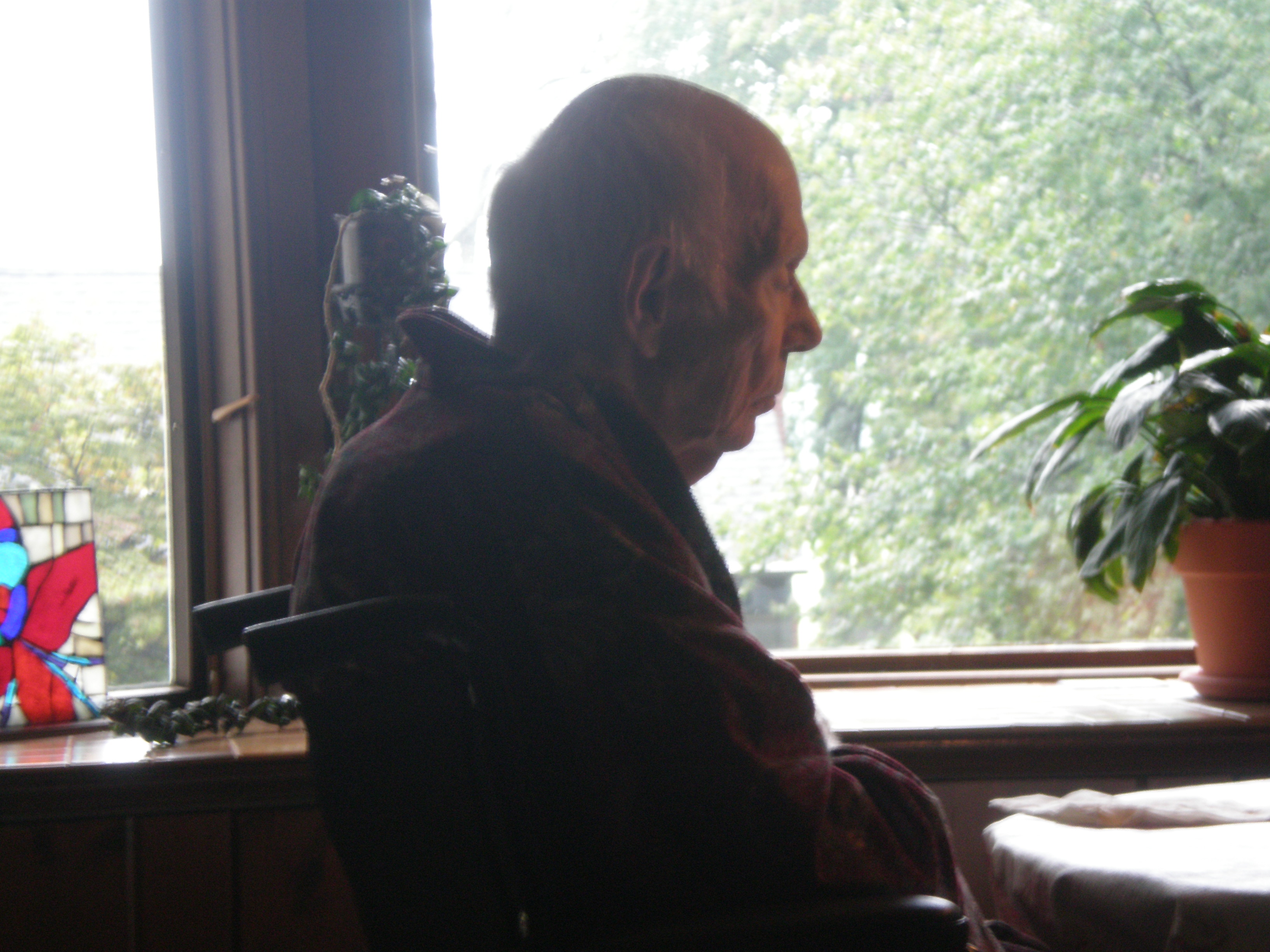
Dad in 2012, when I first moved home.

Dad in 2012, when I first moved home.

Posted in caregiving, Relationships | Tagged , , , , , , | Leave a comment

Physical Simplification, Part 3: Disability

I’ve been writing recently about physical simplification–the process of accepting and affirming rather than rejecting or resisting the physical changes that occur in us as we age. I wrote first about accepting changes in appearance, then about accepting changes in physical performance. This post is about what is likely to be the most difficult type of physical simplification: accepting and affirming the disabilities and diseases that may come with advancing age.

Image from clubwarehouse.com.au

Image from clubwarehouse.com.au

Most of us understand that it’s beneficial to accept our limitations and losses, but may have difficulty explaining how such acceptance can benefit us. I currently identify as able-bodied, so I can’t speak from personal experience here. Lewis Joseph Sherrill, whose ideas about simplification are the basis for this series of posts, writes of the benefits of affirming physical diminishment and its attendant sufferings in a way that I found to be vague and unclear, at least initially. He says that out of our suffering “there may come a redemptive gift which is the gift of the suffering yet triumphant self.” What gift is there in disability, either to the sufferer or to others?

In thinking about the gift to the sufferer, I am reminded of Steve (not his real name) a therapy client I worked with about fifteen years ago. He had worked many years in a physically demanding, rather dangerous job that required him to spend months at a time away from home. He was highly regarded in his community and felt proud of what he did. Unfortunately, he developed serious health problems that made it impossible for him to work. It was hard for him to sit at home when he was used to being with his work crew; he reacted with anger and sadness. Then, to compound matters, he was in a serious automobile accident. The other driver died, and he was injured. How could he deal with this on top of all the other losses in his life? It all seemed too much.

Yet, in the course of several months, the accident started to look like a fortuitous event rather than another disaster. The accident was etched in his mind, a high-definition, repeating loop of memory that wouldn’t shut off. “Death was all around me,” he said, “yet I came through.” It seemed to him that he shouldn’t be alive, yet he was. He concluded that God had decided to spare him. God’s mercy became the lens through which he came to view his former job and subsequent disability. He now thought that in his pride he had pushed God aside when he was with the work crew. This was foolish. He could have perished, but God spared him, using illness to bring him off the road and back home. For Steve, his disability and the subsequent accident had become what Sherrill describes as a “redemptive gift,” and he became a “suffering yet triumphant self.”

Can disability be a gift not only to the disabled person but to those around him or her? Steve certainly thought so. While working he was an absent husband and father. During the infrequent times when he was at home, he was distant and imperious. When he was first disabled, he didn’t do much better: he was too absorbed with his own difficulties to be aware of the needs of others. However, once he had come to terms with his disability–once he had simplified–he became much more available to his family, friends, and community. He now devoted quite a bit of his time and energy to three young grandchildren who lived nearby. He talked to them with a gentleness he hadn’t had with his own children. They in turn became sensitive to his needs, fetching things for him he couldn’t get for himself. Steve was no longer a gruff, self-absorbed figure but a loving grandpa living out his affection for them.

I’ve written before about the what 17th century Puritan Richard Baxter thought were the characteristics of those who aged well. Baxter thought that the elderly Christians in his congregation were heroes whom younger members of the church could emulate. He divided those heroes into two groups; those whose heroism was in the active mode and those whose heroism was in the passive mode. Those in the active mode were still out doing good deeds in the church and the community. Those whose heroism was in the passive mode had physical limitations that made such deeds impossible. These elderly saints were heroes because they remained true to their hope, enduring suffering faithfully. As such, they became models of how to live the Christian life in times of hardship. It seems to me that the physical simplification that comes with disability is of this sort, accepting limitations with patience and graciousness, looking hopefully to the life beyond this one where broken bodies will again be made new.

Posted in Body, Spirit | Tagged , , , , , , | Leave a comment

Physical Simplification, Part 2: Performance

I have been writing about physical simplification in later adulthood. According to Lewis Joseph Sherrill, to simplify physically is to accept the changes that occur in our bodies as we age, focusing on those physical features that are most important and letting the less important ones diminish in significance to us. My first post on physical simplification had to do with changes in appearance. In it I talked about rejecting cultural standards about perpetually looking young, instead accepting our wrinkles, grey hair, and the like.

Besides appearance, physical simplification also includes accepting our diminished strength, endurance, and agility. Can I still walk up a flight of stairs without puffing like a steam locomotive on a steep upgrade? Can I lift the box of books I just packed for my upcoming move? Can I still touch my toes?

One place where many of us resist simplification as to physical performance is in our exercise routines. Most gyms have at least one or two aging regulars who are trying to recover their former physical prowess. I find running to be the activity that most tempts me to struggle against worsened performance. I wrote earlier about the challenges of being an aging runner. I do well at trimming how often and far I run to fit with what my body will allow. However, I still do find myself pushing the pace too much (not that anyone watching could tell). I end up with sore ankles and hips. I think my quickened pace is motivated by a barely conscious desire to stave off decline–not just decline in my running speed, but all manner of decline.

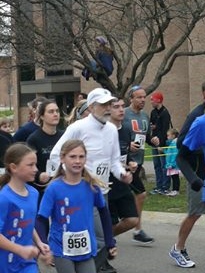
Me pushing my pace at the Calvin Spring Classic

Me pushing my pace at the Calvin Spring Classic

Thinking about this struggle makes it clear to me what I need to do. I need to simplify this aspect of my exercise routine, running at a comfortable pace and reminding myself that the important thing is to retain the capacity to run (and eventually to walk), not to do so as fast as my scrawny legs will carry me.

Physical prowess also includes sexual prowess. Difficulty with sexual performance increases with age. Men may have more trouble achieving and maintaining erections; women may have pain during intercourse due to vaginal dryness. Both men and women usually need more time to achieve arousal.

Such difficulties don’t necessarily mean that sex between older couples is always of poor quality. In fact, an argument can be made that older partners are usually less self-conscious or anxious about performance, making sex better. Sherrill’s focus on simplification leads him to suggest that, even when the sex act can’t be completed as it once was, something more important can come to the fore:

“Love is eternal, rejoicing in the body of the beloved, yet not decaying with the decay of the body, not dying with its physical death. Love ‘abideth'”

Though we do what we can to maintain sexual vitality, it’s nice to know that, even if libido fails and sex organs forget their function, embers of touch and tenderness can continue to glow.

Posted in Body | Tagged , , , , , , | Leave a comment

Physical Simplification, Part I: Appearance

This post is part of a series on simplification in late life. The series is inspired by twentieth-century theologian Lewis Joseph Sherrill, who proposed that the most important psychological task of late adulthood is simplification, by which he means “distinguishing the more important from the less important, getting rid of the less important or relegating it to the margin; and elevating the more important to the focus of feeling, thought, and action.” (from The Struggle of the Soul, p. 130) One area where we face the prospect of having to distinguish the important from the less important is in response to the changes that take place in the body in late life. Sherrill describes the challenge that physical simplification entails:

“In Western life when an individual receives his first signals of approaching age, one of the major tests of character is upon him: to reject and deny it, or to accept and affirm it.”

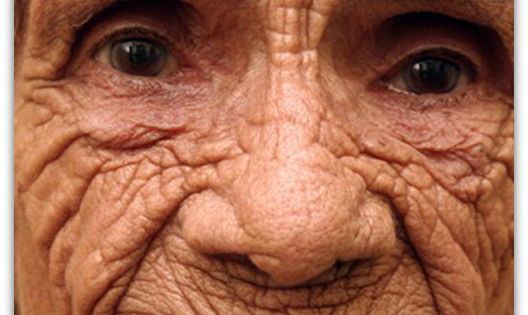
Our bodies change in many ways. The topic of this post is dealing with the changes in our physical appearance as we age. Skin wrinkles and sags; hair thins and grays; trunks thicken while arms and legs thin. Simplification regarding appearance consists of accepting such changes and placing less emphasis on maintaining the youthful features that our society most values (for example, smooth skin and thick hair). We’ve been the recipient of countless direct and indirect messages that looking young is important, so accepting an older-looking body can be difficult. Two years ago, blogger Ronni Bennett, then 72,  wrote about her habit of not looking at her naked body in the mirror despite regularly passing her reflection on her way to and from her bath:

“Do you have any idea how difficult that is with mirrors on two sides of you every day? It takes a lot of shame to work at it that hard.

“For me, elder advocate that I am, there is a strange division in my mind about this. On the one hand, I unshakably believe – and have done so for many years – that there is nothing wrong with old bodies. I find photographs and paintings of old bodies to be fascinating and attractive.

“On the other hand, I have not liked to see what time has done to my own body.”

Ronnie decided to overcome her avoidance by standing naked before her mirror “for a good, long time,” noticing all the sags and wrinkles. Facing herself in this way did bring about acceptance:

“The more I looked, turning here and there, adjusting the mirrors to try different angles, the more I became okay with me.”

So, if any reader over 50 or so is avoiding the mirror, do like Ronni did; look at your reflection for however long it takes to accept your looks (and thereby simplify your physical self by discarding your mental baggage about perpetually looking young).

Let me conclude this post with a bit of what Dr. Bill Thomas (in What Are Old People For?) thinks about face lifts, Botox, and other wrinkle fighting methods:

“We are asked to unmake what we have spent a lifetime making. What do we receive for this sacrifice? Not youth. Instead, we are given, at best, the facsimile of youth. Expressiveness, passion, and history are pillaged in the pursuit of youth’s fresh blankness.”

What good is youth’s blankness? Simplify your physical appearance! Enjoy your wrinkles!

Posted in Body | Tagged , , , , | Leave a comment

“. . . small nightmares that I hope will develop into great dreams. . .” (Mourid Barghouti)

Harold Knight wrote a beautiful post on his experience of retirement thus far. As I’ve previously noted, the term “retirement” doesn’t fit the active, engaged sort of life lived by him and many others who recently quit working. I’m particularly interested to see that he has a couple passions that have expanded to fill the time previously taken by work. Like many others, such passions were evident in his posts while he was still working, but now he has more time for them.

Harold Knight's avatarMe, senescent

Ali Hassanein, a 54-year-old oud maker works in Ramallah. Every day life in Palestine. (Photo MaanImages) Ali Hassanein, a 54-year-old oud maker works in Ramallah. Every day life in Palestine. (Photo MaanImages)

I’m going to stop saying I’m retired except as part of my quirky attempt at a sense of humor. It’s not true.

Dictionary.com:
retire v.
1. to withdraw, or go away or apart, to a place of privacy, shelter, or seclusion
2. to go to bed

Yesterday morning I played the organ at First Presbyterian Church in Plano, TX, went to lunch at a famed Dallas barbecue spot with a friend, saw the exhibition of “The Abelló Collection: A Modern Taste for European Masters” at the Meadows Museum in the afternoon, had dinner at my favorite Mexican restaurant, and spent the evening packing and preparing for my week-long excursion to North Carolina with my friend.

We have movie and museum and other loosely-formed plans to spend the week “out and about.”

Because I’ll be…

View original post 1,213 more words

Posted in Uncategorized | Leave a comment

Simplification of Status

This is part of a series of posts on simplification in late adulthood. For some context on the concept of simplification, consult a previous post in the series. In this post I’ll focus on simplification of status, especially on the way theologian Lewis Joseph Sherrill conceptualized this type of paring back.

What does it mean for me to simplify my status? One of the things it means is to simplify my work life. My status derives in part from being recognized for the work I do. That’s true whether I was working in a high- or low-status occupation. The doctor skilled with a scalpel or the lawyer skilled at disputation are highly regarded, but so are the carpenter skilled with a hammer or the plumber skilled with a wrench. Whatever one’s line of work, status comes from knowledge and competence.

Giving up the recognition and self-satisfaction that comes from our work can be difficult. Here is what Dr. Gerald Stein says in his blog about losing status at retirement:

“Many of us define ourselves, at least in part, by our work. For those who take particular pride in what they do and the status that it confers, it is especially difficult to surrender their profession. Loss of identity is a risk. In such cases a satisfying post-work life requires that one be flexible enough to re-define oneself and no longer feel the necessity of being ‘the big guy’ who is indispensable to the organization.”

As Dr. Stein notes, it can be difficult to lose recognition as a go-to person. Some retirees keep in close touch with former colleagues, taking some satisfaction when the organization stumbles in their absence and offering advice about how workplace problems should be handled. True simplification means letting go of such residual sources of status. Only by accepting loss of importance in the workplace can one gain what is more important–to be defined by one’s essential personhood, not by one’s social role.

Dr. Stein also alludes to loss of identity and the need to redefine oneself. A few years ago retiree Bob Lowry wrote a nice post at Next Avenue in which he notes that, after leaving employment, retirees are confronted with the question, “Who am I now?” When he was first faced with this question, Bob resorted to  reminding others of his former prominence:

“Well after I retired from being a management consultant to several hundred radio stations in 2001, I felt the need to remind people that I had an airline’s Million Miler Card and got upgraded to first class all the time. Not surprisingly, most were politely uninterested.”

Bob returned to work for a few years, then eventually found two activities to devote himself to: working with prison inmates and blogging about retirement. These interests didn’t emerge until he first cleared space for them by acknowledging his loss of status and facing the question of who he was. The process he went through is what Sherrill described; paring away what has lost importance so that something that is still important comes to the fore.

Work is of course not the only area where simplification of status occurs. In families, parents who were always the ones who arranged family gatherings and provided support, encouragement, and direction to their offspring may eventually step back so that one or more members of the next generation can take on at least some of these responsibilities. In communities, older adults who served on boards or ran for political office often relinquish these roles. As with work, it can be difficult to step aside, but the time comes when it is best to do so not only for the sake of the organization but also for the sake of personal growth.

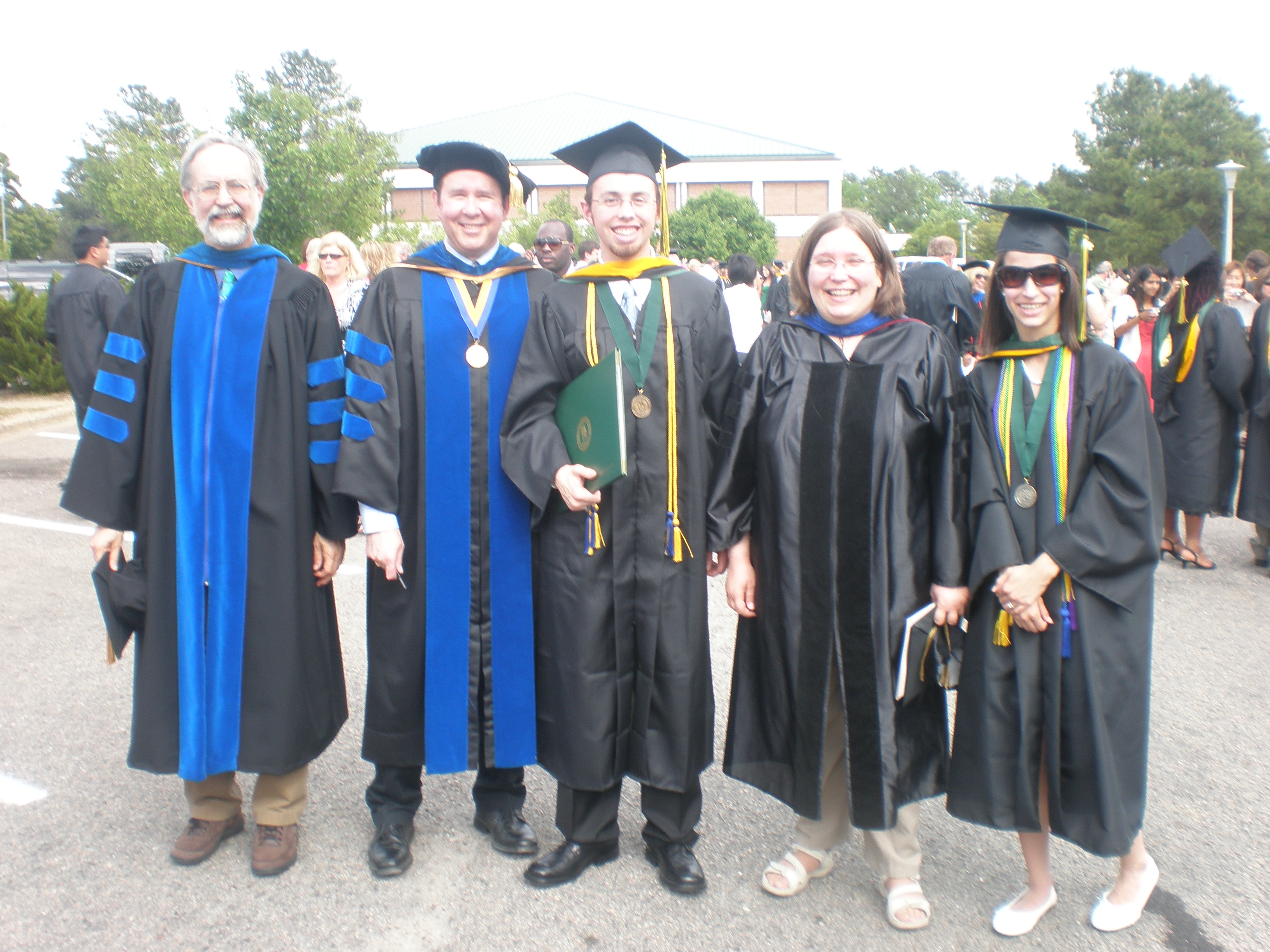
My College Prof Days--With Graduating Psych Majors and Psych Faculty

My College Prof Days–With Graduating Psych Majors and Psych Faculty

I am part way along in my simplification of status. In 2012, I resigned from my full-time position on the faculty of Methodist University in order to provide help to my parents. I was doing what I was sure was the more important thing to do, but personally I felt less important. I was appointed Professor Emeritus, but that is a hollow title, empty of responsibility. I was working part-time as a therapist before leaving full-time work, and I still am doing that. I expect to continue for another year, then start phasing out. Who will I be when I’m no longer working? Someone with less status (and less income) but more time on his hands. I don’t know yet whether, once I give up that which gives me status, I’ll be able to discern and then pursue something more important. I need to make the attempt, though.

Posted in Psyche | Tagged , , , , , , , , | 2 Comments

Aging Well the Puritan Way

Where should we look for models of how to age well? Who has a good understanding of what makes for good psychological, social, and spiritual functioning in old age? Well, how about the Puritans?

Richard Baxter

Richard Baxter

That, at least, is where Maxine Hancock (Professor Emerita of Interdisciplinary Studies and Spiritual Theology, Regent College, Vancouver, BC) would look. Throughout her career Hancock studied the writings of 17th Century Puritans. She was intrigued by what Puritan minister Richard Baxter had written about the characteristics he observed in elderly members of his congregation. Hancock thinks that Baxter and the Puritans had a more balanced approach toward aging that we have now.

How are we out of balance? Hancock thinks that aging well involves keeping a balance between realism and hope. First, we need to be aware that as we grow older we will decline physically and mentally, and that death awaits us all. That’s realism. Such realism needs to be balanced with hope, for alongside the declines that will occur with age many of us will experience gains. We may become more mature, more at peace with our pasts, wiser, and happier. The Puritans were definitely people of hope, with their ultimate hope resting in the promise of eternal life.

Hancock thinks this balance between realism and hope was lost in the 19th century as a consequence of the Victorian belief in progress. The Victorians put faith in the scientific advances of the day, advances that promised improved hygiene, nutrition, and medical care and thereby ever greater longevity. In that age of hope and optimism, there seemed little reason to focus on human decline and decrepitude–but this left Victorians unprepared for illness and death when these inevitably came. Like the Victorians, we live in a society hopeful that science will be able to slow and eventually reverse aging. Are we, like the Victorians, unbalanced between realism and hope?

Baxter, living in an age when realism and hope were in more balance, described three characteristics of aging well that he found in elderly members of his congregation. They displayed:

  • — Futurity—a continued focus on the future
  • Identity in Community—having a sense of identity based on membership in an intergenerational community
  • Fecundity—fruitfulness displayed by both growing personally and having beneficial effects on the community

I plan to eventually devote a post to each of these. For now, I have some initial reactions as to where I stand regarding these three characteristics. Here are my thoughts:

  • I think I am fairly future-oriented. I wonder, though, if this would be the case if I thought my life was growing short. I know I’m healthier than the average person well into the 7th decade of life. Should my optimism be based on such social comparisons, though?
  • I lost much of my identity and sense of community when I left my full-time job and relocated from where I had been living. I’m working on reestablishing identity and community, but find it difficult
  • I think I’m contributing to others both through part-time work and involvement in a church congregation. As to personal growth, I know I’m undergoing personal change, but I’ll have to think more about whether those changes constitute growth.

I’ve studied contemporary psychological and medical views on what it means to age well. It’s nice to look at the issue through another lens. I invite readers to reflect on whether you are aging as well as the Puritans did.

Posted in Culture, Psyche, Spirit | Leave a comment