Being Old-Old and Life Stages

I’ve written some about the changes that have taken place for me since deciding that I was not just old but ‘old-old’, at a point where I am not likely to have many more years of health and vitality. My awareness of that seems to be associated with entering different stage of life, a realization that prompts me to review what others have written about life stages.


In the mid-twentieth century, psychoanalyst Eric Erikson theorized that the final stage of psychosocial development consisted of reviewing one’s life and either finding meaning and satisfaction in one’s accomplishments or, conversely, seeing mostly failures and missed opportunities. The person thus goes through a process leading to either integrity or despair. This is the most popular theory of late-life psychosocial development, but not the only one. Ten years ago, I described in this blog the views of Lewis Joseph Sherrill, contemporaneous with Erikson but with an educational and theological background, rather than a psychoanalytic one. He thought that the final stage of adulthood consisted of simplification. He described this as “distinguishing the more important from the less important, getting rid of the less important or relegating it to the margin; and elevating the more important to the focus of feeling, thought, and action.” I wrote a series of posts on simplification in late life.

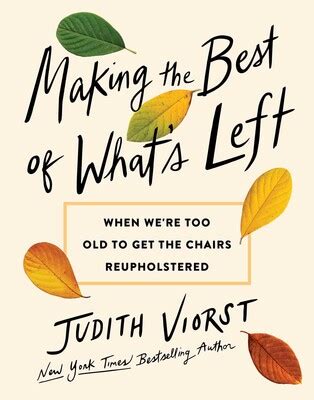
I thought about these ideas recently while reading Judith Viorst’s Making the Best of What’s Left: When We’re too Old to Get the Chairs Reupholstered, an alternately lighthearted and somber account of life past age 90. She describes Erikson’s theory, then notes that he was talking about people in their mid-60s. She asks, “how long can people look back on their accomplishments?” She suggests there must be another stage beyond what Erikson describes.
I’m 17 years younger than Viorst, but the changes that have taken place in me over the past year or so make me think there is something to her suggestion. I did quite a bit of life review during the roughly ten years after I retired from full-time work. I’m not thinking as much as I did then about what I accomplished and where I fell short. (There’s one area that’s an exception to that, which I may write about at some point.)

As for simplification, I see my life as simpler than it was in some of the areas that Sherill talked about–especially status, character, and the material realm. I suspect that making life simpler is a project that will continue until I die, but I’m not currently devoting much effort to the process. Here, too, the supposed last stage of development seems to have come and gone. So what comes next?

I haven’t identified a key issue for this phase of life, but I have noticed a few changes in my usual state of mind that may be associated with some sort of transition. First, I notice more happy bemusement, second, I have a sense of constrained freedom.

First, the happy bemusement. Imagine having an old car that you’ve driven more miles than you expected. You tell yourself that this can’t last forever, that the engine or transmission or something else major will go bad, and that will be the end. Nevertheless, it keeps on puttering along, the numbers on the odometer climbing higher and higher. You’re surprised, and also glad, and eventually entertained by its durability. The older I get, the more I’m struck by how well my body continues to function when so many others are having significant, sometimes life-threatening problems. I’m glad to be doing so well. Sometimes I think that this can’t last and I should be prepared for cancer, heart disease, or something else major to strike. Mostly, though, I am grateful. I shake my head in wonderment.

How about constrained freedom? When I wrote  about my relationship to time, I noted that, until recently, there was always something I had to do–work, raise children, care for parents, etc. Now, there’s nothing I have to do. There’s considerable freedom in that. Freedom is of course double-edged, both welcome but in some ways burdensome. If I can do anything, what will I do? How will I decide?

My freedom isn’t total, though, but a constrained freedom. The constraint is age. I may not have many years left, or, if I do, illness or disability may intrude. So it would be unwise for me to embark on a project that would take ten or twenty years to come to fruition; I wouldn’t be likely to complete it.

Freedom plus limited time pushes me to live in the present much more than I ever have. Through much of life, thinking about and investing for the future was the sensible thing to do. Aesop warned us: Be like the ant, not the grasshopper! The ant prepares for winter, but how will he act once winter arrives? Once there’s no more need to strive and save, can he relax and enjoy himself? That’s the question I’m faced with. I don’t need to work or plan anymore. Can I live happily in that freedom?

So maybe those are the challenges of being old-old while still healthy and reasonably vigorous: To be grateful rather than worried about eventual decline, and to live well within this recently arrived-at, genuine, but also limited freedom. At present, I’m using this freedom for something I hadn’t planned on: Over the last year, I’ve been dating a wonderful woman, and we plan to be married. I plan to write about that relationship and how it fits into this stage of life in a future post.

 

Posted in Psyche | Tagged , , , , , , , , | 2 Comments

Contemplation and Attention

Photo by ByChelo on Pexels.com

After turning 50, prominent psychiatrist Gerald G. May started to take solitary camping trips to wilderness areas, attempting to become more connected with nature (including his own nature). His book The Wisdom of the Wilderness: Experiencing the Healing Power of Nature (HarperSanFrancisco, 2006) describes his adventures and their effects on him.

In his first such excursion, he was irritated by the loud droning of cicadas. He tried to tune them out, and their singing was so steady and rhythmic that he was able to do so; then they would stop abruptly, and the silence would capture his attention. The sequence repeated over and over.

Noticing how his awareness cycled, May reflected on the interplay of contemplation and attention. He describes contemplation as “a state of awareness that is, among other things, wide-open and completely present to whatever is going on in the immediate moment.” Attention, on the other hand, is focused, directed to specific tasks to the exclusion of background stimuli and distracting thoughts. He initially worked to block out the cicada sound and concentrate on other things; eventually, he decided to open himself up to the sound and learn from it.

May suggests that “it is civilization, the taming of our nature, that has taught us to focus on a single task and tune out what we consider to be distractions.” We have to do this to some extent to function in society, but we lose something in the process. As May puts it:

“What we are missing is fullness of life. To put it simply, in concentrating on one thing at a time, we miss everything else. Going shopping, we miss the sky. Doing work, we miss the singing of birds. In conversation with one person, we ignore the presence of others. Through it all, we fail to appreciate our own precious being–the soft flow of breath, the beating of heart, the subtle beauty and wisdom of body, the sheer pristine wonder of being aware.” p. 64,5

I was struck by the contrast May drew between contemplation and attention. I’ve always been able to focus well on tasks, to the point that, if I’m reading an interesting book or working on a problem, I can be totally oblivious to conversations, sounds, or activities going on around me. That results in me being remarkably unaware of my surroundings. Someone can ask me a simple question like “what color is your living room,” and I’ll have no idea, after having been in it every day for years.

My ability to concentrate on a task served me in good stead when I was working as a therapist or college professor. Now that I’m mostly retired, though, I don’t often need such highly focused attention. I’d be willing to trade some focus for more awareness of the broader world and a more contemplative approach to life. Alas, once focused concentration is learned, it’s not easy to unlearn.

There is research indicating that the ability to concentrate decreases some with age. I haven’t noticed much difference to this point, though. Perhaps changes in my brain during the coming decades, should I live that long, will loosen the grip of focused attention and I’ll become more open to experiencing my surroundings more fully. However, I’d like to achieve that state by some means other than by waiting for neurons to die.

A couple of days after I started mulling over contemplation and attention, I ran across this Financial Times graphic. (It was in an article at The Dispatch by Yascha Mounk entitled “How We Got the Internet All Wrong.” The link is https://thedispatch.com/article/social-media-children-dating-neurotic/) 

The article argues that heavy exposure to the internet is wiring young brains differently than the programming that affected previous generations. The chart most relevant to the question of attention is the third one, showing the degree to which people of different ages described themselves as easily distracted. Those younger than 40 reported more distractability than older adults, and the difficulty has increased markedly since 2016, whereas the ratings made by people over 60 have seen little change.

It’s a problem for young people if they can’t concentrate well: it’s likely to affect work performance, interpersonal functioning, and the ability to smoothly navigate daily life. Will there also be a silver lining in the form of openness to the world around them and an increased capacity for contemplation? Or will their attention be captured by the virtual world without any improvement in their receptivity to nature or other aspects of the world around them? I’d like to hope for the best, but at this point I don’t see evidence of a coming wave of young contemplatives.

Posted in Body, Psyche, Uncategorized | Tagged , , , , , , , | 2 Comments

Being Old-Old: Relationships

Barnabas House, the community where I live.

I’ve been thinking and writing about my realization that I’m not just old, but more advanced in years than what it takes to be considered old, a status I’ve called “being old-old.” I continue to think about what is changing in my life as I come to terms with that awareness. I have written so far about travel and time. Now I would like to say something about the relational aspects of being old-old.

I’ve been aware for years that people who are much younger than me are becoming less interested in interacting with me. In particular, I noticed a change when I moved to Milwaukee a little over two years ago. For eight years prior to the move, I was a member of a church in Grand Rapids, Michigan, where I then lived. I didn’t have much difficulty connecting with people at the Grand Rapids church, interacting regularly with young adults and up, all the way to those a few years older than me. I joined committees, growth groups, and ministries, which probably helped with making connections, but I also knew quite a few young people not in any of those smaller circles with whom I could at least exchange pleasantries.

After moving, I visited a few churches, then settled on one that I have been attending. In pretty much all of the churches I visited, not many people who looked under the age of about 50 interacted with me, even when I stood around after the service in hopes that someone would initiate a conversation. At the church I now attend, there aren’t too many people who are old, much less old-old. I do know and interact with quite a few of the older congregants. In contrast, the only people who are young or even early in middle age who will start a conversation with me are those with whom I’ve connected in some small group setting—a Bible study, a growth group, or my housemates. The church is about the same size as the Grand Rapids church when I started going there, and the two are similar demographically, so my hypothesis is that younger people here are less friendly because I look older than I did ten years ago.

So looking old seems to be a social barrier in large social gatherings. How about the relationships in the smaller groups that I’ve been in? People have welcomed me there, and seem interested in getting to know me. In both the Bible study and the growth group, there is opportunity to share thoughts about scripture passages, spiritual formation, and life challenges. In those groups, my comments have been very well received. If anything, I’m given more deference and respect than I received in similar groups through the years. I’m not sure why. Is what I’m sharing more pertinent or useful? Maybe so, since I have more time to think and reflect beforehand about whatever the topic of meeting will be. Or perhaps I’m given more deference because of my age. The contrast with large social settings is remarkable, though. In large groups, I’m ignored. In small groups, I’m valued.

I mentioned a few paragraphs ago that there were some housemates who attend church with me. I live in Barnabas House, a Christian community, with six other people, all but one male, all single. Five of us go to the same church. The house was in fact founded by two members of the church in 2016, and it is a ministry of the church. I joined the community in 2023, when I moved to Milwaukee. We residents are spread across a wide age range, with me as the oldest, one person in his 60s, two in their 30s, and two in their 20s.

What’s it like living mostly with those half my age or younger? Surprisingly, there are more commonalities than differences. I don’t talk to or about the youngest housemates as if their youth disqualifies them from acting sensibly or thinking seriously, and they don’t treat me as if I’m antiquated and out of touch. They seem to value it when I offer observations about life, probably because I try to offer them tentatively and deferentially. I don’t do as much with them as they do with each other—no video, board, or card games for me—but we’re together for a couple of meals a week, morning and sometimes evening prayer, movie night, and informal conversations around the house. The youngest one tells me that he sometimes forgets about my age. I take that as a compliment. I’m old-old, he’s just figuring adulthood out, but we connect as emotional, volitional, spiritual beings—as humans. There’s a richness to that that I deeply value. Being old-old seems to have mixed effects on relationships, but for the most part my experiences have been positive.

I haven’t talked in this post about closer relationships–family, close friends, or romantic relationships. I’ll try to write something about those as well.

Posted in Relationships | Tagged , , , , | Leave a comment

Being Old-Old: Time

I recently posted about being “old-old,” not just old but at an age where I’m not likely to have many more years of health and vitality. In that post, I described how my sense of history had changed. I’ve had other realizations, some of which came as a result of struggle.

I went through a period of malaise late last fall. I was lethargic and lacking in motivation. I found myself spending too much time reading mediocre online articles. The world around me seemed off somehow. I wasn’t sure what was wrong. I was somewhat bothered by the the US national election, but it seemed there was more going on with me than that. What was it?

I eventually concluded that the biggest reason that I didn’t feel much like doing anything is that I didn’t have to do anything. Life doesn’t require as much from me as it used to. As long as I can remember, I was being pushed by activities that either someone else required of me or were important to me: go to school and study, find a job, develop a career, raise kids, help my parents. I had a life in which my purpose was clear and I had something to motivate me, something to accomplish, each day. Now there’s not anything like that. I have a few things to do every day, and some days are busy, but often there’s nothing that demands my attention.

Many days, I don’t have a mental list of things I need to get done. Instead, I have periods of time when I’m wondering what I should do. I have six or seven clients a week, but that’s very much part-time work. Add in three meals a day plus laundry and grocery shopping, and there are still more holes in my schedule than full blocks of time.

Here’s some of what happens to the rest of my time:

  • I do quite a few things of a religious nature. I start the day with the “Pray as You Go” app, do morning and evening liturgical prayer at the house where I live, attend church, lead a community group at the church I attend, study scripture, and go to a men’s Bible study. That’s a lot; maybe to the point of being unbalanced.
  • I exercise nearly every day, whether by going to the gym, jogging in the neighborhood, biking when the weather’s nice, or doing floor exercises in the living room.
  • I meet with friends or talk with them by phone or videoconferencing. When I moved to Wisconsin, I expected to make plenty local friends. It’s been harder to add them than I expected, but friends from elsewhere have continued to meet social needs.
  • I read. The New Yorker always has excellent articles, and I have plenty of books I want to read. We have a book discussion group at the house, and I’ve been fortunate to participate in several Catherine Project online reading groups.

Even with all that, there is still some unscheduled time. I’ve decided to leave it that way. That is partly an effort to maintain my awareness that none of my time is really my own, it’s a gift from God. It’s also a way of allowing some uncluttered mental space for God to intrude however he wants. I’ve found that the intrusion often takes the form of someone expressing a need to me. Will you take me to the store? To look at an apartment? To the courthouse? I’m glad that at least some of the time I can say ‘yes.’ “My time is in your hands,” the psalmist remarked to God (Ps. 31:15). Those of us who are old-old can appreciate that sentiment more than ever.

Posted in Psyche | Tagged , , , , , | 9 Comments

Traveling While Old-Old

The last thing I posted on this site was a reflection on turning 76. I wrote: “That somehow seems much older than 75. I’m not sure what the difference is. Maybe it’s that 80 looms closer, and that landmark seems not just old in a still-vibrant way but old-old.”

Six months on, my change in perspective has stuck, though I’m not as preoccupied with being old-old as I was at first. I think that being old-old is now a framework through which I filter experiences, and that has led to some new understandings. I’m going to write some about these, not so much to explain them to others but to better understand them myself.

In this post I’ll discuss how travel seems different to me. I really enjoy travelling, particularly international travel. I first traveled to Europe in 1999, and have crossed the Atlantic several times since then—Berlin and Prague in 2002, Budapest in 2003, a Mediterranean cruise in 2008, London in 2012, Israel in 2016, Turkey in 2018, and England in 2022. I embraced tourism, which the Britannica website defines as “the act and process of spending time away from home in pursuit of recreation, relaxation, and pleasure, while making use of the commercial provision of services.” In accord with the definition, I find travel pleasurable, though I think my main interest is not in the things Britannica lists but in gaining cultural and historical knowledge. Thus, in London you’re likely to find me at the British Museum or the National Gallery, not at Harrods or the London Eye. I’m interested in growth of the mind more than in having a good time. Besides valuing these historical and cultural elements, I gradually came to see travel as pilgrimage. I’ve visited sacred places and focused on my connection with God and on spiritual growth rather than on recreation, entertainment, or intellectual growth.

In September, I went on another international trip, to Amsterdam and Germany. For the Germany portion, I and my son Elliot were part of a group visiting the places where Luther and other Reformation figures studied, worked, and lived. Some of the trip was touristy—the Van Gogh Museum and a canal boat ride in Amsterdam, The Reichstag in Berlin and Neuschwanstein in the German Alps. Some sites I approached more as a pilgrim: Ould Kerk in Amsterdam, The Bonhoeffer House in Berlin, the Castle Church in Wittenberg, and the Theatinerkirche in Munich. These evoked something of the sacred or an appreciation of how God had been present in these places. As I age, the pilgrimage aspect of travel takes on greater importance to me.

Bonhoeffer House, Berlin, Germany

Bonhoeffer House, Berlin, Germany

Besides sliding between tourism and pilgrimage, I think that travel evokes something else in me that wasn’t present, at least not as strongly, when traveling 20 years ago. There’s more of a sense of continuity with the past and a diminished emphasis on the present. We all mostly view the world from the time in which we live, from now. We have a preference for the present, and view times past as substantially different and probably inferior. Or, if we see some similarity between past and present, we ignore the substantial differences and assume that those living in earlier eras were thinking pretty much as we do. As I’ve aged, I’m less inclined to prefer the present and to reshape the past in conformity with the present.

One reason for the change is that much more of the past was once present for me than used to be the case. As a teenager or young adult, my remembered past was only a little over 10 years. Now, I can remember things that happened 70 years ago. Many early memories are of family events or places I lived, but I can remember more national and international history as well. I remember the television broadcast of the 1956 political party conventions, for example. I remember Sputnik and the Cuban revolution. When I was in Berlin on my recent trip, I certainly could remember when the Wall went up between East and West Berlin, and also could recall television images of the Berlin airlift. It turns out that the airlift ended when I was 16 months old, so the videos in my mind’s eye must have been broadcast later, but I still have a sense that the conflict over Berlin was something that happened in my lifetime. As such, it doesn’t seem particularly distant or unfamiliar to me. So it’s easy for me to sense continuity with that period.

My changed sense of history isn’t limited to the years within my span of life. I see similarities between my life and that of historical figures such as Luther, Lucas Cranach, Van Gogh, and Bonhoeffer despite the significant differences in how we each lived. The problems that Luther tried to solve (how to resist an ideology that seems to be exploiting human ignorance and need, how to handle sudden celebrity, how to respond to violent threats, how to rein in a movement that one no longer controls) all have present-day equivalents. The similarities seem more important than the dissimilar specifics—indulgences, papal authority, and Anabaptists. The dilemmas faced by those who lived hundreds of years ago are quite a bit like the dilemmas we face. I think I’m better at seeing our commonalities while still respecting the tremendous differences in such matters as culture and technology.

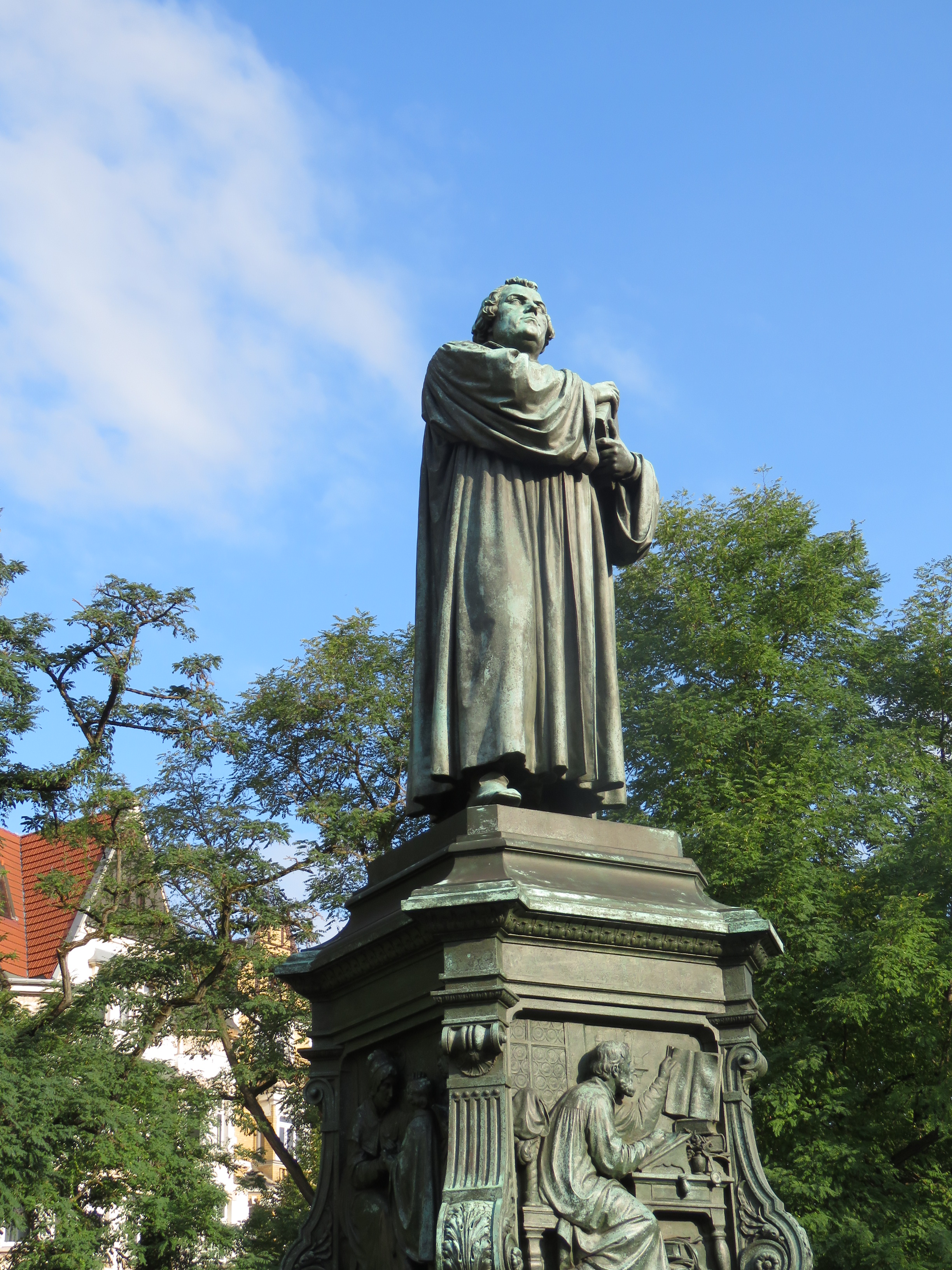
Statue of Luther, Eisenach, Germany

I’m not quite sure what mechanism connects growing older with such changes in perspective. There are many possibilities. Maybe it’s a matter of having much more knowledge of history than I used to. Maybe I don’t retain details as well, so broad strokes are more salient. Maybe I’m thinking more of ending up where forbearers did—in the grave. Whatever the reason, the change does make reading history and visiting historical sites more meaningful and pertinent to my life. I’m thankful for that. And I hope to keep traveling!

Posted in Culture, Psyche | Tagged , , , , , | 2 Comments

Seventy-Six

Age is just a number, or so they say. There’s of course more to it than that. Age is the product of one’s mind and body being subjected to innumerable influences, some beneficial and some detrimental. There’s actual changing, not just a count of passes through the turnstile of years. Possibilities shrink, horizons constrict.

I haven’t been bothered all that much by growing older. Three-quarters of my life or more is behind me, but I still felt physically healthy and mentally alert. I’m not able to climb mountains or run marathons—or even see well at night or reliably pull words from memory—but most capacities seem intact or nearly so.

So birthdays weren’t an issue, at least not until this year. In June, I turned 76. That somehow seems much older than 75. I’m not sure what the difference is. Maybe it’s that 80 looms closer, and that landmark seems not just old in a still-vibrant way but old-old. Maybe I’m comparing myself to my dad, who traveled to Europe at 75 (though it was a strain for him) but in just a few more years was showing signs of dementia. Maybe it’s that I seem to be hearing lots more stories of people about my age needing institutional care, developing dire medical problems, or dying.

So I’ve been trying to cope. I live in a house whose residents are mostly in their 20s and 30s. Old or not, I wouldn’t want to change places with them. I appreciate my life’s worth of experiences, both because of the richness of the memories and because of the value of the lessons they taught me. I like it that qualities such as perspective, judgment, and patience—likely signs of maturity—have grown with time. There’s loss, but there’s also gain.

Since writing poetry is one of my ways of processing what happens to me, I decided to write a poem about being 76. In popular culture when I was young, that particular number was associated with a song—“Seventy-Six Trombones,” from “The Music Man,” a musical about a con man who convinces a gullible small town that he can save their youth from juvenile delinquency by creating a band, led specifically by that number of trombones. The song is rousing, which I like. The poem references not just my age but that musical number. Here it is:

Seventy-six, just one more 
than seventy-five--the number
said to lead the big parade,
sound scampering around the sliding
tubing and blaring out the bell.
I’m not trombone-minded now;
I’m shadowy and solemn,
a bow pulled slowly over cello strings.

Seventy went past without a sound.
-one and -two were fine, humming
with a tone of quiet satisfaction.
Seventy-four brought a little more,
since it was a year of death,
though that was welcome mercy
Midway through my septepule span,
all still seemed decent,
though without particular delight.
Then, unexpectedly,
along came seventy-six.

My body is a crucible for aches.
Skin sags and puckers in unslightly ways.
The plans and purposes that most days carry
have shrunk remarkably.

Did I take a wrong turn to wind up here?
No, this is where time’s travel carries everyone.
The journey started with breath
into the mouthpiece, ran forward
out the slide, then bent back
to make full circuit, turned delightful
only at the end. Why would
I want to miss the music?
Photo by Mathias Reding on Pexels.com
Posted in Psyche | Tagged , , | 3 Comments

Not-At-Homeness

Where I once felt at home.

In his book “On the Road With St. Augustine,” James K.A. Smith writes about the not-at-homeness (a translation of Heidegger’s term Unheimlich) that is a familiar part of the human condition. It’s a “sense of frustration, futility, of never arriving, never feeling settled with ourselves…” We’re searching for home, in other words for a place where we are welcomed, where we belong, where we can stop striving and rest.

Smith notes that many people try to cope with not-at-homeness by distracting themselves from the sense of alienation and restlessness. We get busy, or immerse ourselves in entertainments. There’s value, though, in letting ourselves yearn for a home. Our not-at-homeness “becomes a gift that creates an opening to once again face the question of who we are.” Smith suggests we can better understand this condition by reflecting on the lives of those who are most acutely without home: the exile, the migrant, and the refugee. He thinks Augustine was aware of such alienation, since he left his African homeland to pursue his fortunes in Italy only to find that he was too African for the Italians and, once he returned to Africa, too foreign for the Africans.

The not-at-homeness that Smith describes has grown for me personally over the last few years. My greatest sense of home for most of my life came from my visits once or twice each year to my parents’ house in Michigan. In 2012, I returned there to live with them and provide care as their abilities diminished. It still seemed like home while I was there, though it had been diminished in many ways. Both of them eventually died, and I moved to Milwaukee about six months after my mom’s funeral. It’s not a place I had lived before, but is near my oldest son. It doesn’t feel like home here. Then again, there’s no other place that seems more like home, nowhere that I belong. I lived in North Carolina for over 30 years, but that almost seems like another life now. My Michigan hometown still is full of both friends and memories, but it’s definitely not home anymore.

After reading Smith’s description of not-at-homeness, I thought of the last years with my mom. She lived in the same city all her life, and died in the house she and my dad bought back in the 1950s. Had it continued to feel lite home to her, though? Her husband died eight years before she did. Her parents, best friend, and sisters were all gone. She wasn’t totally isolated: She still had some friends and talked to her children and grandchildren. But she frequently asked “Why am I still here?” Her sense of home was only tenuously related to her surroundings. Instead, she thought more and more about a home she had never visited but yearned for, where Jim and Joann and Marian and so many others she loved had gone before her, where she would meet Jesus face to face. Her favorite song in the last few weeks of her life was a plea to be brought to that place:

Precious Lord, take my hand,
Lead me on, help me stand,
I am tired, I am weak, I am worn;
Through the storm, through the night,
Lead me on to the light:
Take my hand, precious Lord,
Lead me home.

In light of her experience, perhaps my increased sense of not-at-homeness since her death isn’t unusual, but is what will happen to most of us if we live long enough. My sense of home is like a tent staked to the ground. One by one, the stakes are being pulled up. Eventually, they will all be removed, and the tent will blow away. I’ll be ready to follow it. From this perspective, the unsettledness is as Smith describes it: not a problem but an opportunity. It’s preparation for what’s to come, provision for a journey to the home that is waiting for me.  

Posted in Death, Psyche | Tagged , , , , , | 1 Comment

When Parents Die, Who Do They Become?

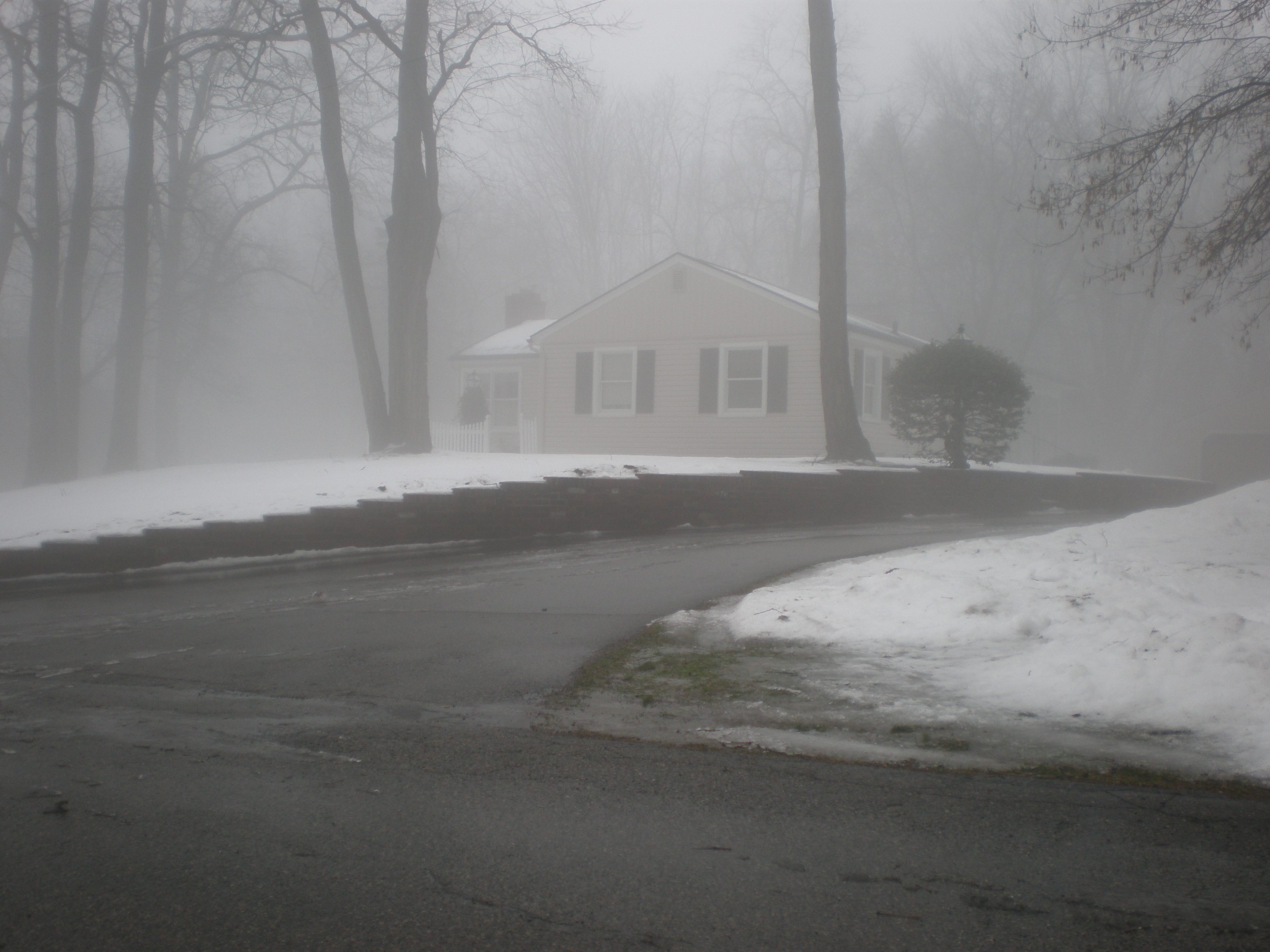
Ed (not his real name), who lives with me at Barnabas House, just lost his father. His mother died a few years ago.  His dad was 92 years old and under hospice care. Ed’s relationship with his dad was very strained, and he admitted that he thought of them as dead to him long before they actually died. However, he’s experiencing a stronger reaction than he expected to his dad’s death.

Both of his parents came from large families, but none of their siblings are still alive. It’s eerie for him that the entire older generation is gone. Ed also is troubled that there’s not a family home to which he can return. There’s his dad’s house, which his brother will probably end up owning, but there’s no family place to gather. It was different when his mother died. Back then, his father was still there, making plans for life without her. Now there’s no one.  

We talked about all this after our prayer time the night his dad died. I have also lost both parents, my dad in 2014 and my mom in 2022. Though the relationships I had with my parents were much different from those he had with his, I could identify with much that he was saying. It still seems odd to me that dad and mom are gone and their house belongs to someone else. They, too, were the last members of their generation on either side of the family. I think of my mom’s sisters, eccentric characters who made family gatherings memorable. It almost seems they left no trace behind, though I know they did since I know of their influence on their still-living children. I even think some about my dad’s brother, the only other sibling either of my parents had, though he died more than 50 years ago.

My perception of my parents has changed since my mom’s death. Specifically, their lives seem complete and settled in a way that wasn’t the case while they were alive. My dad’s life didn’t seem quite done while my mom was still living, probably because she talked so much about him and still had many of his possessions. Now, their lives are fixed, almost like stars in the sky by which I navigate but which have a remoteness and immutability about them.

They may be unchanging, but that doesn’t mean my thoughts about them are similarly static. I think especially of dad as he might have been at my current age. He must have undergone similar bodily changes, noticed how others’ reactions to him changed as he aged, reflected on a similar expanse of days gone by, and developed a similar awareness that his future was being shortened. I have more appreciation for him, and see myself as following in his footsteps. It’s like I’ve discovered that all along I’ve been walking in tracks that someone else made in the snow. Sure, I’m different from him, but also very much like him. And I’m also aware that, as I’m following his steps, he was following the path of his dad, who was following his dad, and on and on back to someone who spoke a different language, lived on a different continent, and couldn’t imagine the life I now live.

Both my parents now seem more exceptional and complex than they ever seemed before. They always had just been there, their accomplishments taken for granted, important but also ordinary in many ways. Now they both seem like remarkable people who did remarkable things. This is the opposite of walking in the footsteps of others I just described. They followed others, but also struck out on their own. When my dad was younger than my oldest grandson is now, he was a soldier stationed in Belgium, a combatant in a great war. His teenage girlfriend was back home, doing her part, waiting for his letters and sending off her own. Those long-ago lives now seem to me like the stuff of screen and story. What fears they must have fought, what yearnings filled their hearts! Then the war was over, dad came home, they married, and they built a life. I’ve long known the details, but the facts used to seem certain and unalterable, as if their destinies were written out and they just had to follow the script. Now I realize there must have been many possible paths, and it took courage, foresight, and wisdom to choose the one they did: the schooling, the business, the church, the home, the friends, the hospitality, the vacations, the celebrations. How did they manage to imagine all that? I’m ready to not just appreciate them but also to congratulate them for their performance in the improv theater known as life. Way to go, dad and mom! Take a bow!

I’m thankful for these new insights into Jim and Lois Ritzema, aka dad and mom. Knowing them as I’ve come to see them since their deaths helps me to know myself. I’m them to an extent, but also unlike them by way of choice and chance. Their flames burned bright, then flickered and went out. Mine will as well. It may be many years away, but the view to that future is becoming less obstructed. Dad and mom, we’ll be together sooner rather than later.

Posted in Death, Relationships, Uncategorized | Tagged , , | 2 Comments

A Year in Review, Part Two

Recently, I posted some thoughts about the past year. Life changed quite a bit during 2023, with a move from Michigan to Wisconsin, going from living alone to living in a communal setting, and from living in a different state than my sons to living less than an hour’s drive from each. I wrote in the earlier post about the household where I live, my relationships, my new city, and my new church. There are some additional things of note about the past year that I’ll write about in this post.

There’s been a change my prayer life. One resident at Barnabas House, where I live, had prayed the Liturgy of the Hours morning and evening for about a year before my arrival, and had tried to get others in the house to join him, with limited success. The Liturgy of the Hours (also known as the Divine Office) has ancient roots, going back to the prayers that St. Benedict developed for his monasteries. Each day, both the morning and evening prayers consist  of a couple Psalms, a canticle from elsewhere in scripture, a brief New Testament reading, the song of Zechariah (morning) or the Magnificat (evening), and some additional petitions concluding with the Lord’s Prayer. Since March I’ve joined in those prayers. Most days three of us pray the Liturgy together. In the past I had included psalms in my prayers, but never to this extent and never using such a formal liturgical structure. This type of prayer requires intentionality, focus, and the willingness to surrender control over the manner in which I pray. I’ve found that spoken liturgical praying keeps me engaged in prayer and attentive to the presence of God more consistently than I would be otherwise.

I still work part-time, seeing a handful of clients every week on a teletherapy platform. I still find it rewarding to help people deal with their emotional struggles. I also bought a duplex six blocks from where I live. One unit was rented when I bought it. I decided to move my furniture and household goods from storage into the other unit. That entailed a trip to St. Louis to rent a U-Haul, load up all the household furnishings I had in storage there, and bring everything to Milwaukee. My intent was to rent that unit out short-term. There’s a nurse who has a three-month contract with a local hospital that is supposed to move in the vacant unit tomorrow. The house needed some repairs, so owning it has been a rather expensive proposition so far. It’s also taken a fair amount of time on my part. Hopefully the finances will work out okay in the long run. I’ve enjoyed doing some minor repairs, arranging furniture, and getting the apartment ready to be occupied.

I have time to read or listen to audiobooks. At the house three of us read and discussed Tolkien’s “The Hobbit” and C.S. Lewis’ “The Great Divorce” together. I also applied for and got to take part in a number of online reading groups through The Catherine Project, which hosts online discussions each centered around significant works of literature. The books I’ve read and discussed there are Kierkegaard’s “Philosophical Fragments,” Dante’s “The New Life,” George Eliot’s “Middlemarch,” and Hannah Arendt’s “The Human Condition.” Reading with a group makes it easier to keep motivated, and I’ve really appreciated the opportunity to have serious literary and philosophical discussions with people who read carefully and think critically. I think my intellectual life is in decent shape.

I also have been physically active. I go to the gym and, when the weather is decent, jog or bike. When biking, I usually ride 10 minutes to a trail, then ride another 10 minutes down to a park alongside the Milwaukee lakefront. I eventually get to a path that goes alongside Lake Michigan and faces towards the downtown skyscrapers for about a quarter-mile, then circle around go back along the same route. The picture above was taken from the lakeside path. I really like seeing the lake in its various moods, When I jog, I head over to a nearby park and climb the hill there (the site of the city reservoir for 125 years until it was taken out of service and filled in with dirt about 20 years ago). There’s a great view of downtown, with the lake in the distance. Here’s a poem I wrote this past summer about jogging up that hill:

The hill once held a lake from which the thirsty city drank. 

Finally decrepit, it was filled with dirt, flattened at the top,
and inlaid with paths. Pedestrians now walk where water was.

Near dawn on Saturday, I jog through empty streets to the bottom
of the hill, deciding that it’s worth expending breath and effort
making the ascent. A minute, and I’m above the city, looking down.
Treetops bloom below; in the distance buildings jut assuredly,
commerce and cars abated to an understated murmur.

I wonder whether God comes here to sit and watch, remembering
generations which, synchronic with the reservoir, served the city
well but now, like its remains, are resting underneath the soil.

As might be evident from the above, writing poetry is another way I spend my time. I write a poem every week. I did that for several years before and after the beginning of the 21st century, and have done it again for the past 5 years. I hadn’t looked back at the poems I’ve written over the years until about six months ago, when I decided to review what I had in my files. I appreciated hearing my voice from across the years—what I had observed about life, nature, and people. I ended up selecting almost a hundred poems to put in a book I self-published. It’s titled Among the Fallen Trees: Poems of Midlife, and is available for purchase through Barnes & Noble at https://www.barnesandnoble.com/w/book/1144456264?ean=9798855665468.

I haven’t traveled much this year. My dog Zoe is old, and I don’t want to leave her for long in the care of others. I did manage to fly to Florida two weeks ago to visit my sister Mary and her husband, who spend four months of the year in Inverness. I have gone to Chicago by train three times, mostly to go to the Art Institute of Chicago. I really enjoyed an exhibition of works by Van Gogh, George Seurat, and other avant-garde artists who painted in the Paris suburbs around 1880. I’ve gone to Grand Rapids a few times, staying with a cousin and getting together with friends.

My most interesting trip was unexpected. My sixteen-year-old grandson was supposed to go during June on an intensive three-day tour of the battlefield at Gettysburg planned by his other grandfather. Ten days beforehand “Grandpa Pete” was injured in a fall and unable to travel. I filled in at the last minute. It was great spending the time with Theo. I have never been particularly interested in military history, but I came away thinking that all Americans should have more than casual exposure to the Civil War. The tour guide lived and breathed Civil War history. He walked us (literally!) through each day of the battle, showing us where significant engagements took place and explaining all the ways that the battle could have gone differently were it not for a pertinent insight by one or another of the generals, the folly of leaders who didn’t know how to lead, or the heroism of ordinary men. I got the merest glimpse of the scale of the battle and the magnitude of the destruction. What tremendous sacrifice and determination it took to preserve the Union!

So, that’s a summary of my year. I may seem busy, but most days go by at a leisurely pace. Still, it’s a pretty full life. In some ways it seems unreal. How many people in their mid-70s live in a house with a bunch of single adults whose median age is less than 40? How many get to have communal prayer morning and evening? How many can see their children and grandchildren frequently? I’m surprised, and grateful. Each night, we pray Mary’s great canticle of praise from Luke 2, which includes the lines “The almighty has done great things for me, and holy is his name.” I can’t claim to have experienced great things, but, like her, I am deeply appreciative for what God has done for me.

Posted in Psyche, Spirit | Tagged , , , , | 3 Comments

A Year in Review

A year ago I was living in Grand Rapids, Michigan, packing up in preparation for moving to Milwaukee. I had been there for ten years, ever since I came north to help my parents, and I had formed many attachments. I knew I would miss several friends. I’d miss my church, the neighborhood where my family had lived for over 60 years, Calvin College (my alma mater, the gym, coffee shops, bike trails I liked to ride on and roads I jogged on. I had already been missing  mom, who died in June of 2022. The move to Milwaukee was to be near Jas, my oldest son, and his family. On January 7, I took the trip around the lake to move into Barnabas House, a Christian community for single adults less than two miles north of downtown Milwaukee.

Looking back, life was quite uncertain then, and I was unsure whether my plan was sound. Just about everything was changing for me. Living with five people whose average age is more than three decades younger than me could backfire. Would I be accepted? Would I feel at home? What sort of life would this be?

For the most part, things have worked out well. Let me summarize the last year. 

Living with five other people has been quite an adjustment, especially for an introvert like me. Fortunately, the others all work full-time jobs, so I’m alone much of the day. We do have regular times we get together: Friday evenings for pizza and a movie, Saturday evening dinner, and brunch Sunday noon. We invite others to Saturday dinner and Sunday brunch, so there’s often someone else here at those times. The house emphasizes hospitality, which reminds me of my parents, who opened their home to so many people through the years.

When I moved in, there was quite a bit of tension, though not much open conflict, between two house members. They were the two founding members of the house. One was older and the other still in his 20s. There was a longstanding pattern of the young guy breaking promises and acting irresponsibly and the older one withdrawing and harboring resentment. In August, the younger person moved out and a woman in her 30s moved in. that change has alleviated much of the tension. I’m closer to the older founder than the other four people, and we talk quite a bit. He has always been something of a loner, and that tendency has increased in response to disappointments over the past few years, which has meant that, though we’ve become friends, we’re not as close as we could have been.

So my closest relationships are still with people outside the house. It’s been good to live a half-hour drive from Jas, Jenn, and the two grandkids who are still at home. From January to May I picked up Theo, now sixteen years old, one afternoon a week after school to take him to an after-school activity, so we got to talk quite a bit then. I’ve been to several of twelve-year old Willa’s activities as well. I get together with the family a couple times a month, usually to eat dinner together. I see my other son Elliot about twice a month as well, often by driving the thirty miles out to Nashotah House, where he’s living in student housing and working on a Master’s degree Christian Ethics. Besides family, I talk a couple times a week with my best friend, who lives in Georgia. I talk from time to time with several Michigan friends as well, usually on Skype or Zoom. I have only one person in Milwaukee with whom I regularly go out to coffee. I would really like to have a couple more. It’s difficult to find people with similar interests who don’t already have full lives.

I’m learning my way around parts of Milwaukee pretty well, though there are plenty of areas I haven’t been to yet. I’ve gone to the art museum a couple times, seeing a special exhibition on the Ashcan School and another from a collection of 17th century Northern European paintings. I’ve been to the symphony three times, hearing Beethoven’s 5th, Bolero, Prelude to the Afternoon of a Fawn, and the Messiah. When my sister came to visit, we went to the St. Joan of Arc chapel (a village church relocated from France to the Marquette University campus) and the Pabst Mansion (the former home of the beer baron). My most significant involvement has been with church. I was heavily involved in my church in Grand Rapids and many of the people to whom I was closest were members there. I visited a number of churches when I first got here, then after a couple months settled on City Reformed Church, which my son and his family were once members of and which founded Barnabas House, where I live. The pastor has a doctorate and has studied at Princeton, so his sermons are intellectually rigorous and thought-provoking. I like that. I attend both an early morning men’s group and an evening community group. I’ve started to volunteer some. I’m not a member, largely because the church is affiliated with the Christian Reformed denomination and I’ve been unhappy with the direction the denomination has taken the last few years. So I’m part of the congregation but don’t feel quite at home there. It’s another area of life with which I’m not fully satisfied.

It seems like everything I mentioned to this point has included negatives: relationships at the house, lack of new friends, issues with church. Does that mean that I’m dissatisfied or unhappy? Not really. Perhaps when I was younger, those things would have been troublesome, but they haven’t had that effect. I knew coming here that life wouldn’t be the same. Life always has negatives; that would have been the case wherever I was. Understanding that is part of contentment. Arthur Brooks recently wrote an article titled “How to be Happy Growing Older.” It’s at https://www.theatlantic.com/ideas/archive/2023/12/happiness-time-aging-mood/676964/. He suggests that you don’t even have to try to be happier for it to happen. Research has found that positive affect increases as we grow older, and negative affect decreases for men (but not for women). He reports on three interrelated characteristics that may be responsible for this outcome: “They react less to negative situations, they are better at ignoring irrelevant negative stimuli than they were when younger, and they remember more positive than negative information.” It seems that I have at least the first two of these. The negative doesn’t bother me, and I don’t pay much attention to it. So, though I recognize what’s negative, life as a whole seems pretty good.

This post is getting pretty long, so I’ll stop here and conclude my review of 2023 in a few days.

Posted in Psyche, Relationships | Tagged , , , , , , , | 4 Comments